Detached ADUs, garage conversions, and Junior ADUs for North Hollywood homeowners — built by a licensed general contractor who runs the LADBS submittal, the plan-check corrections, and the build, all in-house.
Hillstar Construction is a licensed North Hollywood ADU contractor. We've built detached ADUs, garage-conversion ADUs, above-garage units, and Junior ADUs (JADUs) for NoHo homeowners across the NoHo Arts District, the Chandler Boulevard corridor, the streets between Lankershim and Vineland, the blocks near NoHo West, and the Magnolia and Victory corridors.
NoHo is one of the best-positioned ADU neighborhoods in the San Fernando Valley: predominantly flat valley-floor R1 with mixed-use R2, R3, and R4 corridors; no Very High Fire Hazard Severity Zone; no hillside overlay; no HPOZ inside NoHo proper; and the Metro B (Red) Line station at Lankershim and Chandler plus multiple bus lines put most of the neighborhood inside the state ADU parking exemption buffer.
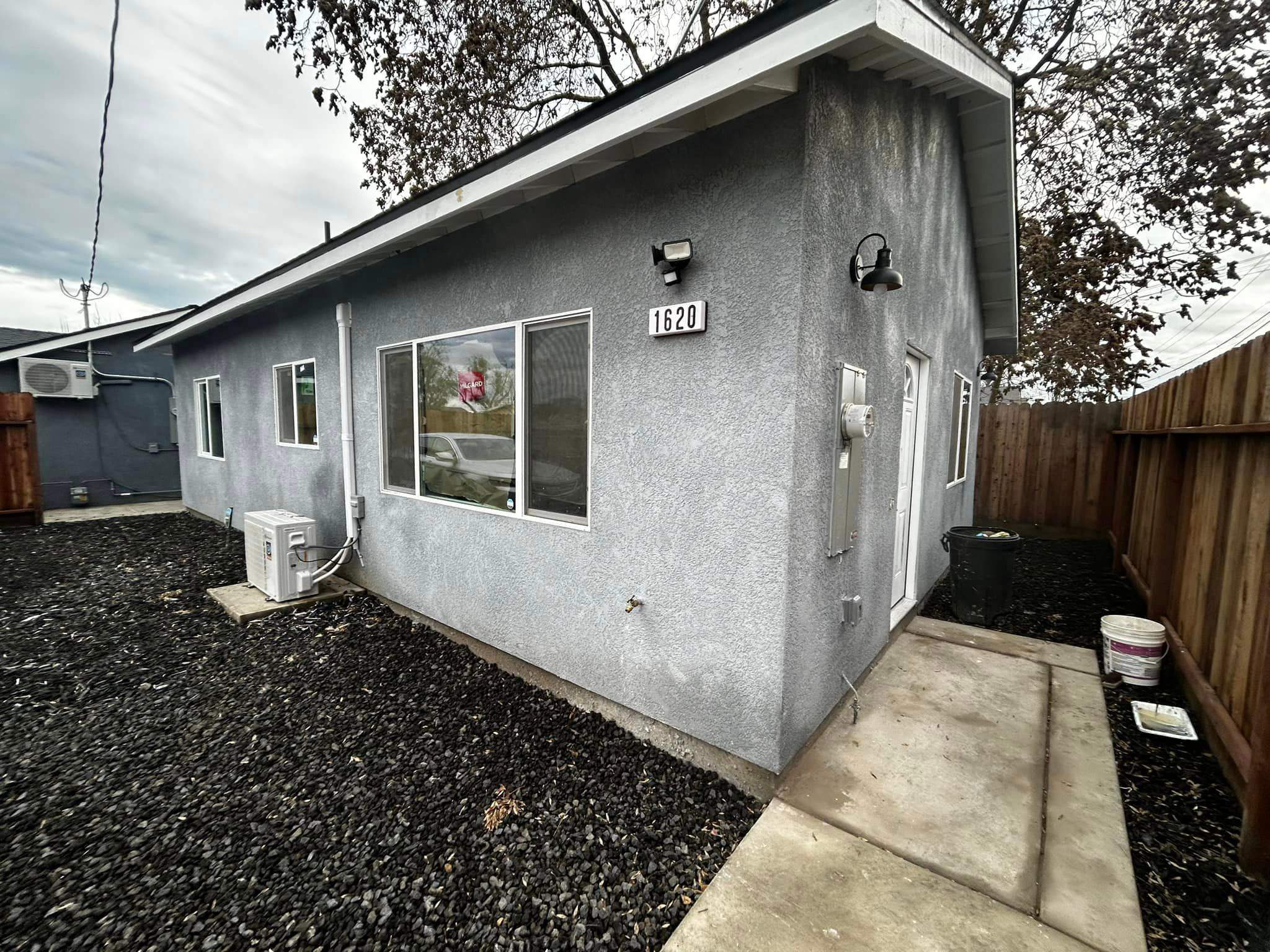
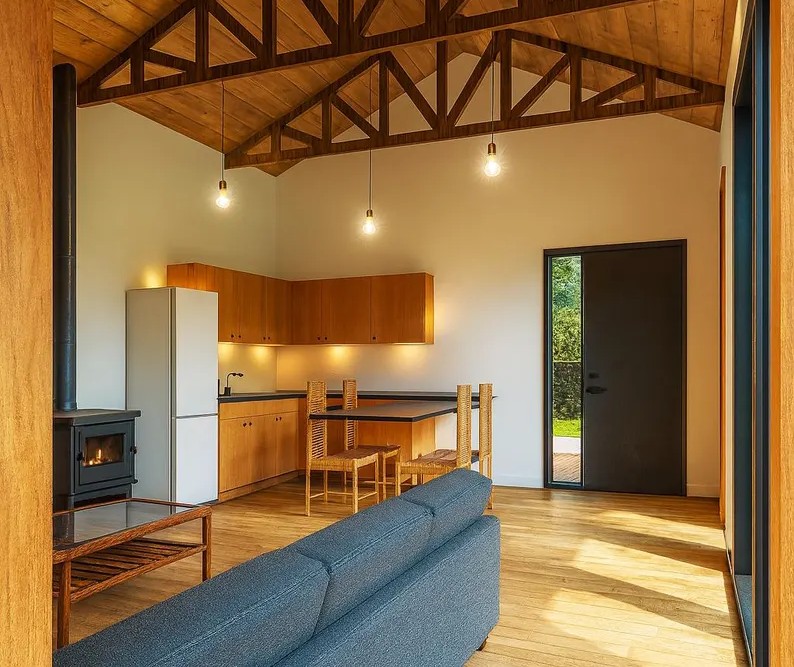
Recent NoHo-area build
North Hollywood is one of the cleaner LA-area ADU jurisdictions — not because of anything exotic, but because of what NoHo is not. It is not hillside, so no Baseline Hillside Ordinance grading rules. It is not in a Very High Fire Hazard Severity Zone, so Chapter 7A Wildland-Urban Interface materials are not required. It is not inside an HPOZ — the adjacent Toluca Lake neighborhood to the east has HPOZ boundaries, but NoHo proper does not. And it is inside the City of Los Angeles, so LADBS standard plans and the Express Permit counter are available.
That combination makes an NoHo ADU a relatively efficient LA project to design and permit. Most of the value a local contractor adds is in knowing the specific NoHo stock: which blocks have alley access for detached rear-yard builds, which original 1940s–1960s detached garages need foundation or shear reinforcement before conversion, which corridor-adjacent parcels touch the NoHo or Warner Center specific-plan overlays, and how to route utility trenching to existing LADWP service cleanly.
When a detached ADU isn't realistic — because of a tight side yard, alley-access constraints, an older garage that isn't worth converting, or a corridor-adjacent parcel with specific-plan massing considerations — a home addition or scoped whole-home remodel in North Hollywood is sometimes the cleaner path.
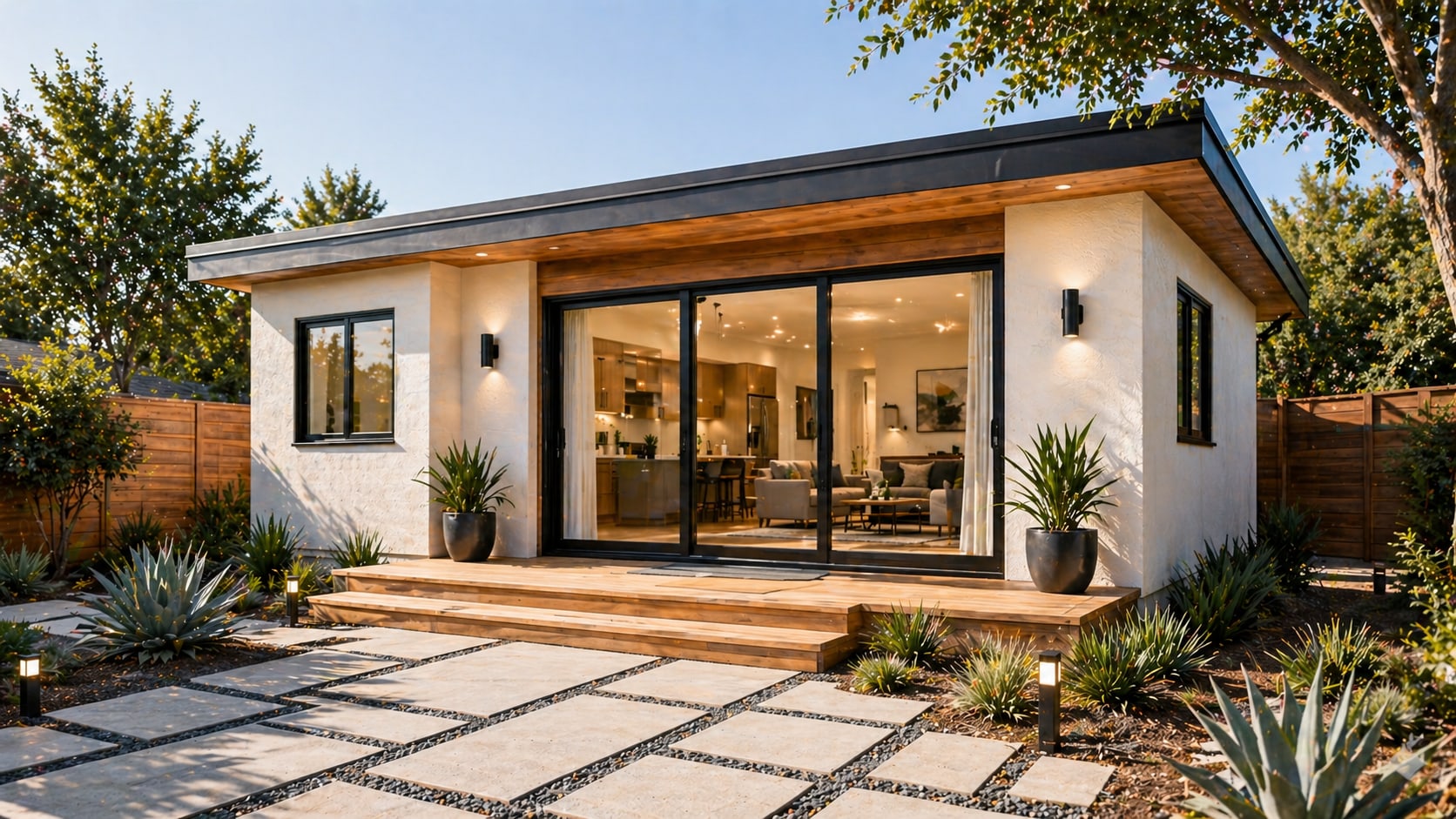
Hillstar project
ADU rules for North Hollywood come from California state law plus the Los Angeles Municipal Code, administered by LADBS. These are the constraints that drive design on a typical flat R1 NoHo parcel.
State law requires LADBS to allow a detached ADU of at least 850 sq ft for a studio or one-bedroom, or 1,000 sq ft for two or more bedrooms. On typical 5,500–7,500 sq ft NoHo R1 lots, an 800–1,000 sq ft detached unit fits the rear yard comfortably while preserving the primary home's backyard.
State law limits required side and rear setbacks to four feet for a new detached or attached ADU. No setback is required where you convert an existing garage inside its original footprint — the common path on NoHo lots with original alley-access garages.
NoHo is inside the City of Los Angeles, so permits go through LADBS. State law requires completeness within 15 business days and approval within 60 days on a complete application. LADBS standard plans and the Express Permit counter shorten turnaround on standard NoHo lots.
State law exempts most ADUs from added on-site parking within a half-mile walking distance of public transit. The Metro B (Red) Line at Lankershim & Chandler plus bus service on Lankershim, Magnolia, Vineland, and Laurel Canyon puts nearly all of NoHo inside that transit buffer.
A NoHo ADU typically connects to existing LADWP water and power service for the primary home — separate metering optional. Sewer capacity on most R1 NoHo streets is adequate for an added ADU. We coordinate LADWP, sewer, and gas with LADBS plan check as a single workflow.
NoHo proper is flat valley floor — no Very High Fire Hazard Severity Zone, no Baseline Hillside Ordinance area, no HPOZ inside NoHo itself. That means no Chapter 7A ignition-resistant detailing, no hillside grading review, and no Cultural Heritage Commission sign-off on standard NoHo R1 ADUs.
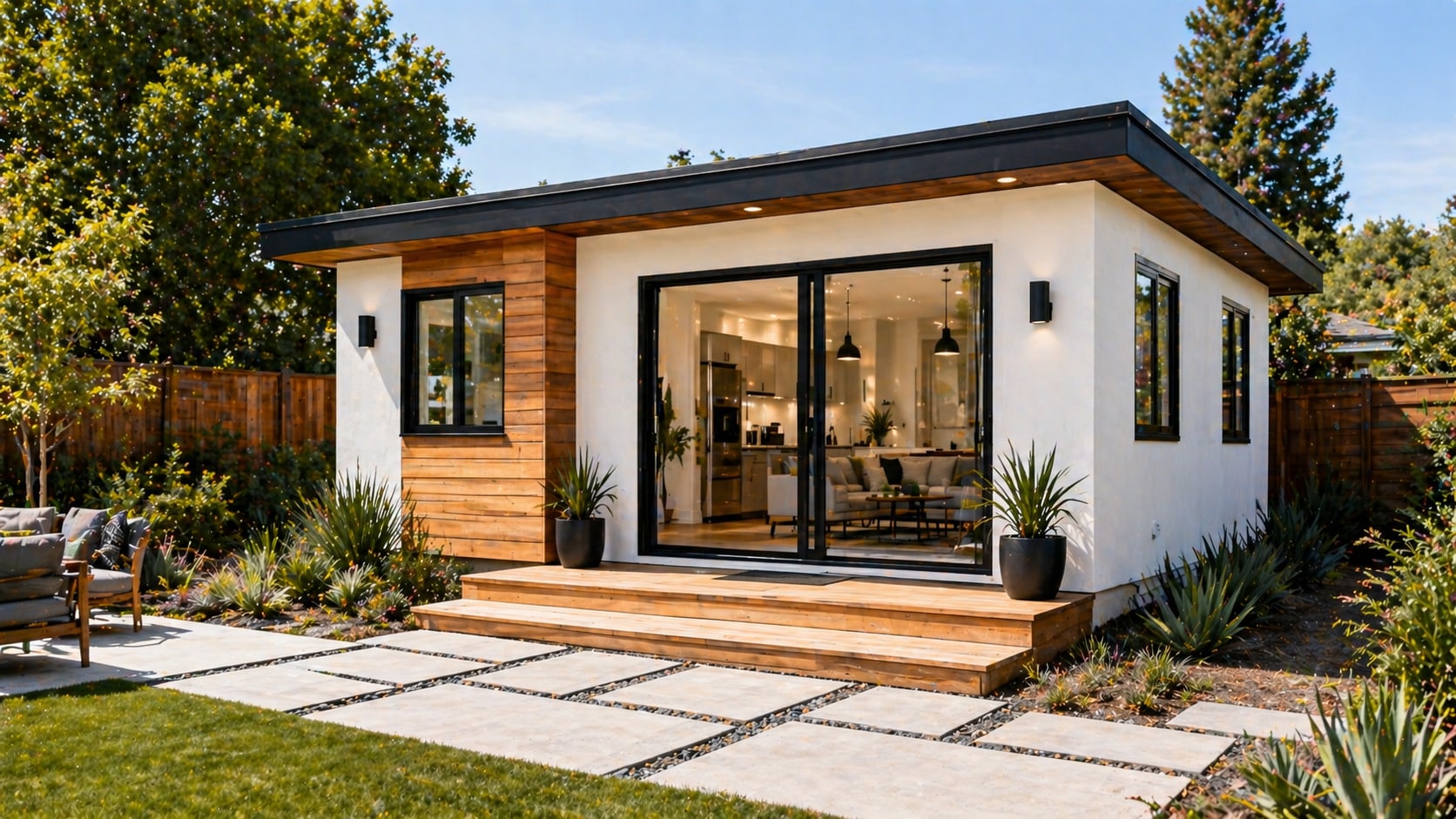
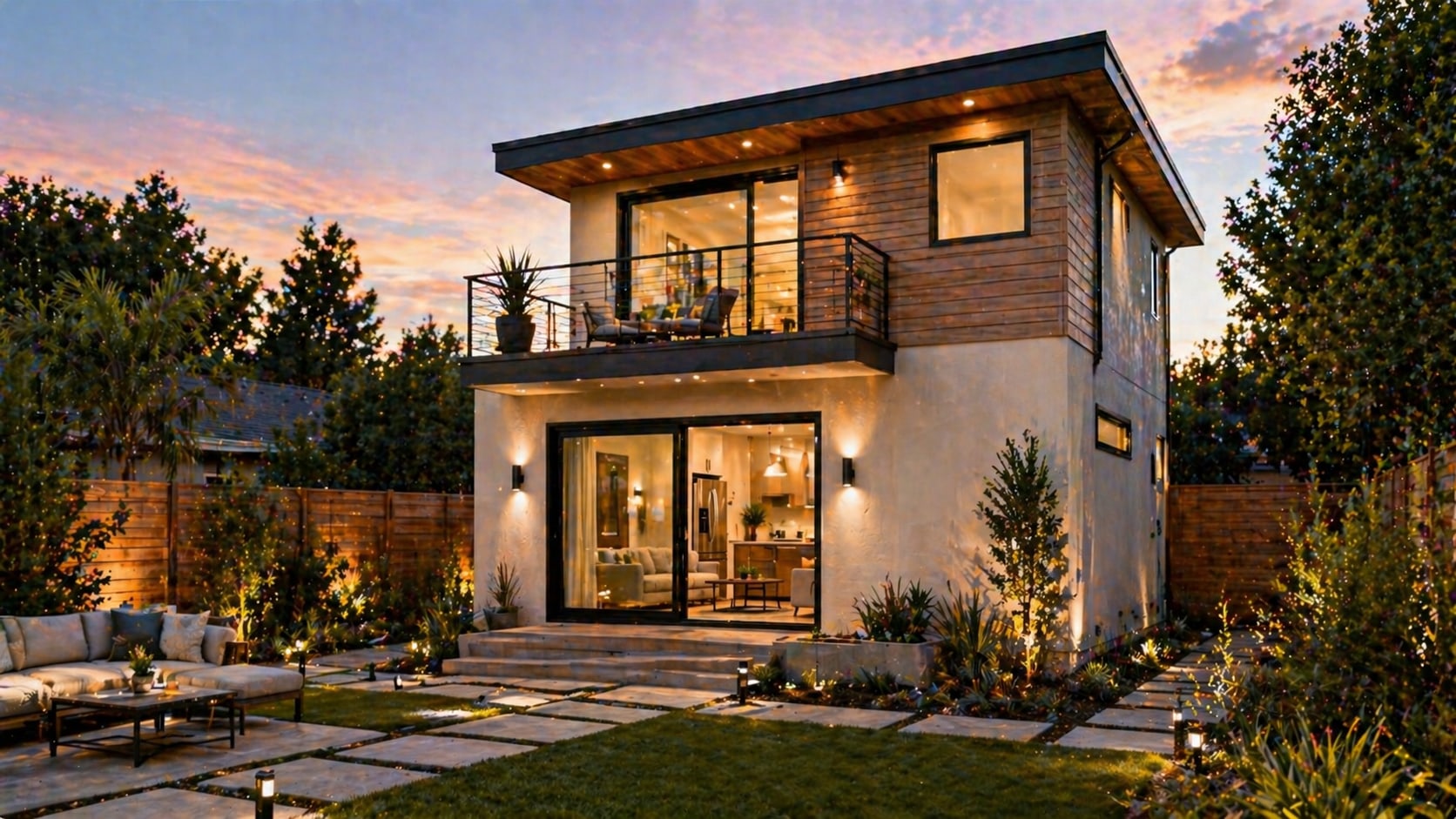
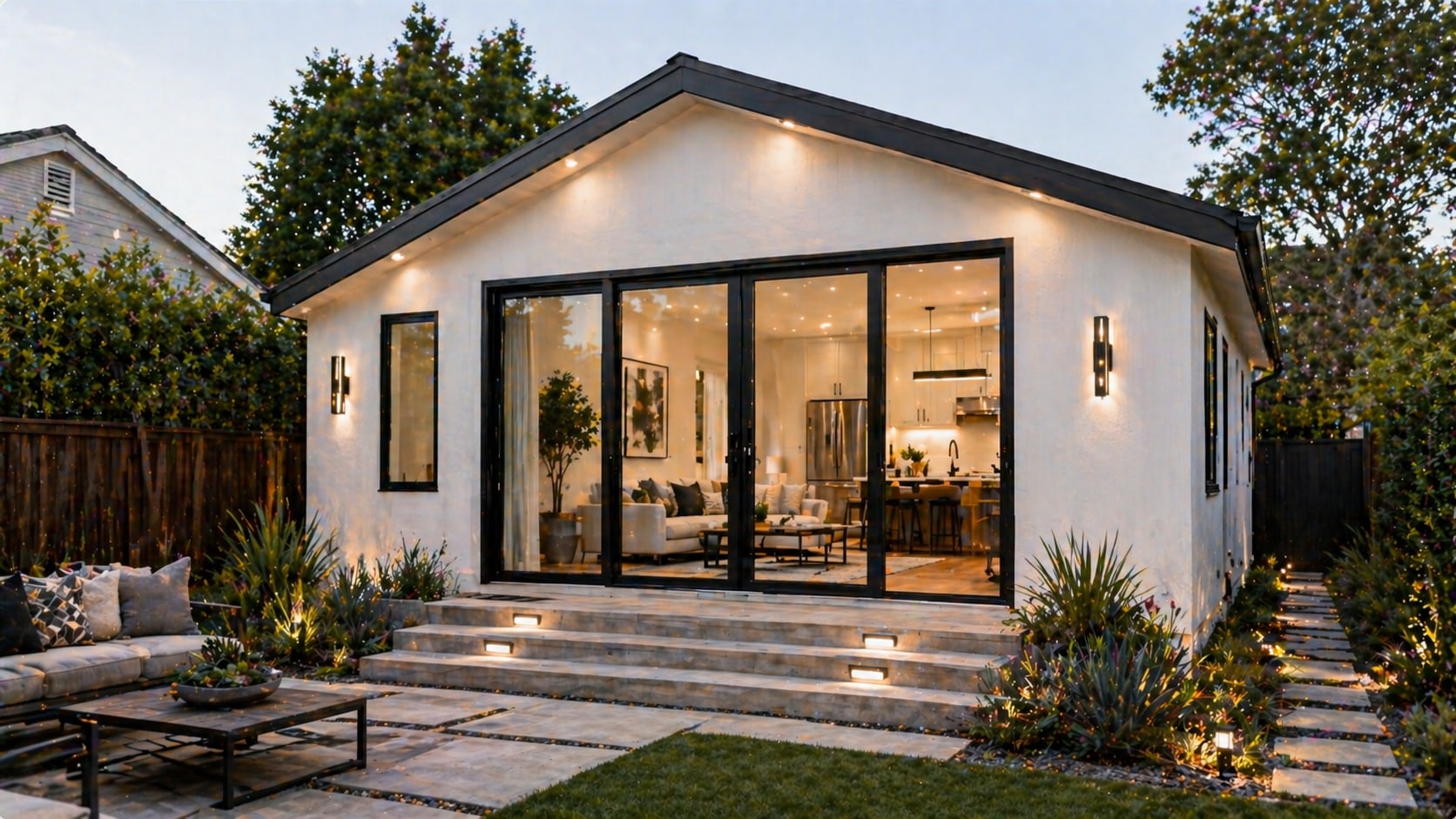
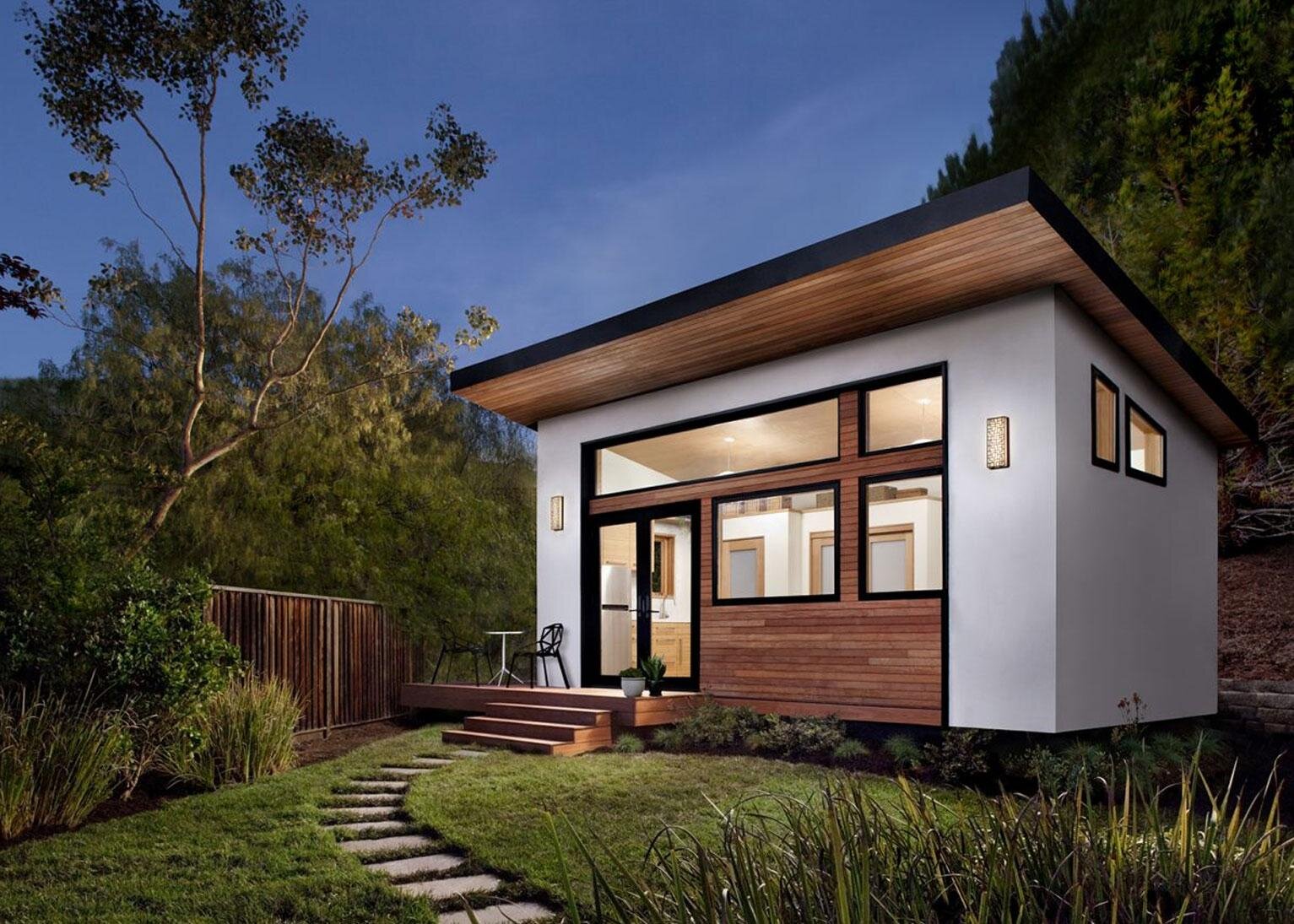
A cross-section of recent Hillstar ADU builds across the greater Los Angeles area — real projects, real homeowners.
NoHo R1 lots are typically 5,500 to 7,500 square feet, flat, and across most of the neighborhood come with original detached rear-yard garages accessed from the alley. The 1940s–1960s post-war stock between Chandler and Victory is particularly garage-conversion-friendly. That stock makes three ADU types especially common:
The most common NoHo configuration. An 800–1,000 sq ft detached unit in the rear yard, with four-foot side and rear setbacks, fits comfortably on a standard NoHo R1 lot while preserving the primary home's backyard. Alley-access lots read particularly cleanly — the ADU gets its own entry off the alley, independent of the primary home's street frontage.
A strong option on NoHo lots with original detached rear-yard garages — which is most of the neighborhood's R1 inventory. State law allows conversion with no required setback from the existing footprint, shortening LADBS permitting. We verify slab, foundation, framing, and drainage first; older NoHo garages sometimes need footing or shear reinforcement to carry habitable-use loads and meet current energy code.
Works where the yard is tight but an existing detached garage footprint can carry a second-story habitable unit within state setback and height rules. A clean fit on specific NoHo lots, especially where the lot is narrow but deep.
A JADU is carved out of the existing primary home — up to 500 sq ft — with its own entrance and efficiency kitchen. Often the right answer where the rear yard is already accounted for by a pool, mature landscaping, or existing outdoor living, or where a broader home remodeling project is already underway and a JADU fits the reworked floor plan. JADUs continue to have owner-occupancy requirements under state law.
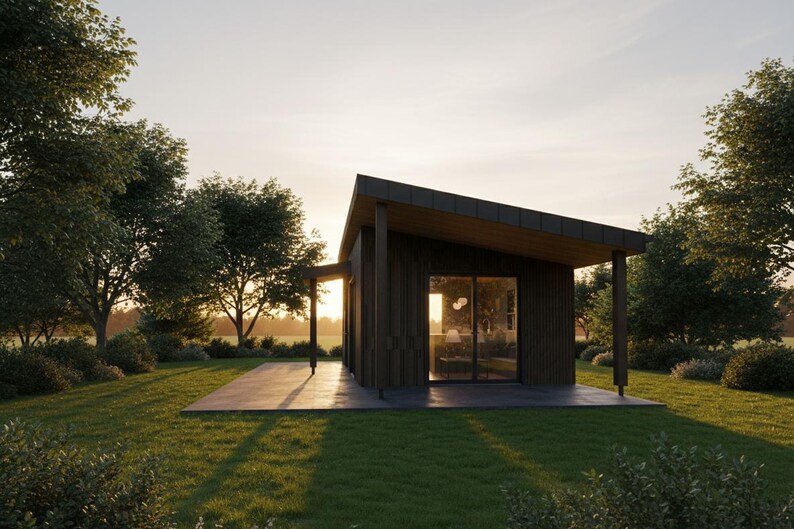
Hillstar shed-roof build
A realistic NoHo ADU timeline from first site visit to certificate of occupancy is roughly 7 to 11 months — at the efficient end of the LA-area range because there are no hillside, fire-zone, or HPOZ review layers.
Zoning, setback, lot-condition, and alley-access check on your property. Straight answer on what your lot can actually support — no obligation.
Floor plans, elevations, site plan, and a written scope with a clear price. Decisions on detached new-build vs. garage conversion vs. JADU happen here.
We submit to LADBS — standard plans or Express Permit where applicable. State law: 15 business days to completeness, 60 days to approval on a complete application.
Typical build is 3–6 months for a garage conversion, 4–6 months for a detached new-build. Direct access to your project manager from kickoff to certificate of occupancy.
Jeffrey Rhodes · Houzz review, January 2019Hillstar was great! We did a garage conversion and Lior was the best. He helped us plan every detail.
Lior was such a pleasure to work with for our guest house remodel. He was so easy to get in touch with, incredibly responsive and finished the job early.
— Amy Christine, Feb 20195.0 average across 17 Houzz reviews. Every project is the same licensed team, start to finish.
— Hillstar, CSLB #972213Straight answers to the questions we hear most often before the first site visit.
Most North Hollywood lots qualify. California state law (Government Code §65852.2) requires the City of Los Angeles to allow at least one ADU on single-family residential lots, and North Hollywood has a large R1 single-family footprint alongside mixed-use R2, R3, and R4 corridors on Lankershim Boulevard, Magnolia Boulevard, Vineland Avenue, and Victory Boulevard. Typical NoHo R1 lot sizes run roughly 5,500 to 7,500 square feet and support a detached new-build ADU, a garage conversion, or a JADU on most properties. NoHo is flat valley floor, not a hillside or Very High Fire Hazard Severity Zone, and no HPOZ covers North Hollywood itself — so the lot-by-lot complexity is low.
North Hollywood is a neighborhood within the City of Los Angeles, so ADU permits go through the Los Angeles Department of Building and Safety (LADBS). State-law timelines apply: LADBS must determine application completeness within 15 business days and approve or deny a complete ADU application within 60 days. LADBS publishes ADU standard plans and runs a streamlined Express Permit counter that can shorten turnaround on simple projects — a good fit for standard flat NoHo R1 lots. We handle the LADBS submittal, plan-check corrections, utility coordination with LADWP, and final inspection — end to end.
Very often, yes. A lot of the original North Hollywood single-family stock — particularly the post-war blocks between Chandler Boulevard and Victory, and on the streets east of Lankershim — was built with detached rear-yard garages accessed from the alley. State law allows garage-to-ADU conversions with no required setback from the existing structure's footprint, which shortens LADBS permitting versus a new detached build. We verify the existing slab, foundation, drainage, and structural condition first — older NoHo garages sometimes need footing or shear reinforcement to carry habitable-use loads and meet current energy code.
The NoHo Arts District is a creative-economy and specific-plan area but is not a Historic Preservation Overlay Zone (HPOZ). There are no HPOZs inside North Hollywood proper. The adjacent Toluca Lake neighborhood to the east does have HPOZ boundaries — if your parcel sits on the NoHo / Toluca Lake line, we verify HPOZ status at the first site visit. Specific-plan areas along Lankershim and Chandler have design and massing standards that can affect elevation choices on corridor-adjacent lots, but on the R1 residential streets the typical ADU is not meaningfully affected.
Usually not. California state law exempts ADUs from added on-site parking where the lot is within one-half mile walking distance of public transit, among other exemptions. Much of North Hollywood is inside that transit buffer because of the Metro B (Red) Line station at Lankershim and Chandler plus multiple Metro bus lines on Lankershim, Magnolia, Laurel Canyon, and Victory. On most NoHo lots the parking exemption applies and removes a common ADU design constraint on smaller properties.
Yes. California state law expressly allows ADUs to be rented as independent dwellings on single-family residential lots, and North Hollywood is one of the strongest ADU rental markets in the San Fernando Valley — transit access via the Metro B (Red) Line and easy freeway routing on the 170, 101, and 134 keep demand high, particularly among industry and creative professionals who work in the nearby studios. There is no citywide minimum lot size or owner-occupancy requirement on a standard ADU under state law. Junior ADUs (JADUs) — the up-to-500-square-foot units carved out of the primary residence — do continue to carry an owner-occupancy requirement. Short-term rental rules in the City of Los Angeles are a separate ordinance we can walk through if that is on the table.
No surprise change orders unless construction uncovers something that genuinely requires one. Direct access to your project manager from kickoff to certificate of occupancy.
CSLB #972213. Design, permitting, construction, and final inspection under a single license — not a network of subs you have to coordinate.
LADBS submittal, plan-check corrections, and LADWP utility coordination run in-house. You don't chase plans between an architect and a separate permit expediter.
Every inquiry gets a real answer within 24 hours. Every project gets a named project manager you can reach directly — not a call center.
17 reviews, 5.0-star average. Every project from first site visit through final inspection is the same licensed team, start to finish.
Building outside North Hollywood too? Tap a nearby LA-City neighborhood for local details:
Valley Village· Studio City· Sherman Oaks· Arleta· Pacoima· Los Angeles (citywide)
We handle more than one project type in NoHo. Explore related services for your home: