Hiring a General Contractor vs Going Owner-Builder for an ADU in Los Angeles
Owner-builder means you pull the LADBS permit in your name, hire subs directly, and coordinate inspections yourself. A licensed general contractor pulls the permit under their CSLB number, manages all trades, and carries liability insurance. Los Angeles ADU work involves Title 24 compliance, fire-rated assemblies, and utility upgrades that stall when one trade misses a rough-in detail another trade depends on.
What Does Owner-Builder Actually Mean in Los Angeles?
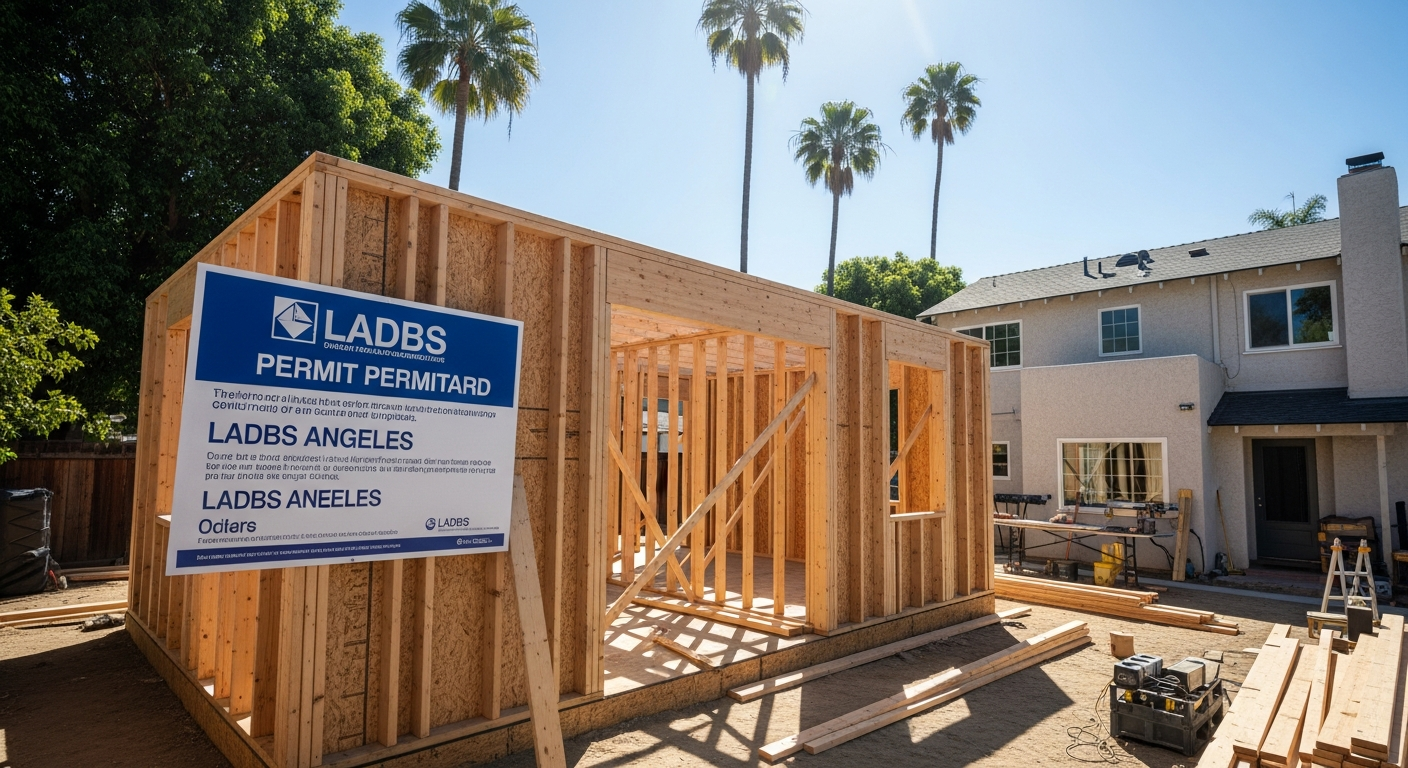
Owner-builder means you are listed as the contractor of record on the LADBS permit. You sign the application, post the placard, schedule inspections, and hire every trade directly. The city treats you as the responsible party for code compliance, so you answer correction notices and coordinate re-inspections when framing or plumbing fails. A licensed general contractor pulls the permit under their CSLB number, carries the required liability and workers' compensation insurance, and sequences foundation, framing, MEP rough-in, insulation, drywall, and finish trades.
Los Angeles ADU construction is more than carpentry. Title 24 energy compliance requires calculations and documentation matched to the approved plan set; your engineer and LADBS plan-checker confirm the specifics for your project. Fire separation between the ADU and the main house is a code requirement inspectors check in the field; your plan-checker or engineer will specify the exact assembly for your project. Utility service upgrades can add their own application and inspection steps outside the LADBS permit timeline; confirm this with your contractor early. As owner-builder, you coordinate all of that yourself.
Where Do Homeowners Trip Up as Owner-Builders?
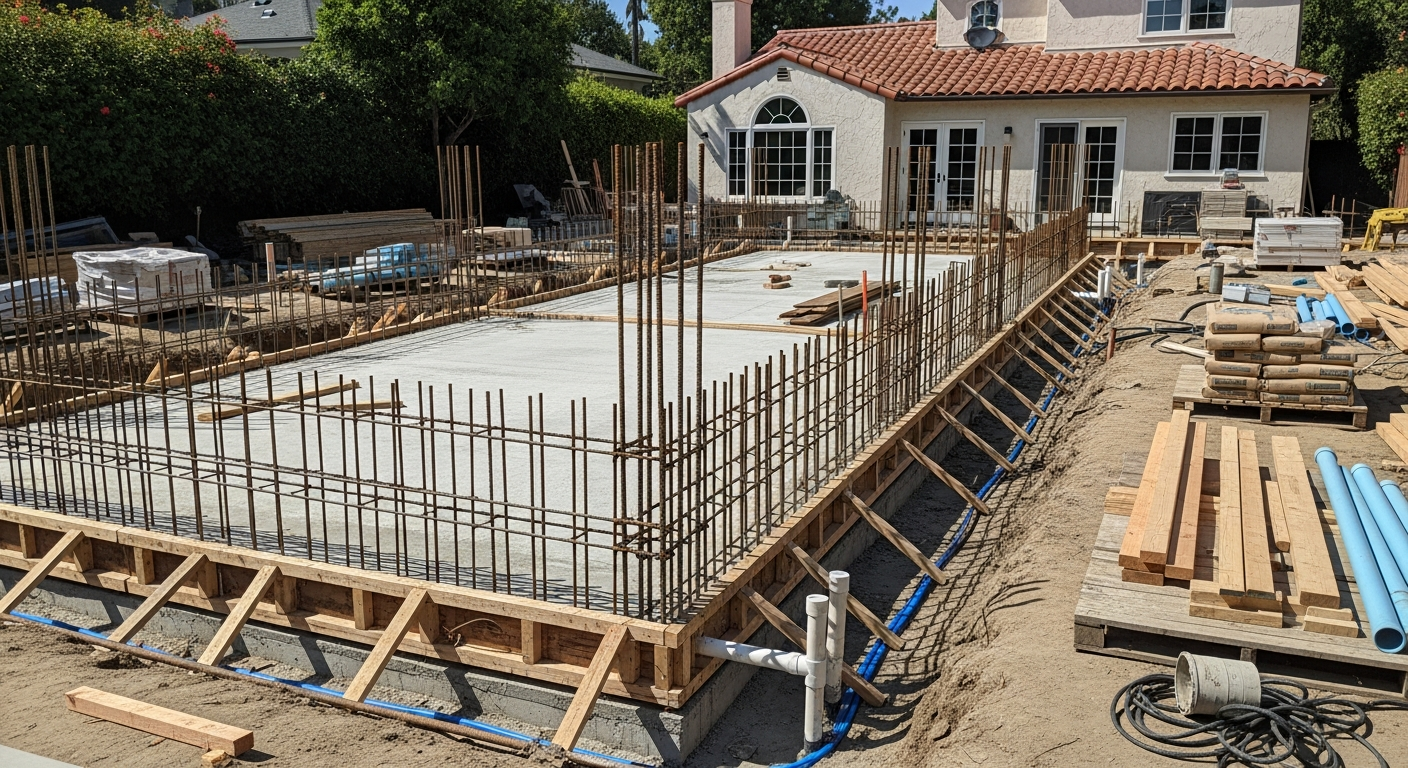
The most common trip point is sequencing. Concrete cures before framing, framing passes before plumbing and electrical rough-in, and insulation must be visible before drywall. Schedule the electrician before the plumber sets waste lines and the electrician either waits or drills into the plumbing layout—the rough inspection fails and you pay both trades to return. Inspectors also call the morning of and expect someone who knows the plans on-site; if you are at your day job and the framer is in Encino at eight, the inspection gets postponed and the drywall crew sits idle.
- Permit corrections that require a second or third inspection because one trade's work wasn't complete when the inspector arrived.
- Missing Title 24 documentation that the inspector asks for at final.
- Subcontractor liens filed because the homeowner didn't verify that the framer paid their lumber supplier or that the electrician carried workers' comp.
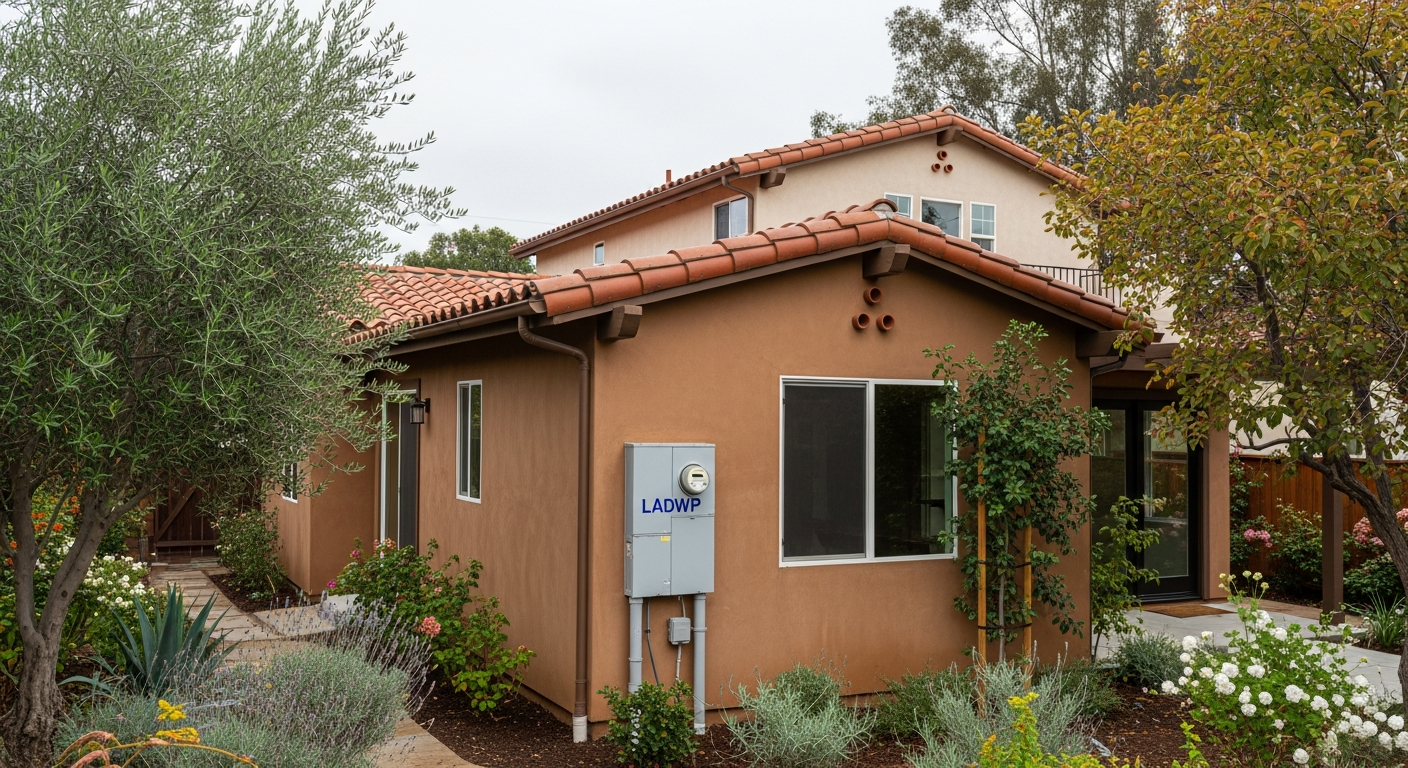
- Utility coordination delays when LADWP or SoCalGas requires a separate inspection that wasn't on the original permit timeline.

What Does a Licensed General Contractor Bring to an ADU Build?
A licensed general contractor holds a CSLB B license that covers the full scope—foundation, framing, plumbing, electrical, mechanical, roofing, and finish. They carry liability insurance and workers' comp. They also manage the plan set: stamped structural calculations, Title 24 forms, and a soils report when the lot is on a hillside or in a liquefaction zone. Owner-builder submissions often miss the shear-wall schedule or beam callouts, and LADBS returns the application with corrections that add time.
- Direct relationships with inspectors and plan-checkers, so the contractor knows what LADBS expects on a hillside lot or in an HPOZ district.
- Trade crews who show up on schedule and whose work passes inspection the first time.
- Experience reading correction notices and knowing whether a red-tag is a quick fix or a design issue that requires the engineer to revise the plans.
- A one-year workmanship warranty, so if a window leaks or a door binds after final, the contractor returns and fixes it.
What Are the Real Costs of Going Owner-Builder?
Owner-builder is not no-cost project management. You pay for coordination with your own time and absorb the risk of hiring trades who may not carry insurance or who file a lien in a payment dispute. Hidden costs land in three places: failed inspections, material waste from lumber ordered off rough dimensions, and schedule delays that cascade through every downstream trade.
What Should You Ask a General Contractor Before Signing?
Ask for the CSLB license number and verify it on the state site. Hillstar Construction Inc is CSLB 972213, active and in good standing. A contractor who hesitates to provide the number or whose license shows a lapse is not someone you want on a project LADBS will inspect at every phase. Ask how they handle permit corrections—every project gets one, and the question is how fast the engineer, the trade crew, and the re-inspection get lined up. Ask for references from recent ADU projects in Encino, Sherman Oaks, or Woodland Hills. ADU work is different from home remodeling: Title 24 is stricter, fire-rating details are more complex, and utility coordination crosses multiple agencies.
- Who schedules inspections—does the contractor handle it, or do you call LADBS yourself?
- What happens if a trade damages landscaping or hardscape during excavation or delivery?
- How are schedule changes communicated—weekly update, or day-of surprise?
- What is included in the contract scope—HERS rater, Title 24 forms, utility coordination, or are those separate line items?
How Does LADBS Treat Owner-Builder Permits Differently?
LADBS applies the same code to both kinds of permit. In practice, being able to speak to the plans in the field matters: an owner-builder who can't answer an inspector's question about the shear-wall schedule or the beam span on-site is more likely to get a correction notice and a re-inspection. Owner-builder permits also trigger added scrutiny on resale—title companies and buyer's agents prefer contractor-pulled permits because they signal that the work was done to code by a licensed party. If you plan to sell within a few years of finishing the ADU, a contractor-pulled permit is the cleaner path.
What Are the Insurance and Liability Differences?
A licensed general contractor carries commercial general liability and workers' comp. If a framer falls off a ladder or a plumber's torch starts a small fire, the contractor's policies respond and the homeowner is not personally liable. Owner-builders are personally liable: a homeowner's policy typically excludes construction activity, so an injured subcontractor can sue you directly. Builder's risk policies exist but are expensive, and you still have to verify that every trade carries its own coverage.
When Does Owner-Builder Make Sense?
Owner-builder makes sense when you have real construction experience, can be on-site during business hours, and the scope is simple enough that sequencing is not a major risk. A detached ADU with a slab, wood framing, and standard finishes is more forgiving than a two-story unit with a raised foundation, complex roofing, and a shared fire wall. It also fits when you are doing most of the work yourself. If you are hiring out every trade and acting only as coordinator, you are taking on the risk of a general contractor without the experience or insurance that makes the role manageable.
What Does Hillstar Bring to ADU Construction in Los Angeles?
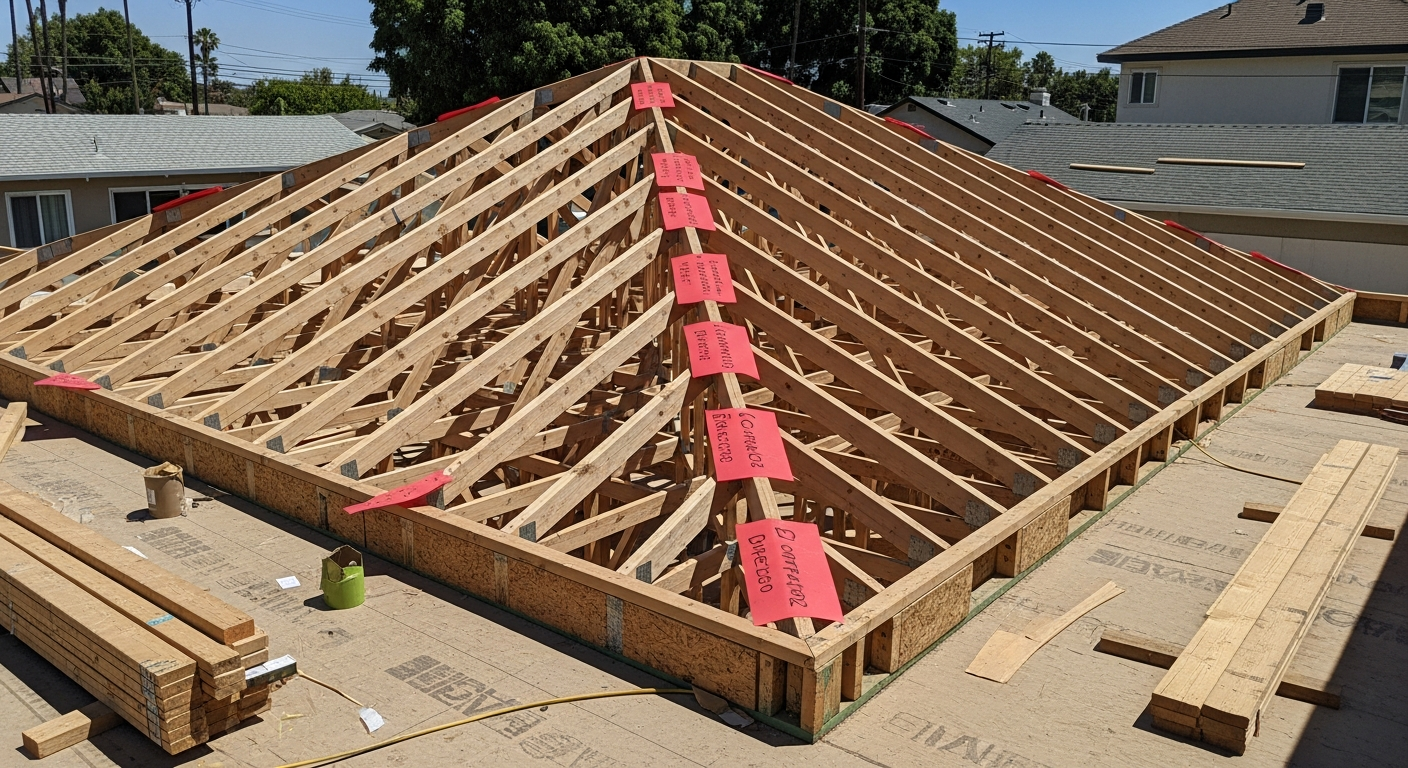
Lior Mazor, who leads Hillstar Construction Inc, brings over 40 years of hands-on construction experience to ADU work in Los Angeles. We hold CSLB license 972213, carry full liability and workers' comp, and work directly with LADBS inspectors and plan-checkers across the city. We manage the full process—site evaluation, engineer coordination, Title 24 compliance, fire-rated assemblies, final inspection—and we handle concrete foundations on hillside lots, roofing matched to the main house, and stucco finishes that meet HPOZ design guidelines. We coordinate LADWP and SoCalGas, sequence inspections, and back the work with a one-year workmanship warranty.
ADU construction in Los Angeles is not a side project. It is a permitted, code-compliant structure that will be part of your property for decades. The difference between a general contractor and an owner-builder is not just cost—it is risk, time, and the likelihood the project finishes on schedule. If you are ready to move forward, call Hillstar. We will walk the site, review the plans, and give you a realistic picture of the permit process.
FAQ
Can I start as an owner-builder and switch to a general contractor midway through the project?
Confirm with your plan-check office before you switch — whether and how the responsible party on an active permit can be changed, and what documentation it takes, depends on your specific project.
Does LADBS require a bond for owner-builder ADU permits?
Confirm the current bonding requirement for your specific owner-builder permit with LADBS; it can depend on the scope of work.
What happens if an owner-builder hires unlicensed subcontractors?
Hiring unlicensed trades for licensed work violates California law. An inspector who finds unlicensed work can issue a correction notice requiring it to be redone by a licensed party before the permit can proceed. The homeowner is also personally liable for injuries or property damage.
How does Title 24 compliance work on an owner-builder ADU permit?
Title 24 is the same for both permit types. Submit energy calculations with the application, and provide the compliance forms at final inspection.