
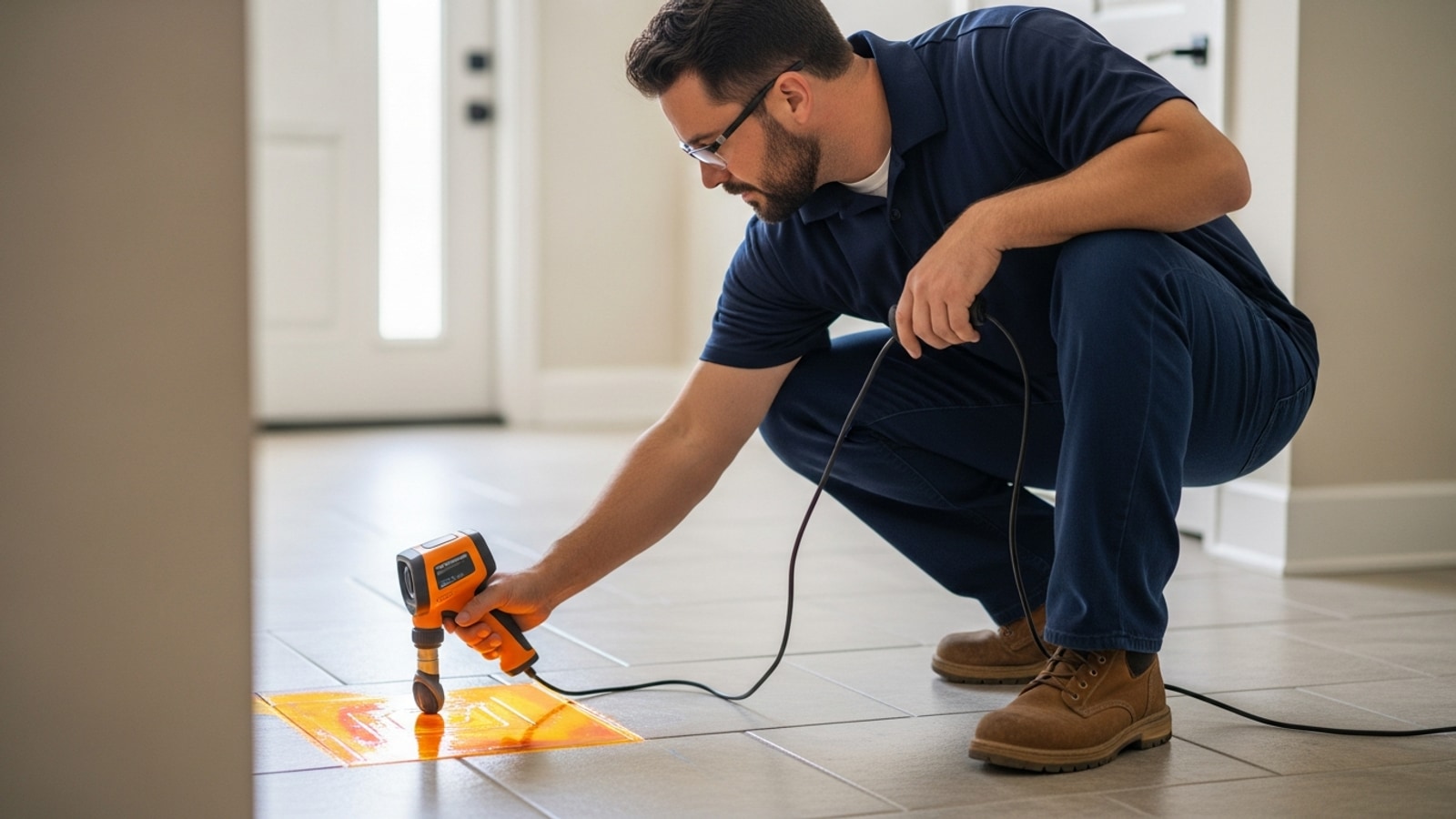
Older single-family homes in Los Angeles often have copper water supply lines running under the concrete slab. When one of those lines develops a pinhole or a corrosion failure, water surfaces under the slab — sometimes without any visible damage in the rooms above. That hidden failure is what a slab leak is. This post walks through how a Los Angeles plumber narrows down where the leak is hiding and what the repair options look like before any concrete gets cut.
Signs a slab leak is the cause
A few symptoms tend to show up before any visible water:
- A warm spot — or an unusually cool spot — on a tile or wood floor, especially near the kitchen or a bathroom.
- A water bill that climbed without a matching change in usage.
- The sound of running water inside a wall or floor when every fixture is off.
- Reduced pressure at one fixture or one zone of the house.
- A faint mildew or musty smell along a baseboard or in a closet on a slab.

How a Los Angeles plumber locates the leak
Detection is the first half of the work. The home runs through a closed pressure test to confirm the leak is on a supply line and to isolate which side — hot or cold — is affected. From there, the plumber narrows the location with a mix of tools:
- Acoustic listening devices that pick up the rush of water through a pinhole leak in a pressurized line.
- Thermal imaging cameras that read warm zones above hot-water lines.
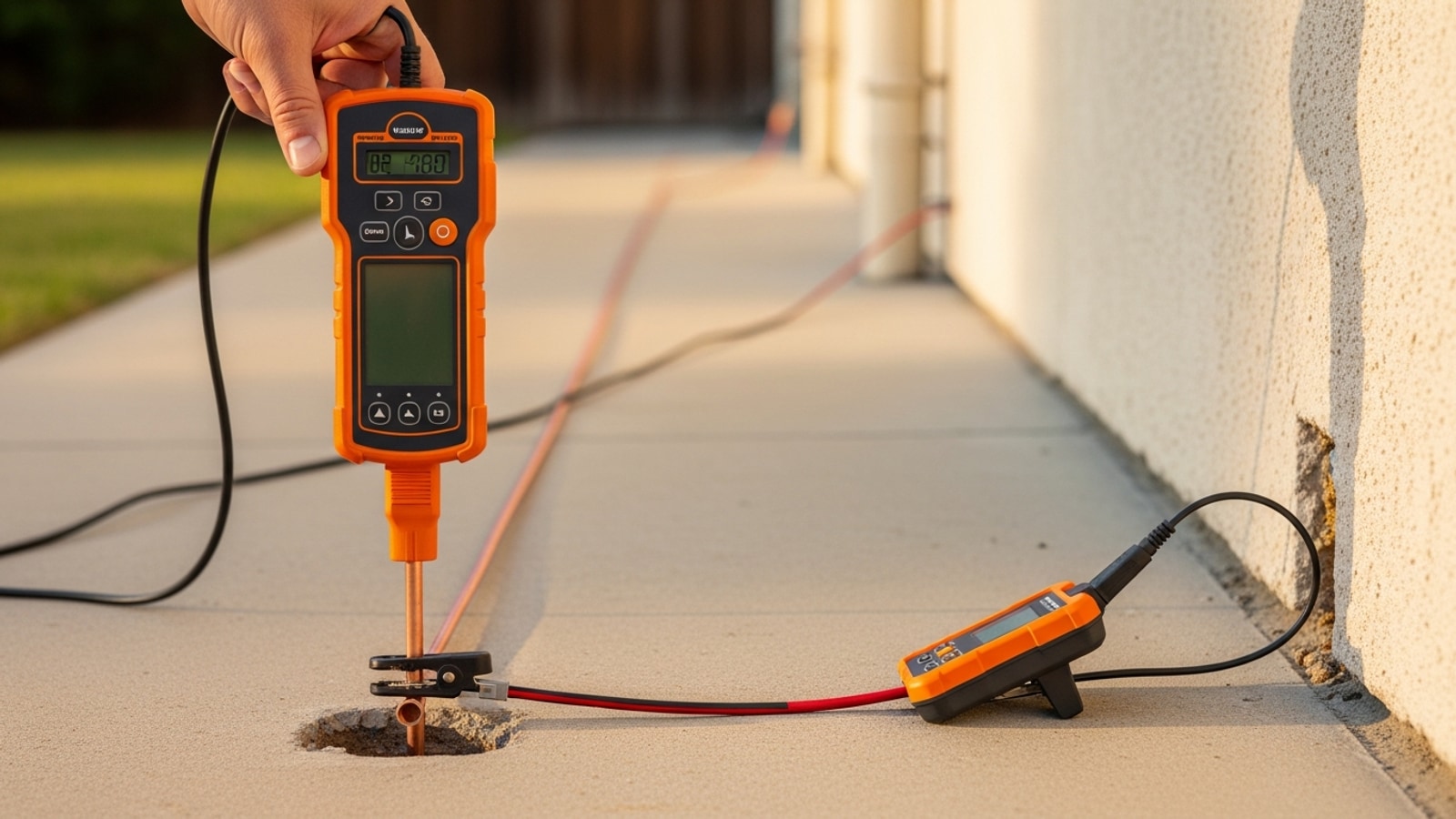
- Electronic line locators that trace a copper line through the slab and through the walls.
- Tracer-gas methods for stubborn cases where acoustic and thermal both come up short.
Repair approaches
Once the leak is located, the choice of repair depends on the age of the rest of the system, the depth of the slab, and what is sitting on top of the floor.
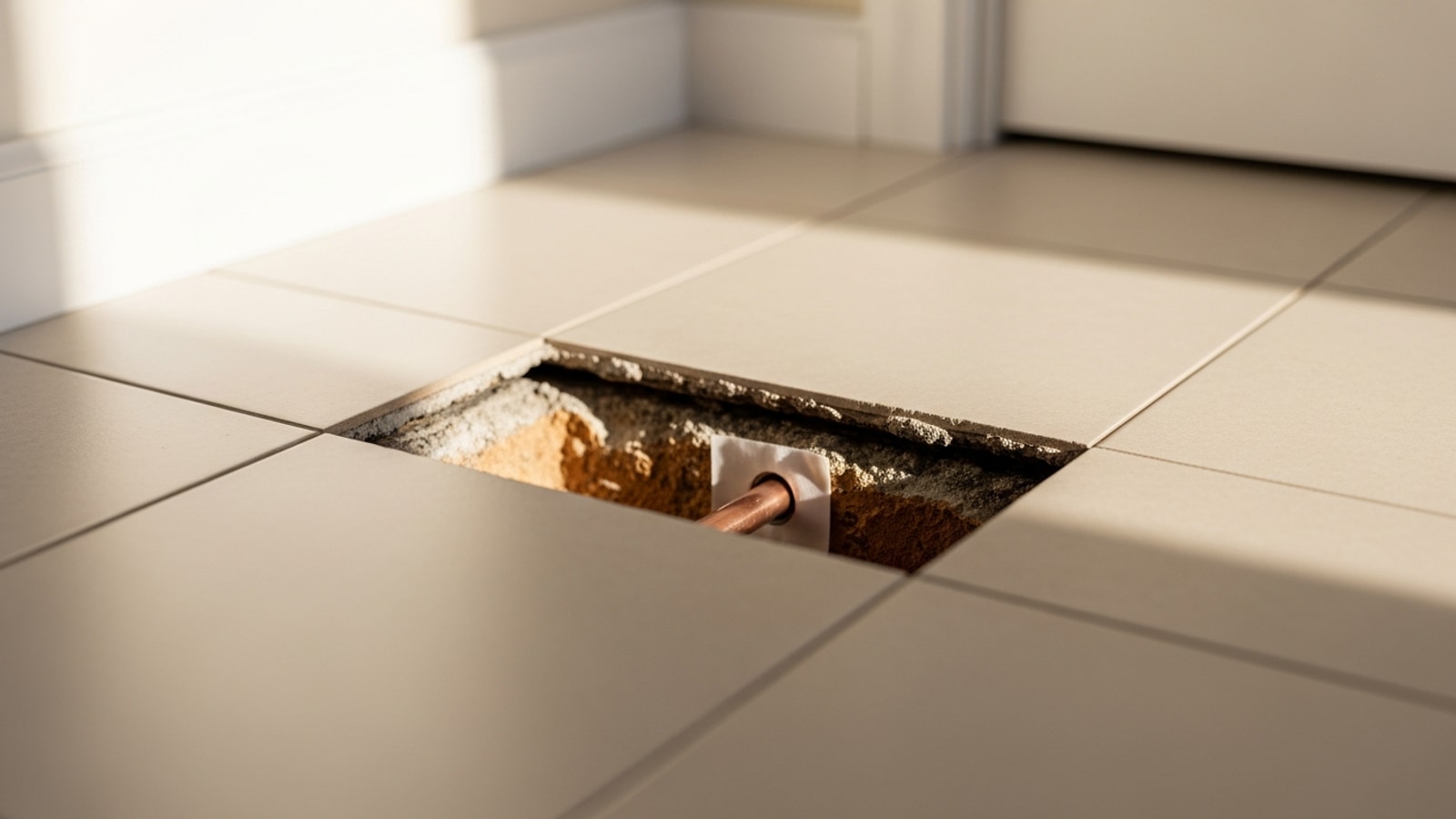
- Spot repair through the slab — break a small section of concrete, repair the line, patch back. Targeted, with minimum disruption to the rest of the floor.
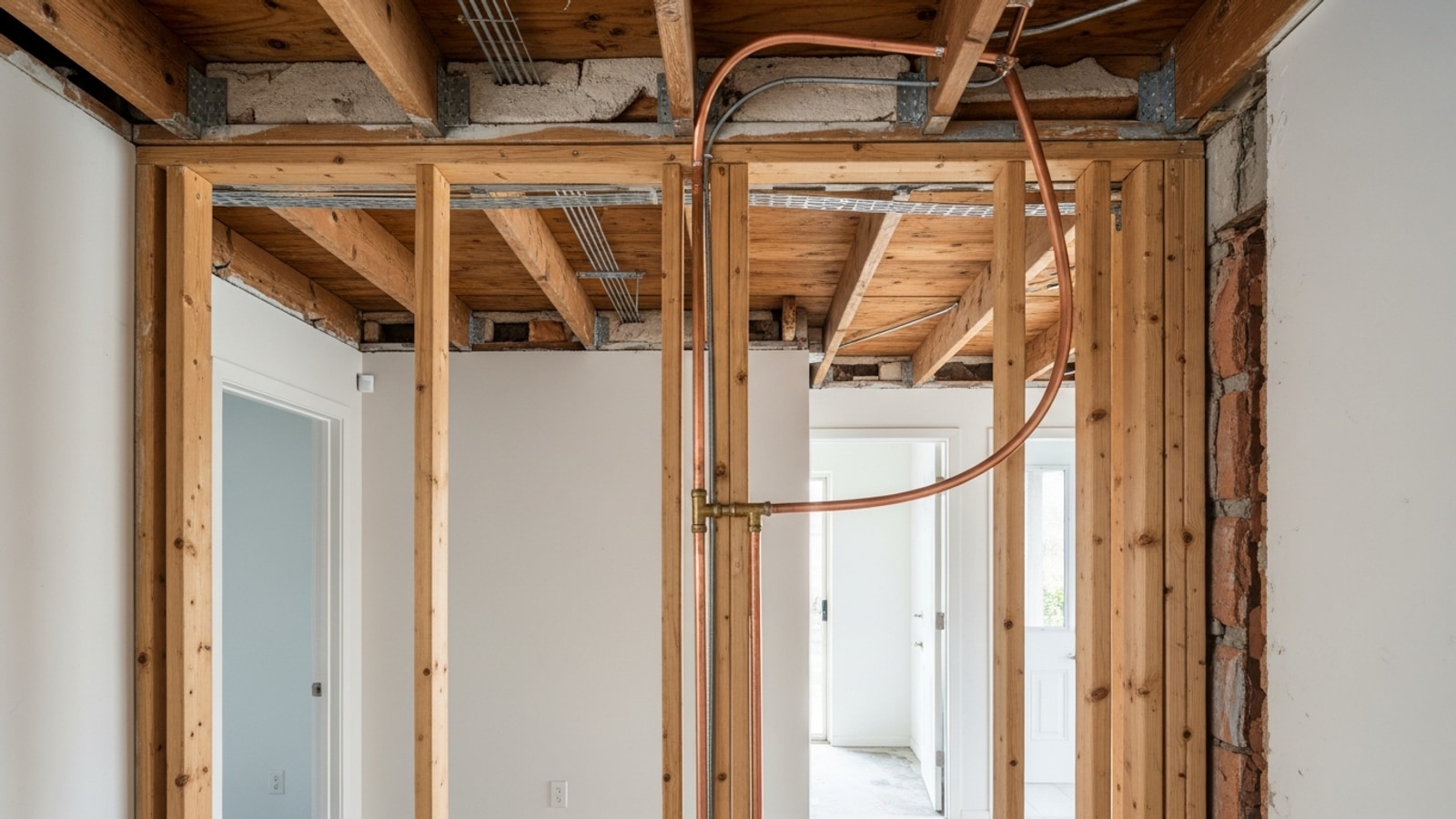
- Re-route around the slab — abandon the failed segment and run a new supply line overhead through interior walls or the attic. No concrete cut, but more wall patching afterward.
- Partial repipe — replace the affected branch entirely. Useful when the same branch has had earlier issues.
- Whole-house repipe — if the rest of the supply system is similar age and showing similar signs, replacing the whole system at once is often the cleaner overall move.
How the repair choice usually gets made
The deciding factor is usually the condition of the rest of the system, not the leak itself. A first pinhole in an otherwise healthy system points to a spot repair or a re-route. A branch with a history of trouble argues for replacing that branch outright. And when this is already the second or third leak, or the exposed lines and water heater connections show the same age and symptoms, patching one segment only postpones the next call. That is when a whole-house repipe becomes the practical answer: one project, one permit cycle, and one round of wall patching instead of a string of emergency repairs.
Coordinating with the rest of the house
The plumber's scope is the supply line itself. Tile, hardwood, drywall, and any cabinetry sitting over the work area need to be opened and closed back, and that part of the job is normally a general contractor's lane. On a Hillstar job, the plumber and the GC line up the access cuts, the repair sequence, and the finish work so the homeowner does not see two separate disruptive visits.
The same logic extends to remodels. When the leak surfaces under a kitchen or a bathroom that was already due for an update, it often makes sense to fold the plumbing work into the remodel scope. Plumbing reroutes are a normal part of a bathroom remodel anyway, and a floor opened for a slab repair is a floor that does not need to be opened a second time for new tile. Sequencing the leak repair, any repipe work, and the remodel as one project keeps the disruption to a single window instead of two.
Permits and inspection
A residential slab leak repair is permitted through LADBS as a plumbing permit. The inspection happens at the open-pipe stage, before any patching or finish work goes back. A plumber holding a CSLB C-36 plumbing classification handles the permit submission and the inspection visit.
If the symptoms above match what you are seeing in your Los Angeles home, the right next step is a closed-pressure test plus a leak-location pass — not a guess at where to cut. The diagnosis comes first; the repair plan follows.