
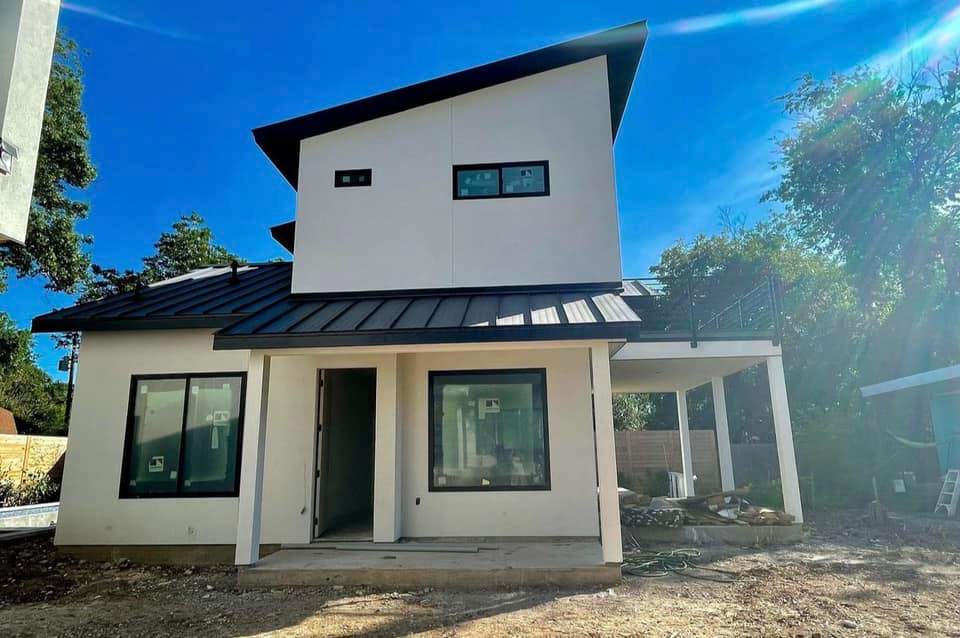
If you are researching ADU cost in Los Angeles, the honest answer is that the number depends on your lot, your utilities, your ADU type, and your finishes — and a realistic figure usually requires a site visit. This post walks through the actual drivers that move the total up or down, what to ask on the first site visit, and why the lowest quote is not always the most reliable choice.
Start with which ADU type fits your lot
The single biggest lever on ADU cost is the type of ADU, not the finishes. In Los Angeles you are typically choosing between four paths:
- Detached new-build ADU. A freestanding structure built from the ground up. Most flexible on layout and orientation, most involved on foundation, utilities, and site prep.
- Attached ADU. A new structure sharing one or more walls with the primary home — similar coordination to a home addition. Saves on some envelope work but adds coordination with the existing framing and roof.
- Garage conversion ADU. Converting an existing detached or attached garage. Keeps the foundation and sometimes part of the envelope, but older garages often need structural and moisture-barrier upgrades before they meet habitable code.
- JADU (Junior ADU) conversion. Converting space inside the primary home up to a state-defined size cap, with a shared entry path per state rules. Smaller scope, but bounded by the existing walls.
Each path has a different base scope of work. Two quotes that look wildly different on paper are often comparing different ADU types for the same lot. Before you compare numbers from different contractors, make sure each is quoting the same type of ADU.
The site-specific factors that change the number
Once the ADU type is settled, the next set of cost drivers are physical and specific to your lot:
- Lot slope. A flat lot can often take a standard slab or stem-wall foundation. A sloped lot — common in the hills above Sherman Oaks, Encino, Highland Park, and much of the westside — may need a stepped foundation, retaining structure, or pier-and-beam design, each of which changes the foundation scope substantially.
- Access for heavy equipment. If a pump truck, excavator, or concrete mixer cannot reach the build area without crossing the primary home's yard or breaking hardscape, the site work is more involved. Lots with narrow side gates or deep setbacks almost always need either hand-dig labor or a plan to route equipment through.
- Soil and drainage. Some parts of the LA basin sit on expansive clay; hillside lots may need a soils report and engineered drainage. These are discoverable up front, not surprises, but they affect structural scope.
- Trees and utilities you cannot move. Protected trees, existing sewer laterals, electrical service masts, and gas meter locations all constrain where the ADU can sit. Every constraint that pushes the building footprint adds to site prep.
None of these are the same for any two lots. That is why a site visit is the first honest step — not a quote from a plan.
Utility upgrades: the part most cost estimates miss
A detached ADU is a second dwelling, and it needs its own connections for at least four services: electrical, water, sewer, and sometimes gas. In older Los Angeles neighborhoods, the existing service at the primary home may not support the additional load, and the upgrade is part of the ADU scope even though it sits on the main house side.
Common utility-driven scope items:
- Electrical panel upgrade. If the primary home still runs a 100-amp or older panel, adding an ADU usually means upgrading to 200 amps at the main, plus a subpanel at the ADU. Hillside homes sometimes need a new service drop or underground feed.
- Sewer lateral. The existing lateral from the house to the city main may need to be upgraded, relined, or replaced — particularly in neighborhoods with original cast iron or clay laterals. A sewer camera before design is inexpensive relative to the surprise.
- Water service. A single 3/4" service from the street may be adequate or may need upsizing to a 1" service depending on combined fixture count.
- Fire sprinklers. Depending on the primary dwelling's existing sprinkler status, the ADU may or may not trigger a sprinkler requirement. This is a code-driven decision that a contractor can confirm after reviewing the primary dwelling.
These items rarely show up in a first conversation because they require looking at the specific house. They often move the total more than the finishes do.
The permit path shapes scope and soft costs
In Los Angeles, an ADU goes through LADBS plan check, and how that review runs depends on the lot and the conditions the plans meet. Either way it requires:
- A full set of stamped plans (architectural, structural, Title 24 energy compliance, MEP as applicable).
- Inspections at each phase (foundation, framing, rough plumbing and electrical, insulation, final).
- Fees paid to the city and, on some lots, to the utility company for service connections.
The soft costs — design, structural engineering, Title 24 compliance, permit fees, and any required surveys or soils reports — are their own category separate from construction. They are not optional, and they are not always included in a headline construction number. When comparing contractor quotes, confirm which soft costs are inside the number and which are handled separately.
Lot-specific conditions can add review steps — a hillside location, a coastal zone, or a Historic Preservation Overlay Zone. None of these make an ADU impossible; they do change the timeline and the soft-cost category. Ask your contractor to confirm the review path for your lot with LADBS before you sign.
Questions to ask a contractor on the first visit
Before signing anything, get plain answers to:
- Which ADU type are you quoting — detached, attached, garage conversion, or JADU?
- What did you observe about the existing electrical panel, sewer lateral, and water service, and what is your scope for each?
- Are you including the soft costs (design, structural engineering, Title 24, permit fees) inside your number, or are those separate?
- What is your scope if the soils report or sewer camera turns up an issue?
- Is this ADU reviewable under that path on this lot, or are there conditions (hillside, HPOZ, coastal) that change the review?
- Which parts of the schedule depend on city inspections and utility company coordination, not on your crew?
- What is your allowance for finishes, and what happens when we exceed it?
A contractor who knows LA ADU work will answer these clearly. If the answers hedge on utilities or the permit path, press for specifics before signing.
FAQ
How much does it cost to build an ADU in Los Angeles?
The honest answer is that the total depends on the ADU type, the lot, the utility scope, and the finishes — there is no credible single number that applies to every home. A contractor who gives you a firm total over the phone is guessing. A site visit plus a utility walk is generally the most reliable path to a workable estimate. A realistic figure becomes possible after that visit.
What are the biggest cost drivers for an LA ADU?
In rough order of how much they move the number: the ADU type you choose, the lot and site work required, the utility upgrades needed at the primary home, the foundation type, and then the finishes. Finishes matter, but they rarely dominate the total the way site and utilities do.
Do I need a separate electrical service for the ADU?
Usually not a separate service from the utility, but typically a panel upgrade at the main house and a subpanel at the ADU. The exact scope depends on the existing panel's capacity and the ADU's load calculation. A contractor can confirm after reviewing the existing panel.
Will my ADU require fire sprinklers?
It depends on whether the primary dwelling already has sprinklers and on the specific code path for your project. This is a building-department call, not a designer preference. A contractor familiar with LADBS review can confirm this early, before design is finalized.
How long does it take to build an ADU in Los Angeles?
Timeline depends on design, plan check, inspections, material lead times, utility coordination, and site conditions. There is no honest fixed answer from a photograph — A realistic estimate is shared after a site visit.