Hiring a General Contractor vs Going Owner-Builder for an ADU in Canoga Park
An owner-builder permit lets you act as your own general contractor, pulling the permit yourself and hiring subs directly. A licensed general contractor pulls the permit under their license, coordinates trades, and carries the liability. The choice turns on your bandwidth, your risk tolerance, whether you're willing to sign the LADBS owner-builder declaration as the party legally and financially responsible for the project, and whether you meet CSLB's owner-builder qualifications.
Get the free Contractor Bid Comparison Checklist
Print it, put it next to your proposals, and find out what each bid actually includes - line by line, before you sign anything.
Get the free checklistWhat 'General Contractor vs Owner-Builder' Actually Means in Canoga Park
A general contractor holds a CSLB license, pulls the building permit under that license, and coordinates all trades—foundation, framing, plumbing, electrical, roofing, finish. An owner-builder permit puts you in that role: you sign the LADBS owner-builder declaration, pull the permit yourself, hire each sub directly, and carry the liability. The permit names you as the responsible party of record.
For home improvements, CSLB's owner-builder qualifications require that the work site be your principal residence, occupied for 12 months prior to completion of the work, that the work be performed prior to the sale of the home, and that you use the contractor license exemption on no more than two structures during any three-year period. The LADBS declaration lists those same three conditions for owner-builder electrical, plumbing or mechanical work that requires a qualified installer.
- The owner-builder declaration is a form you read, initial statement by statement, and sign before LADBS will issue the permit.
- LADBS requires a copy of your driver's license, a notarized form, or other acceptable verification of your signature when the permit is issued.
- Whoever you hire for work that requires a license—one licensed general contractor running most of the project, or separate licensed subcontractors for each trade—must hold a current, active CSLB license in the right classification. CSLB warns owner-builders about unlicensed individuals claiming to be contractors who offer to guide you through the owner-builder process for a fee; they are breaking the law.
Comparing contractors for this project?
The free checklist walks you through every line a complete proposal should carry, so you can compare bids on scope instead of price alone.
Get the free checklistWhere Homeowners Trip Up on Owner-Builder ADU Projects
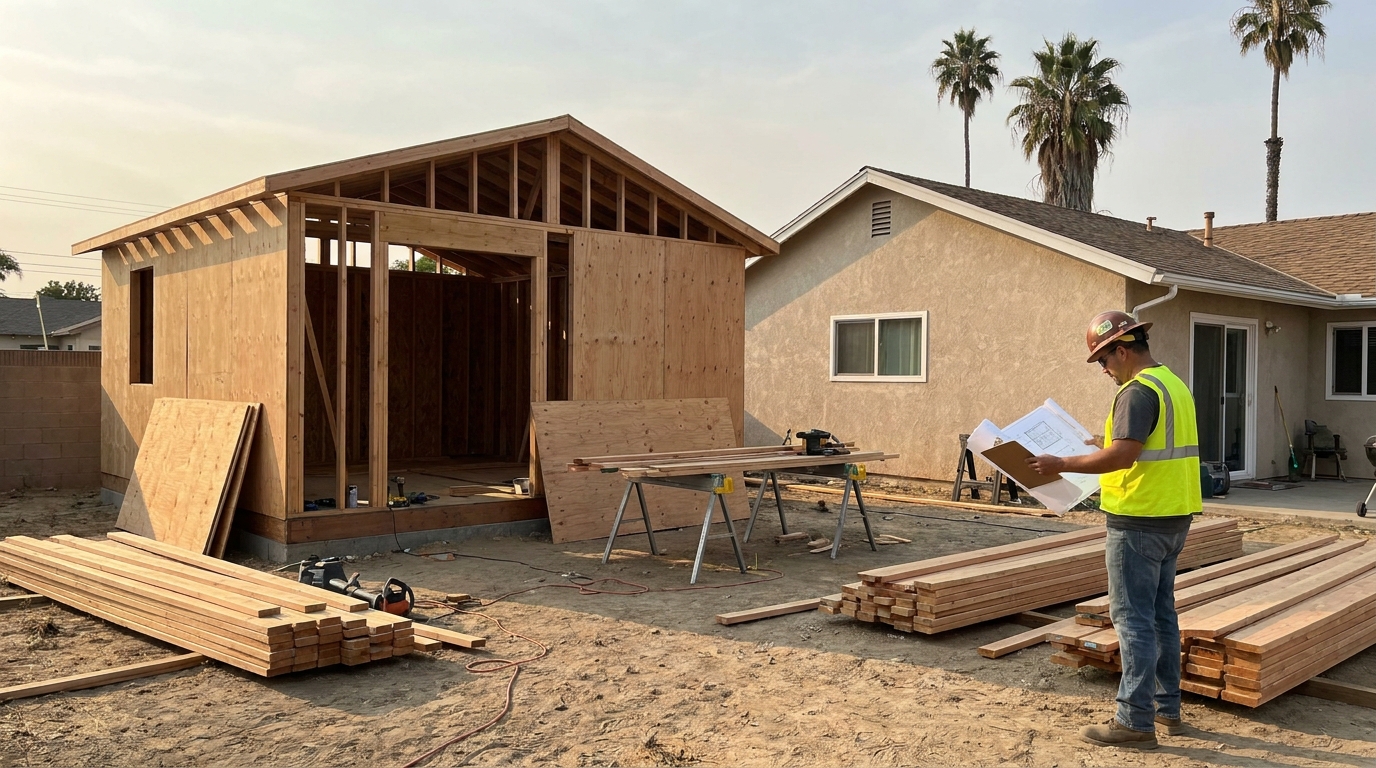
The most common stumble is underestimating the coordination load. Each trade must be scheduled in sequence, and each inspection must pass before the next phase starts, so a missed or failed inspection stalls the entire job until the correction is made and the inspector returns.
- Inspection scheduling: LADBS requires notice before each inspection call, and inspectors work on their own routes—coordination falls to you.
- Material delivery timing: lumber, windows, and finish materials must arrive before the phase that installs them, but not so early that they sit exposed to weather.
- Code interpretation: Title 24 energy compliance, fire-rated assemblies, and accessibility thresholds are not intuitive from the printed code.
Hillstar Construction Inc, led by Lior Mazor, who brings over 40 years of hands-on construction experience, sees owner-builder projects stall most often at the rough inspection.
What Liability and Insurance Look Like Under Each Path
A licensed general contractor carries general liability insurance and workers' compensation coverage for their employees and subs. If a plumber's apprentice is injured on your property, the contractor's workers' comp policy responds. If a framing error damages the neighbor's fence, the contractor's general liability policy covers the claim.
As an owner-builder, you become the employer of record for any worker without their own coverage. California law requires workers' compensation insurance the moment you hire an employee or a subcontractor who does not carry their own policy.
- Each subcontractor you hire must provide proof of their own workers' comp policy or be added to yours.
- General liability insurance protects you from third-party claims—property damage, bodily injury—but does not cover your own workers.
How Permit Prep and Plan Check Differ Between the Two Paths
LADBS requires stamped drawings from a licensed architect or engineer when the ADU includes structural elements—foundation, framing, roof—or when the property sits in a hillside or high-wind zone. The stamp requirement is the same whether a general contractor or an owner-builder pulls the permit. The difference is in how corrections are handled.
A general contractor reviews the correction notice with the design professional, identifies which items require a revised sheet and which can be addressed with a note or detail, and resubmits a focused response. An owner-builder often resubmits the entire plan set with changes scattered across multiple sheets, which triggers another full review cycle.
- Energy compliance: Title 24 requires a CF-1R form prepared by a certified energy consultant; the form must match the construction documents.
- Setback verification: LADBS checks that the ADU footprint complies with rear and side setback rules.
- Fire separation: when the ADU sits within a certain distance of the main house, fire-rated assemblies and opening protection are triggered.
- Utility service: the Bureau of Engineering confirms sewer availability at the street, and LADWP provides a will-serve letter for water and power.
What to Ask a General Contractor Before Signing the ADU Contract
Start with the CSLB license number and verify it yourself on the CSLB website. The license must be active, and the classification must include B General Building Contractor. Check the license history for any disciplinary actions or workers' comp coverage lapses.
- Who pulls the permit, and is the permit fee included in the contract or billed separately?
- What does the payment schedule look like, and does it comply with the down-payment cap California law sets?
- How are inspections scheduled, and who coordinates the inspector's visits?
- What happens if the project uncovers an issue not visible during the walkthrough—old foundation damage, undersized electrical service, or prior work not on the property's permit record?
- Does the contractor carry general liability and workers' comp insurance, and will they provide certificates naming you as additional insured?
Hillstar Construction Inc walks every Canoga Park ADU site before preparing an estimate. The walkthrough identifies existing conditions—soil type, slope, utility locations, access for equipment—that affect the scope and the permit requirements.
When Owner-Builder Makes Sense and When It Doesn't
Owner-builder works when you have construction experience, the bandwidth to manage multiple trades, and a project that fits CSLB's owner-builder qualifications described above. It works when the ADU is a simple detached structure on flat ground with no unusual site conditions, when you can absorb delays without financial pressure, and when you're comfortable navigating LADBS plan check and inspections.
It does not work when your timeline is tight, when the property has challenging access or slope, when you plan to sell the home before the work is finished, or when you lack the time to coordinate inspections and material deliveries.
- If you're building the ADU to increase resale value and might sell soon, a licensed contractor sidesteps CSLB's owner-builder qualifications entirely.
- If the site requires grading, retaining walls, or utility relocation, the coordination load multiplies.
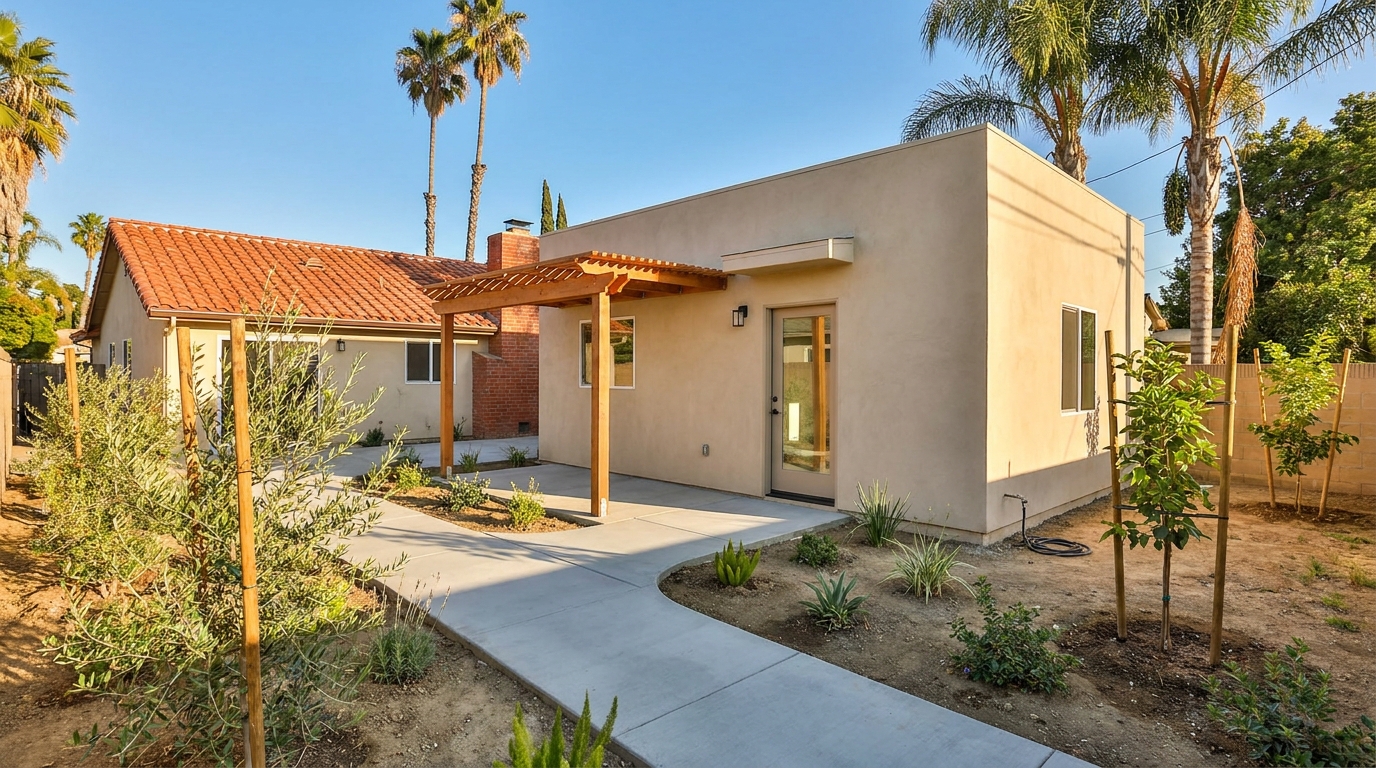
What Canoga Park Properties Face During ADU Permit Prep
Canoga Park properties built before the 1980s often have older electrical service—100-amp panels that cannot support the additional load an ADU introduces. LADWP requires a load calculation, and if the total exceeds the existing service capacity, a panel upgrade is part of the scope.
- Setback rules: LADBS allows reduced setbacks for ADUs under state law, but the specific distances depend on lot size, existing structures, and whether the ADU is attached or detached.
- Fire sprinklers: if the main house has sprinklers, the ADU may require them as well, depending on the distance between the two structures.
- Parking: state ADU law eliminates the parking requirement in most cases, but LADBS still checks that the driveway and street access meet fire-department standards.
How Experienced Contractors Approach ADU Coordination in Canoga Park
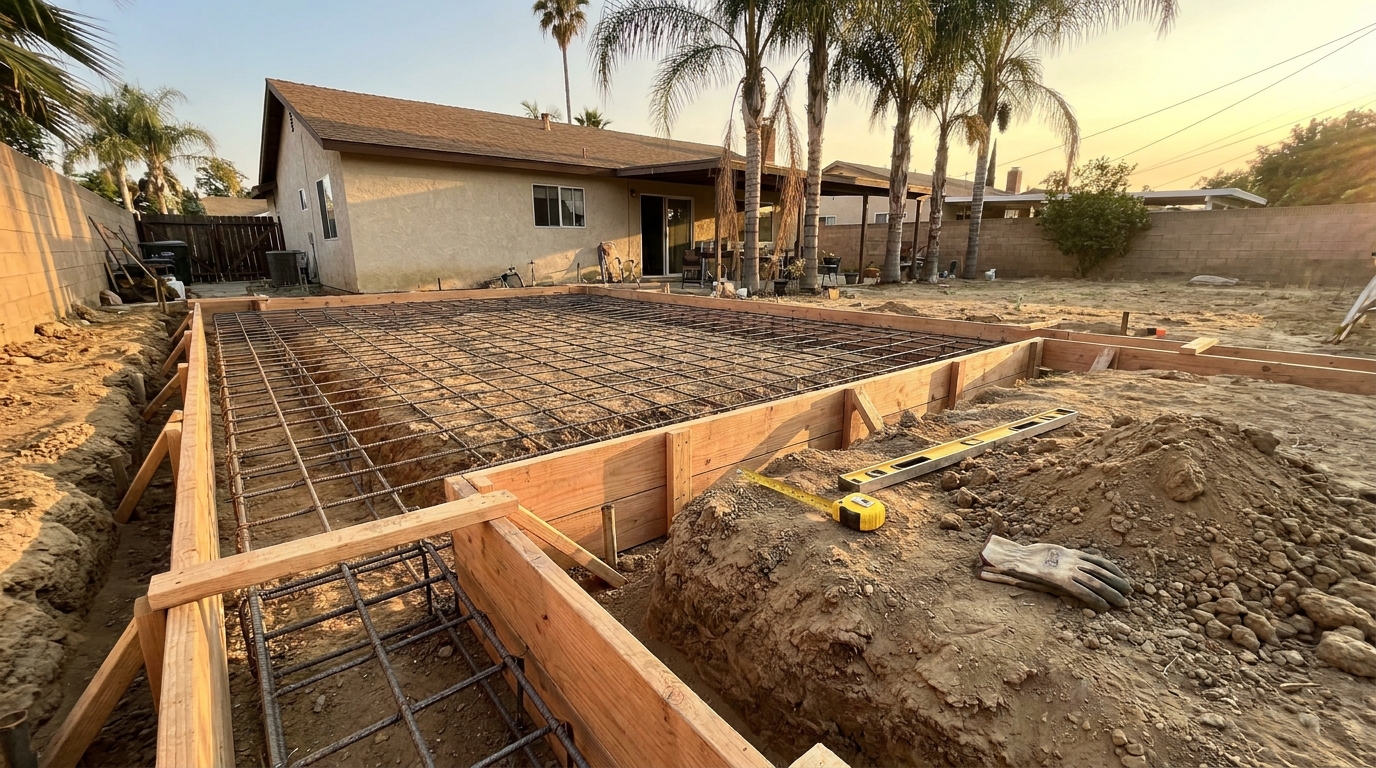
The contractor schedules the groundwork inspection after the foundation trenches are dug and before any concrete is poured. The inspector checks the depth, width, and rebar placement. If the soil report called for deeper footings or additional rebar, the inspector verifies that the design matches the approved plans.
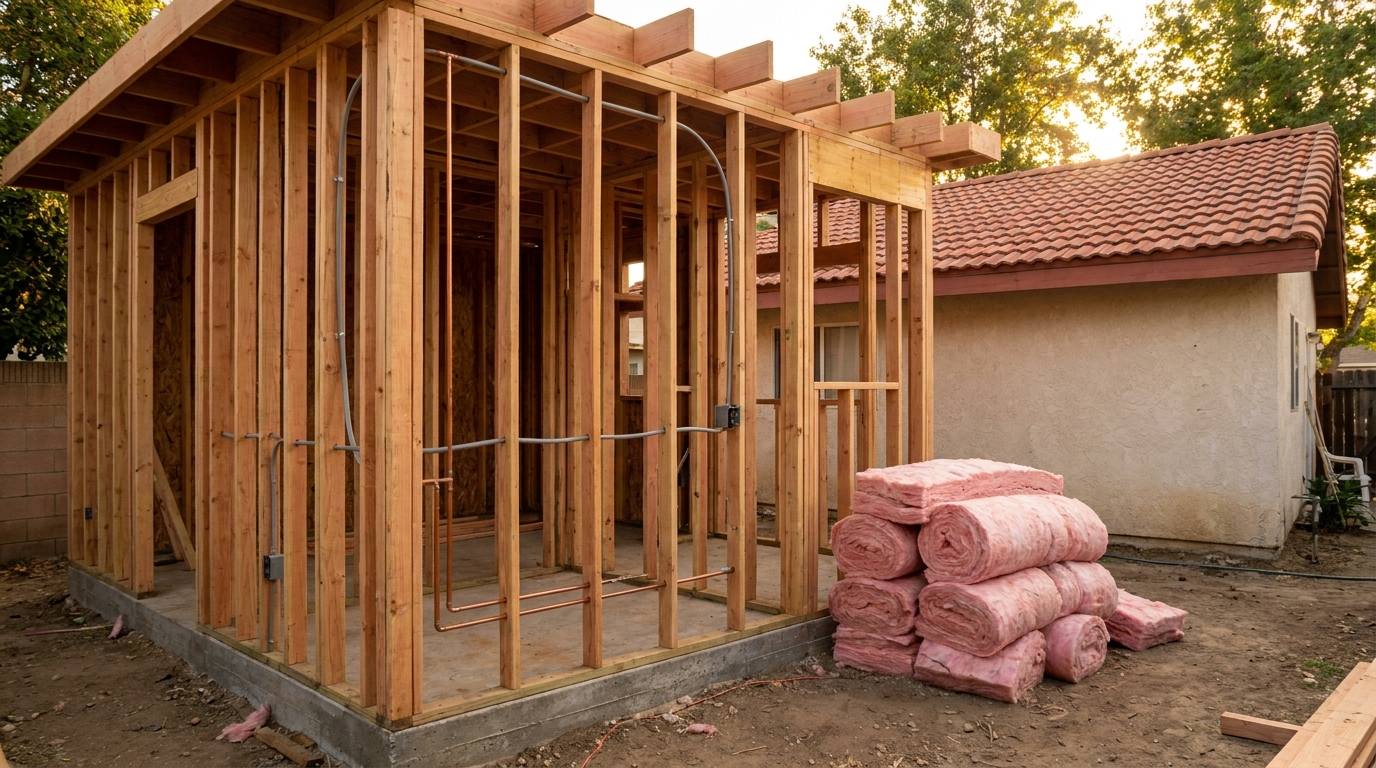
Framing, plumbing and electrical rough-in are typically scheduled close together. The framing must be complete, the plumbing rough-in must be pressure-tested, and the electrical panel and circuits must be installed and labeled. A deficiency in any one system has to be corrected and re-inspected.
- Trade coordination: the plumber and electrician must finish their rough-in before the insulation contractor arrives, and the insulation must be installed before the drywall crew starts.
Hillstar Construction Inc coordinates ADU construction and home remodeling projects across Los Angeles, including Canoga Park, with the same process: a detailed walkthrough, a written scope that reflects the site's actual conditions, and a permit strategy that anticipates LADBS's correction cycles.
What Signing the Owner-Builder Declaration Means in Practice
In the LADBS declaration you acknowledge that you are the party legally and financially responsible for the construction, and that you will abide by the laws that govern owner-builders as well as employers. CSLB's guidance puts it plainly: when you sign a building permit application as an owner-builder, you assume full responsibility for all phases of the project and its integrity.
- Injuries on site: you may be held liable for injuries to an unlicensed worker on your property, and your homeowner's insurance may not cover them.
- Selling later: if you sell the property, you may be held liable for injuries or losses a later owner suffers from latent defects in the workmanship or materials.
- Paying everyone: CSLB lists making sure all workers and material suppliers are paid among your responsibilities, or you face possible mechanics liens against your property.
A licensed general contractor pulls the permit under their own license, so CSLB's owner-builder qualifications never apply to your project. The LADBS declaration makes the same point: you can protect yourself from that financial risk by having the permit filed in a licensed contractor's name instead of your own.
FAQ
Can I hire a contractor to help with parts of an owner-builder ADU project in Canoga Park?
Yes. You can hire one licensed general contractor to run most of the job, or hire each trade separately—CSLB's owner-builder exemption doesn't require you to split the work across multiple contracts. What it does require is that everyone you hire for work needing a license holds a current, active CSLB license in the correct classification; CSLB warns that unlicensed individuals who offer to guide you through the owner-builder process for a fee are breaking the law. You are also responsible for verifying that each contractor is properly licensed and checking the status of their workers' compensation coverage.
What happens if I fail an inspection on an owner-builder ADU permit?
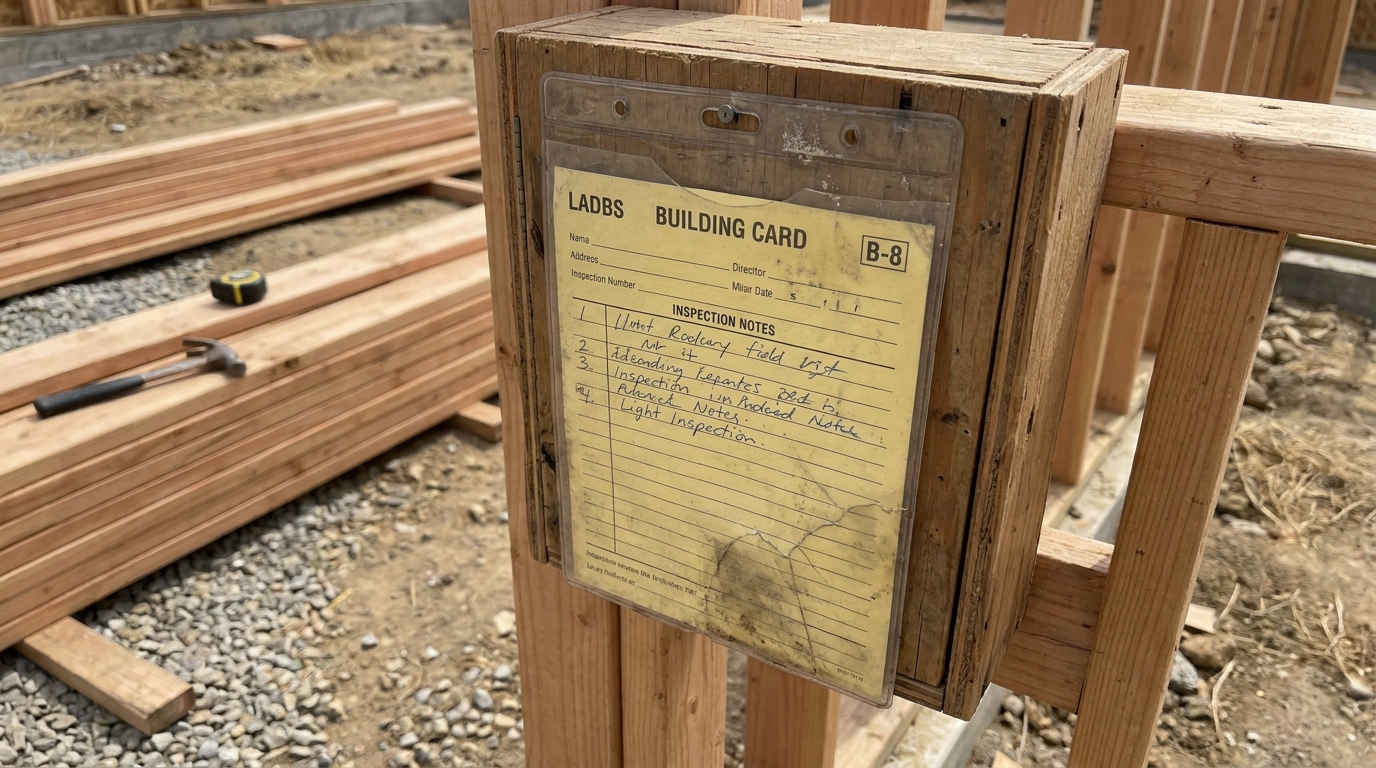
The inspector leaves notes on the Building Card describing the deficiency. You correct the issue, then request a re-inspection. The next phase cannot proceed until the failed inspection is approved. Multiple failed inspections extend the timeline and can trigger additional scrutiny from LADBS.
Does going owner-builder save money on an ADU build in Canoga Park?
It eliminates the contractor's markup, but you must obtain your own insurance, manage all trade coordination, and absorb the cost of delays or errors. The savings depend on your ability to execute the general contractor role competently. Experienced contractors see owner-builder projects that cost more than contractor-led builds when coordination failures and rework are factored in.
Can I switch from owner-builder to a licensed contractor mid-project?
Before you commit, confirm with LADBS what changing the responsible party on your permit requires. Most contractors decline mid-project takeovers because they inherit unknown conditions and potential code violations. The cleanest path is to decide before the permit is pulled.
Ask AI Mickey about your project
Still have a question after reading? Ask. AI Mickey is Hillstar Construction Inc's AI assistant for homeowners — planning, hiring, and what to expect from a remodel. There is nothing to sign up for and no email required.
Before you go
The article is free and it stays free — come back to it whenever you need it. If you would like to know the people who wrote it, or keep it close, these doors are open. There is no form behind any of them.