Hiring a General Contractor vs Going Owner-Builder for an ADU Build in Tarzana
A general contractor holds the CSLB license, pulls the permits, hires and supervises the trades, and carries the liability insurance for the ADU build. An owner-builder pulls the permit in their own name, hires each trade directly, coordinates the schedule, and carries the risk if something goes wrong. Most Tarzana homeowners who start as owner-builders underestimate the permit-coordination load, the inspection sequencing, and the liability exposure when a trade damages the property or misses code.
Get the free Contractor Bid Comparison Checklist
Print it, put it next to your proposals, and find out what each bid actually includes - line by line, before you sign anything.
Get the free checklistWhat General Contractor vs Owner-Builder Actually Means in Tarzana
A general contractor is a CSLB-licensed professional who pulls the permit, hires and supervises all trades, coordinates inspections, and carries the liability insurance and workers' compensation coverage for the project. An owner-builder is a homeowner who pulls the permit in their own name, hires each trade separately, schedules the inspections themselves, and assumes full responsibility for code compliance, safety, and any defects.
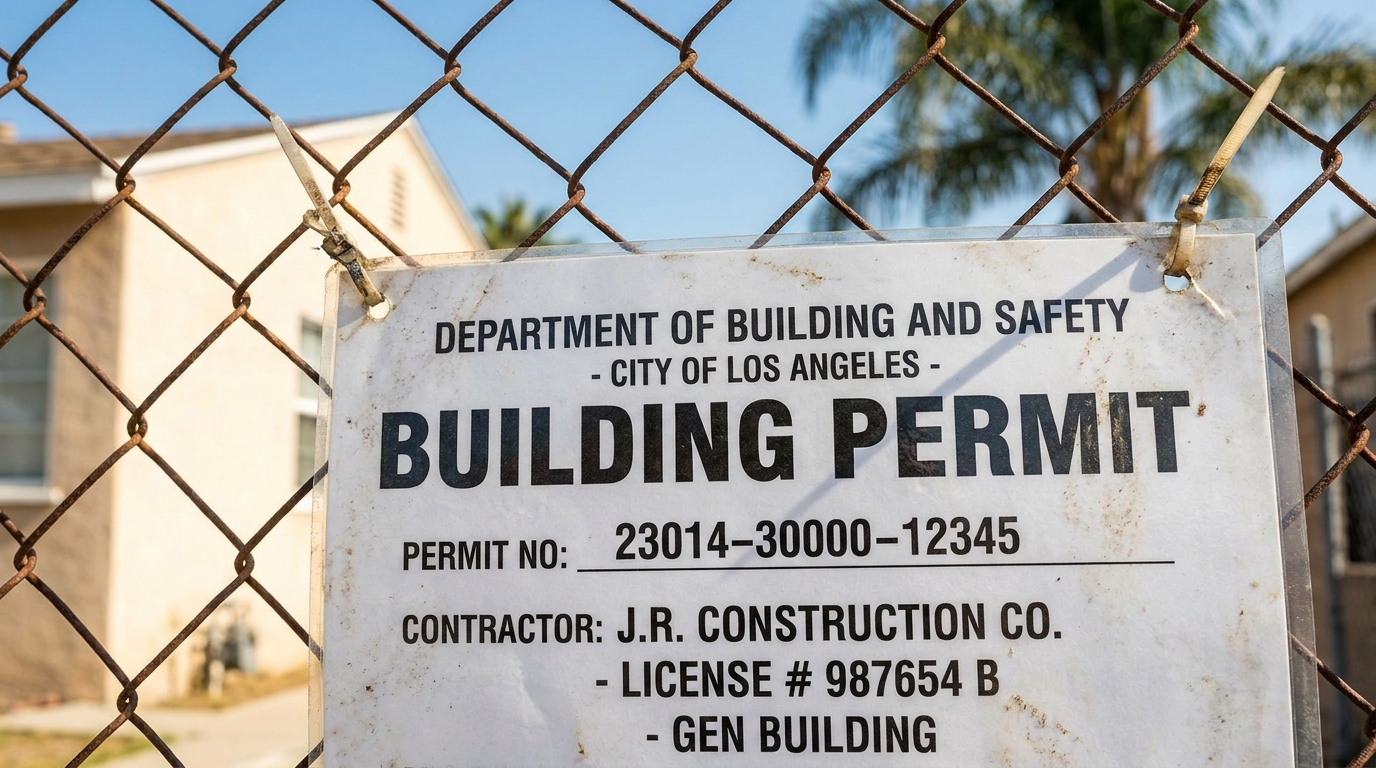
In Los Angeles, LADBS allows both paths for ADU construction. The permit application asks whether the applicant is a licensed contractor or an owner-builder. If you check the owner-builder box, LADBS requires you to sign an Owner-Builder Declaration acknowledging that you understand the risks and that you will not sell the property within a year of final inspection approval without disclosing the owner-builder status to the buyer.
The general contractor's license number appears on the permit, and the contractor's insurance protects the homeowner if the work is defective or if a worker is injured on site. The owner-builder has no such protection unless they purchase separate policies, which most do not.
Comparing contractors for this project?
The free checklist walks you through every line a complete proposal should carry, so you can compare bids on scope instead of price alone.
Get the free checklistWhere Tarzana Homeowners Trip Up as Owner-Builders
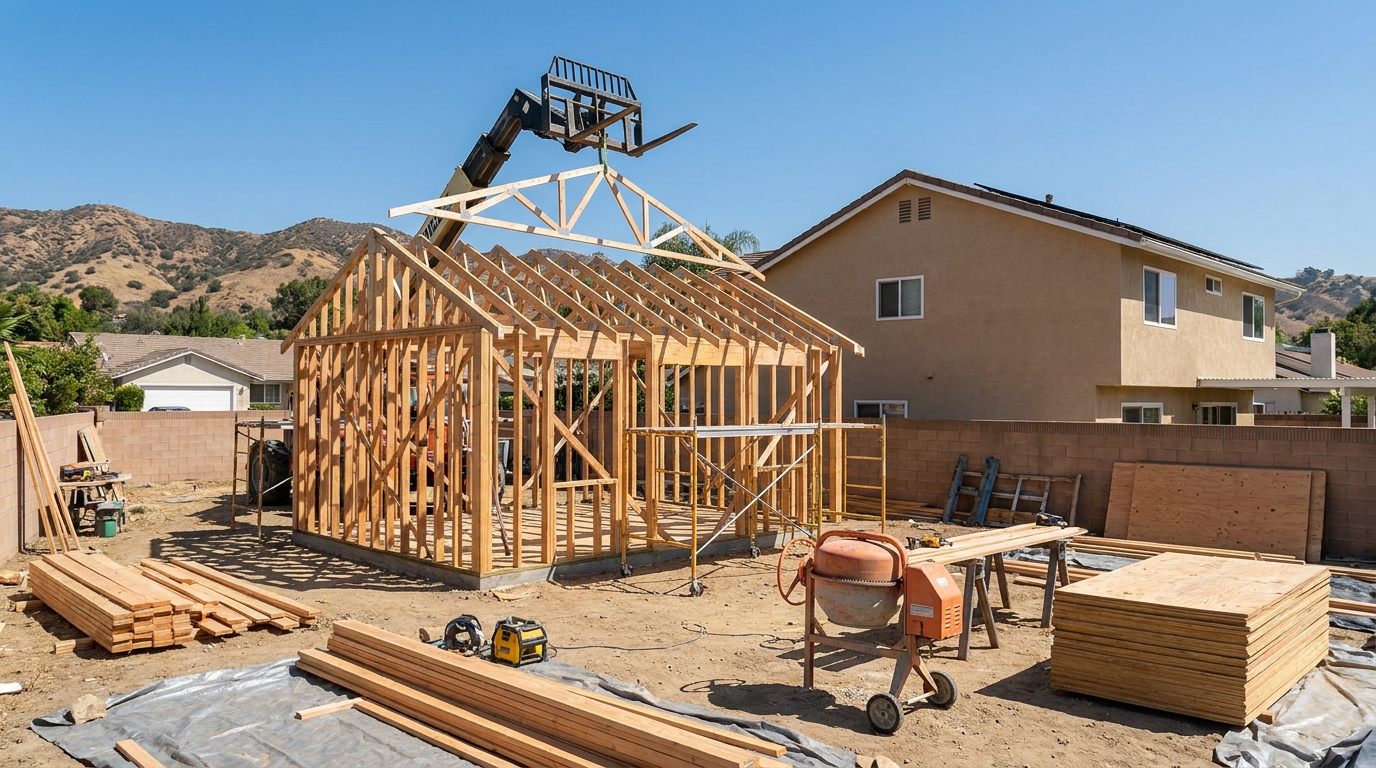
The three places owner-builders fail most often are permit coordination, trade sequencing, and liability exposure. Permit coordination means knowing which inspections LADBS requires, in which order, and what the inspector expects to see signed off before the next trade starts. Trade sequencing means scheduling the concrete crew, the framer, the plumber, the electrician, the roofer, and the stucco crew so that each arrives when the prior trade is done and the inspector has approved.
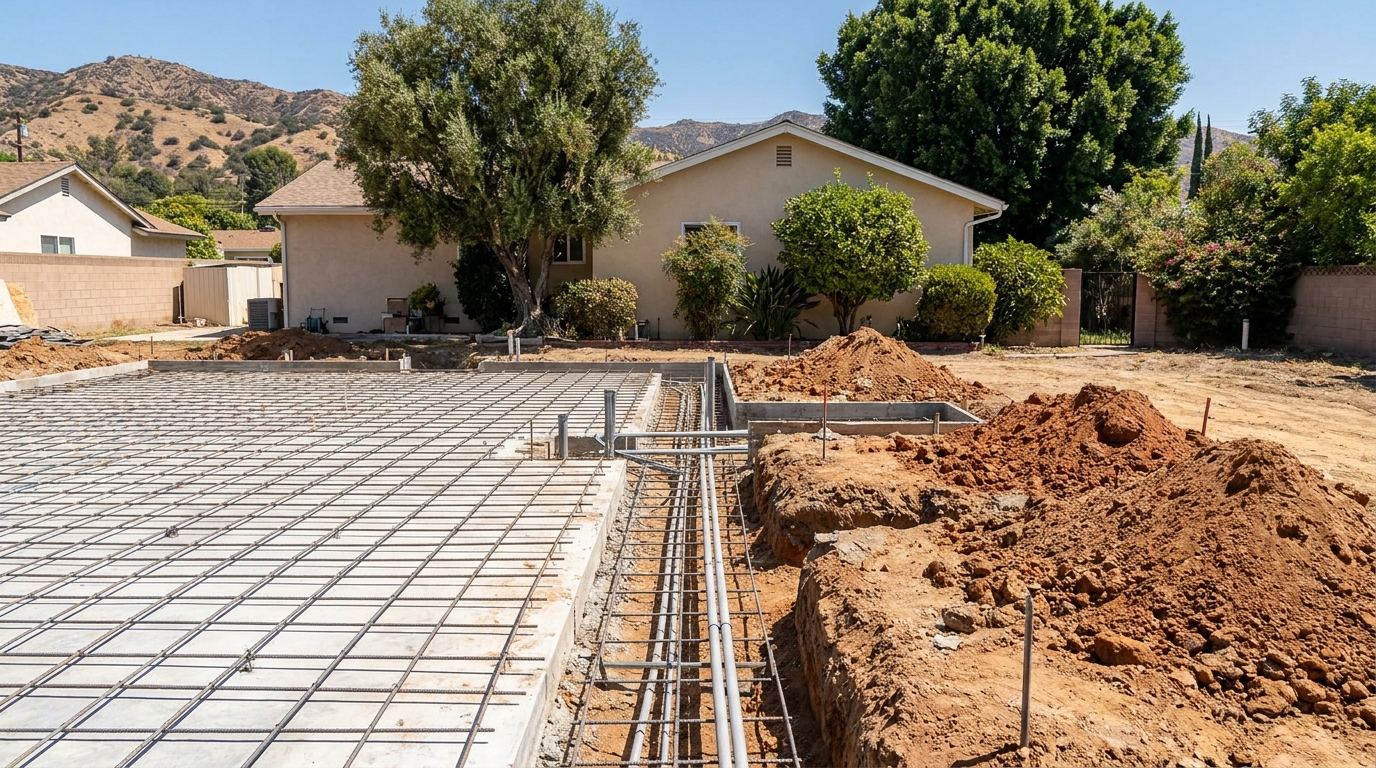
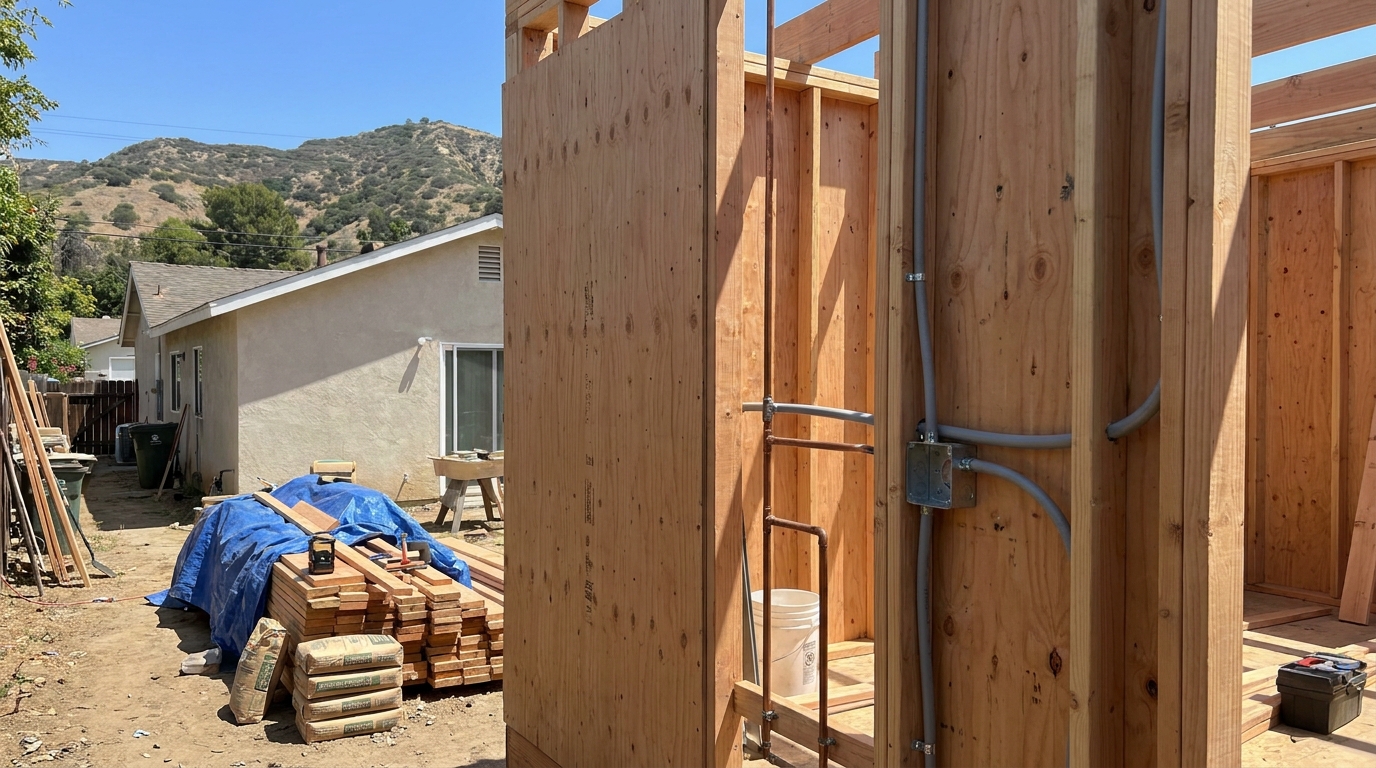
Most Tarzana ADU builds follow the LADBS three-stage inspection sequence: Groundwork covers the foundation and any grading or drainage work. Rough covers framing, plumbing, and electrical together in one combined call. Final covers the completed structure, Title 24 compliance, and any accessibility or egress requirements the approved plans show.
- Hiring unlicensed trades because they quote lower—then discovering they cannot pull permits or pass inspection.
- Underestimating the time required to coordinate five or six separate crews, each with their own schedule.
- Failing to verify workers' compensation coverage, then facing a stop-work order when LADBS or a neighbor reports uninsured workers on site.
- Missing the Title 24 energy-compliance documentation, which requires a HERS rater and a signed CF-1R before Final.
- Assuming that because the main house has an older panel, the ADU can share it—then learning during Rough that a separate service or a panel upgrade is necessary.
What the General Contractor Handles That the Owner-Builder Has to Learn
The general contractor manages the permit from application through final inspection approval, coordinates the trade schedule so each crew arrives when the prior work is ready, orders materials in the quantities and grades the plans specify, and handles any plan revisions or field changes the inspector requires. The contractor also carries the insurance that covers property damage, worker injury, and defective work.
An experienced contractor knows that LADBS plan check for ADU construction reviews the structural calculations, the Title 24 energy compliance, the fire-separation details between the ADU and the main house, and the utility-service plan. If the plans show a new electrical service, the contractor coordinates the LADWP service application and the trench inspection before the concrete pour. If the plans show a new sewer lateral, the contractor schedules the Bureau of Engineering sewer-connection clearance and the LADBS sewer-permit inspection before backfill.
The contractor also knows which materials meet code and which do not. The framing lumber grade, the shear-panel nailing schedule, the plumbing fixture ratings, the electrical panel rating, and the roofing underlayment spec all appear in the approved plans, and the inspector checks them during Rough and Final.
Do I Need a Permit for an ADU Build in Tarzana?
Yes. All ADU construction in the City of Los Angeles requires a building permit from LADBS, regardless of size or whether you hire a contractor or go owner-builder. The permit application includes the structural plans, the Title 24 energy compliance, the utility-service plan, and the site plan showing setbacks and fire separation. LADBS plan check reviews those documents and issues the permit when the plans meet code.
State ADU law preempts some local restrictions—lot coverage, setbacks, parking, and height limits are set by statute for qualifying ADUs—but it does not eliminate the permit requirement. The permit ensures that the structure meets the Building Code, the Energy Code, the Plumbing Code, the Electrical Code, and the Fire Code.
What to Ask the Contractor Before Signing
Ask for the contractor's CSLB license number and verify it on the CSLB website to confirm the license is active, the classification covers residential building, and there are no outstanding disciplinary actions. Ask for proof of liability insurance and workers' compensation coverage, and call the insurance carrier to verify the policy is current. Ask for references from recent ADU builds in Los Angeles, and call those references to ask whether the contractor finished on schedule and whether the inspector approved the work without major corrections.
Ask how the contractor handles plan revisions and field changes. LADBS plan check sometimes requires changes to the structural details, the Title 24 compliance, or the utility routing, and the inspector sometimes identifies conditions during Rough that require a revised detail or an engineered solution.
- Who pulls the permit, and whose name appears on the permit application?
- What does the contractor's scope include—foundation, framing, plumbing, electrical, roofing, stucco, and finish, or only some of those?
- Does the contractor hire the trades as employees or as subcontractors, and who carries the workers' compensation coverage?
- What is the payment schedule, and does it comply with the down-payment cap California law sets for home remodeling contracts?
- What happens if the project uncovers conditions the plans did not anticipate—old utilities, soil issues, or existing work not on the property's permit record?
Hillstar Construction Inc, led by Lior Mazor, who brings over 40 years of hands-on construction experience, walks homeowners through the contract and the permit process before any work starts, and the contract states exactly what the scope includes and what triggers a change order.
When Does LADWP Get Involved in a Tarzana ADU Build?
LADWP gets involved when the ADU requires a new electrical service or a new water service. If the existing main-house service has capacity for the ADU load, and if the existing water meter and lateral can serve both structures, LADWP may not require any new infrastructure. The electrical load calculation and the plumbing fixture count determine whether a new service is necessary, and those appear in the plans LADBS reviews during plan check.
If the plans show a new electrical service, the contractor submits the LADWP service application after LADBS issues the permit. LADWP reviews the application, assigns a service number, and schedules the trench and meter-installation inspections. The contractor coordinates those inspections with the LADBS Groundwork inspection so the trench is open for both.
What Happens If You Start as Owner-Builder and Want to Switch Mid-Project?
Switching from owner-builder to general contractor mid-project requires a permit revision and a new permit holder of record. LADBS allows the change, but the new contractor has to review the work completed so far, verify that it meets code, and accept liability for any defects or code violations the prior work created. Most contractors will not take over an owner-builder project unless they can inspect the foundation, the framing, and the rough plumbing and electrical before those systems are covered.
The contractor who agrees to take over will require a site inspection, a review of the permit history and the inspection records, and often a structural engineer's report confirming that the framing and foundation meet the approved plans. That review costs money, and the contractor will add a risk premium to the bid because they are inheriting someone else's work.
Tarzana-Specific Compliance and Permit Notes
Tarzana sits in the City of Los Angeles, so LADBS handles the building permit, the grading permit if the site requires cut or fill, and the final inspection approval. Some Tarzana properties are in hillside areas where the Hillside Ordinance applies, which imposes additional grading and drainage requirements and sometimes requires a geotechnical report and an engineered foundation design.
Some Tarzana neighborhoods have homeowners' associations that impose design guidelines, setback restrictions, or approval processes separate from LADBS. The HOA approval is not a substitute for the LADBS permit, but the HOA can delay or block the project if the homeowner does not obtain HOA clearance before construction starts.
Tarzana properties sometimes have older utilities—galvanized water lines, clay sewer laterals, or aluminum wiring in the main house—that experienced contractors identify during the walkthrough and the utility research before the plans are drawn. The contractor discusses those possibilities during the walkthrough, and the contract should state how those conditions are handled if they appear.
- Hillside properties may require a soils report, an engineered foundation, and a grading permit before LADBS issues the building permit.
- HOA design guidelines sometimes restrict ADU height, roof pitch, exterior materials, or window placement, and the homeowner must obtain HOA approval before construction starts.
- Title 24 energy compliance requires a HERS rater site visit and a signed CF-1R before the inspector approves the final inspection.
- Fire-separation requirements between the ADU and the main house depend on the distance between the structures and the wall construction, and those details appear in the approved plans.
FAQ
Can I pull the permit myself and then hire a contractor to do the work?
Technically yes, but most licensed contractors will not work under an owner-builder permit because it exposes them to liability without the protections their license and insurance provide. The contractor's license number should appear on the permit, and the contractor should be the permit holder of record.
What happens if I sell the house within a year of finishing an owner-builder ADU?
California law requires you to disclose the owner-builder status to the buyer, and the buyer has the right to request inspections or repairs before closing. Owner-built work statistically has higher defect rates, so buyers and lenders often view it as higher risk.
Does going owner-builder actually save money on an ADU build?
It depends on whether you can avoid the mistakes that cost more than the contractor's markup. The contractor's fee covers their expertise, their insurance, their trade relationships, and their ability to get the work done without delays or red tags.
Can I hire a contractor just for the permit and inspections, and do the rest myself?
No. If the contractor pulls the permit, they are responsible for all the work under that permit, and their license and insurance cover that work. A contractor cannot legally pull a permit and then let the homeowner do the work.
Ask AI Mickey about your project
Still have a question after reading? Ask. AI Mickey is Hillstar Construction Inc's AI assistant for homeowners — planning, hiring, and what to expect from a remodel. There is nothing to sign up for and no email required.
Before you go
The article is free and it stays free — come back to it whenever you need it. If you would like to know the people who wrote it, or keep it close, these doors are open. There is no form behind any of them.