Foundation Repair vs. Soft-Story Retrofit: Two Different Problems on Older Los Angeles Homes
How to tell whether an older Los Angeles home needs foundation repair, soft-story retrofit, both, or neither — what each actually addresses, what triggers each, and why mixing them up leads to scoping mistakes.
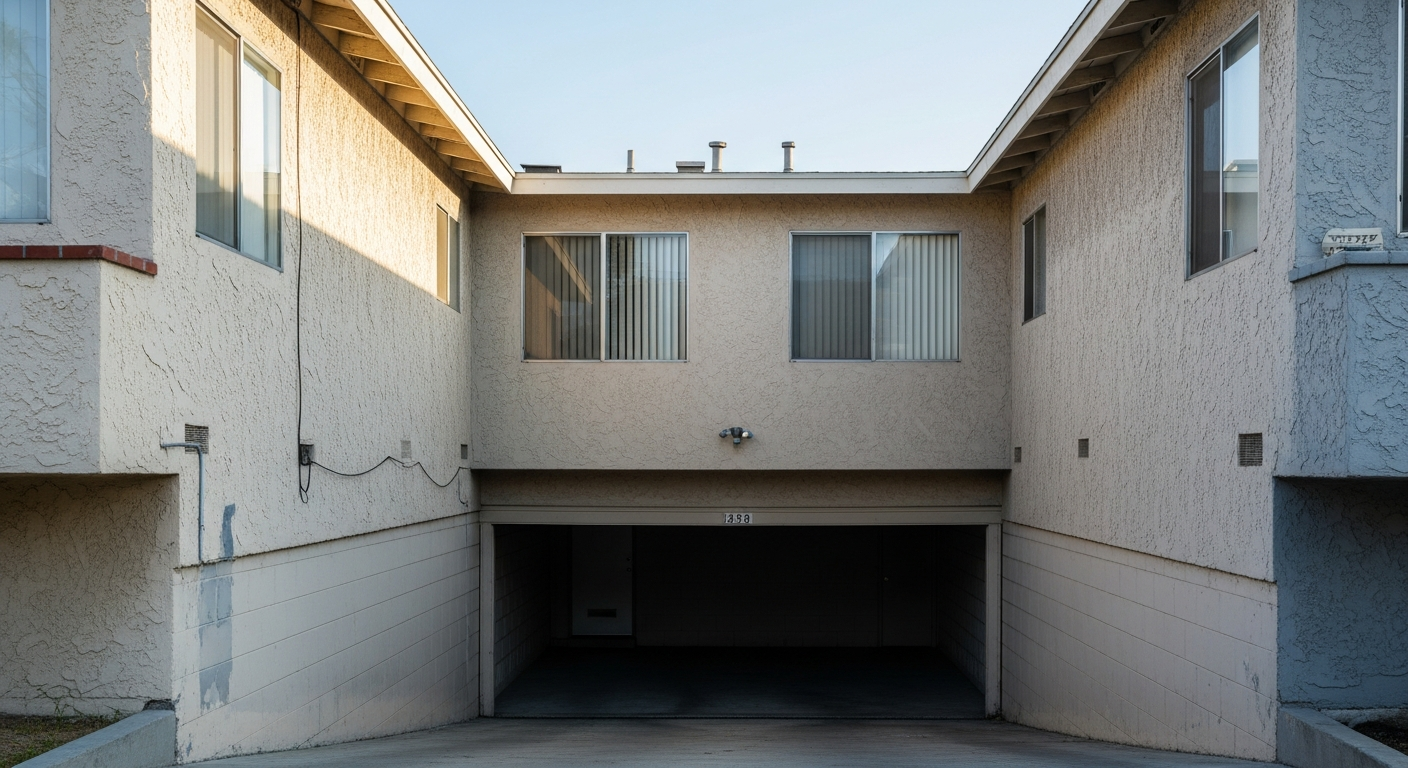
Foundation repair and soft-story seismic retrofit get talked about together because they both involve the structural shell of a Los Angeles home, but they address completely different problems. Foundation repair fixes a foundation that is settling, cracking, or shifting under the building's weight. Soft-story retrofit fixes a building shape that's vulnerable to earthquake shaking. The two scopes overlap occasionally, but the trigger conditions are different, the engineering is different, and the permit paths are different. Mixing them up is one of the more expensive scoping mistakes an older-home owner can make. Our deeper guide to soft-story earthquake retrofit in Los Angeles covers when a retrofit is required and what the process involves.
Foundation repair: a vertical-load problem
A foundation's job is to spread the building's weight onto the ground beneath it. When the foundation can no longer do that — because the soil under it has shifted, the original concrete has aged, or the footing is undersized for the actual load — the building responds. Cracks open above doors and windows. Floors slope. Doors stick at the top corner. Roof framing pulls a small amount where the ridge is no longer where it used to be.
- Settling — one part of the foundation sinks faster than the rest, and the building above tilts.
- Heave — moisture-driven swelling pushes part of the foundation up.
- Cracking — the existing concrete fails in tension or shear, opens up, and the load redistributes onto the wrong members.
- Lateral creep — the foundation slips slightly downhill on a graded site.
- Sister-foundation joints failing — common on properties where additions were built up against an original perimeter foundation without continuous bonding.
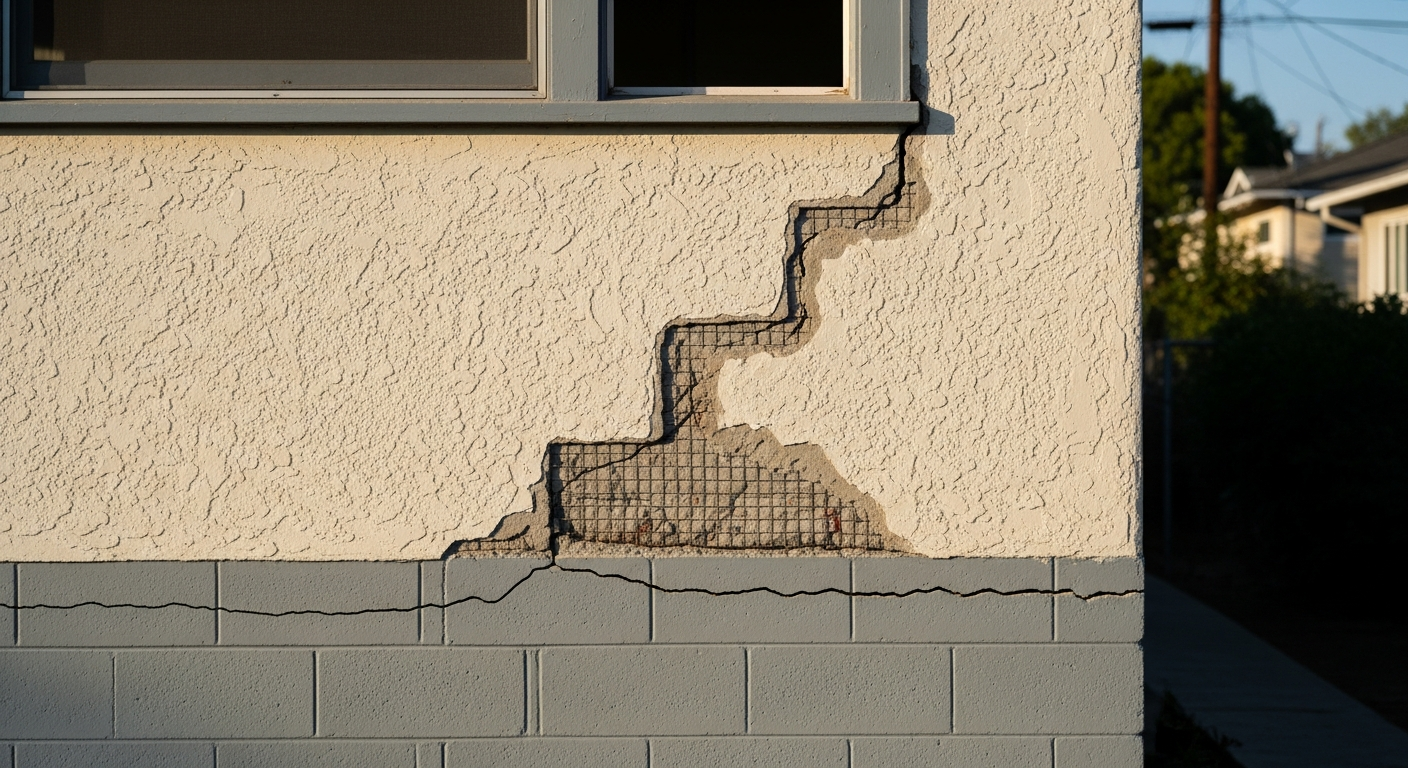
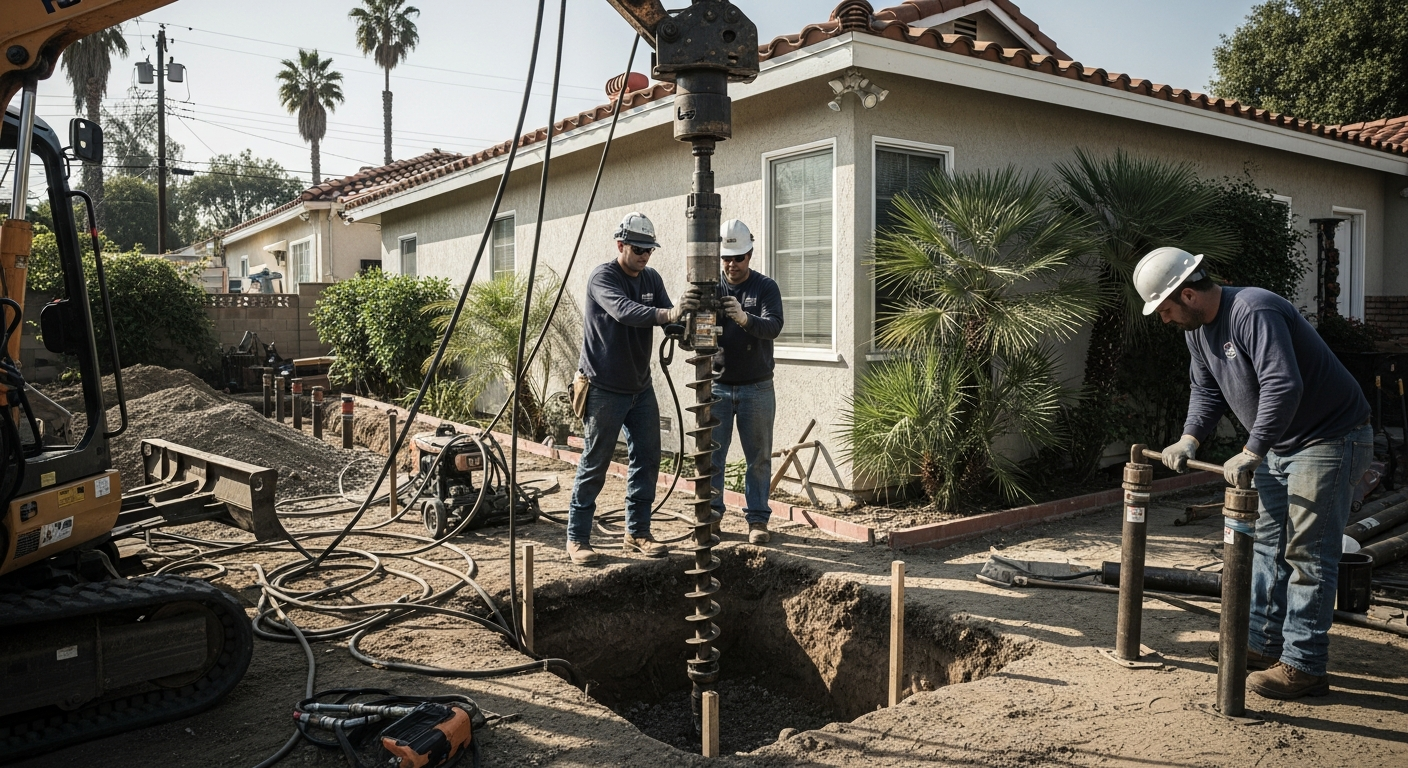
The repair approach varies with the cause. Helical piers and push piers underpin a settling perimeter. Polyurethane injection lifts a portion of slab. New continuous concrete footings replace failed sections. Tied-in micropiles handle hillside lateral creep. The diagnosis is structural-engineer work; a good contractor refuses to commit to a repair method until an engineer has stamped the cause and the recommended approach.
Soft-story retrofit: a lateral-load problem
Soft-story retrofit is a different problem entirely. It addresses how a building shape responds to horizontal earthquake forces, not how it stands up under its own weight. The classic vulnerable shape — and the one Los Angeles's mandatory retrofit ordinance was written around — is a multi-family wood-frame building with a ground floor that's mostly open (tuck-under garages, retail storefronts, large open lobby walls), supporting two or more floors of stiffer framed living space above.
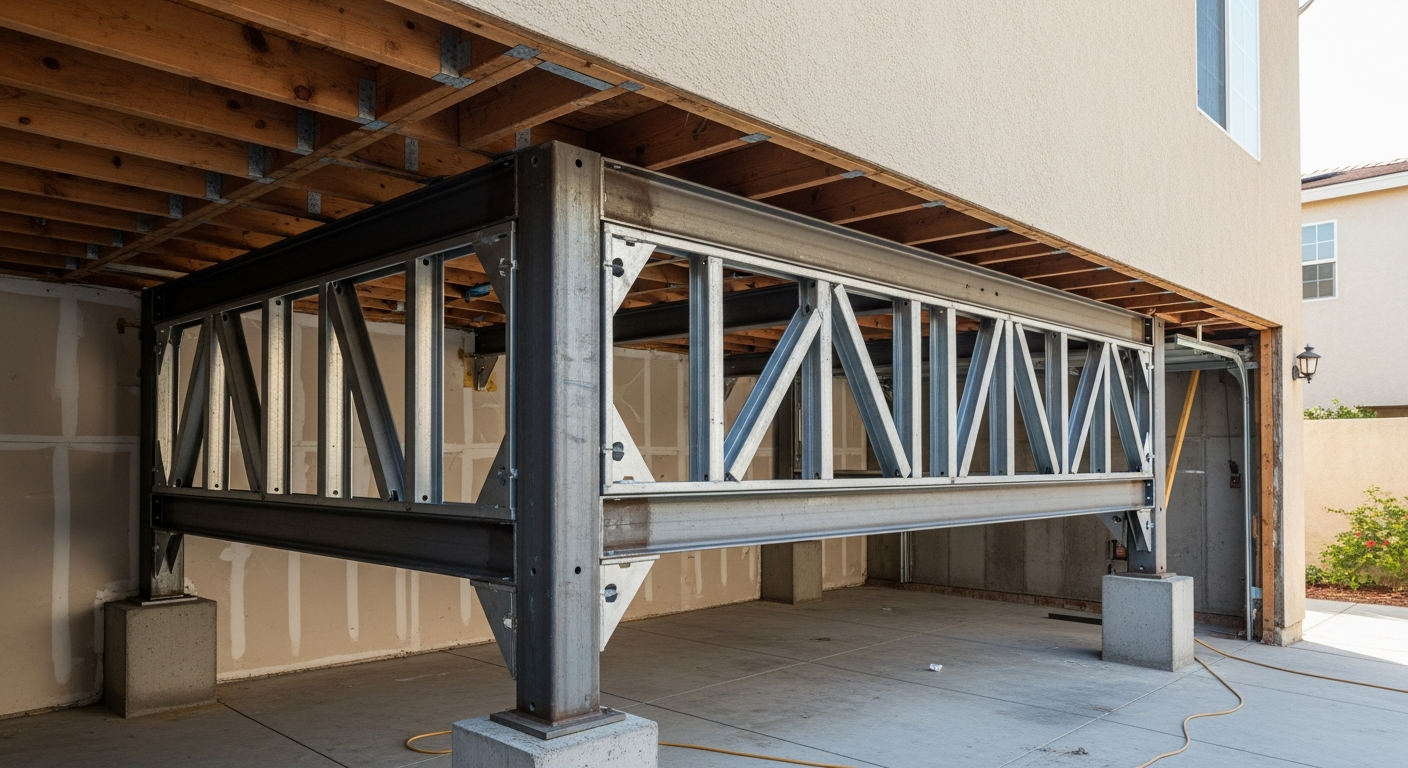
In an earthquake, the open ground floor flexes laterally far more than the stiffer floors above it. The upper floors essentially try to keep moving while the open lower floor sways out from under them. Without retrofit, the failure mode is a collapsed first floor. The retrofit replaces the open shape with a stiffer system — typically steel moment frames, plywood-and-strap shear panels, or a combination — that resists the lateral force.
- Steel moment frames bolted to new foundation pads inside the open ground level.
- Plywood shear walls added where the original framing didn't have them.
- Hold-downs anchoring the shear elements to the foundation so the load actually transfers.
- Continuous load path from the upper floors down through the new system into the foundation.
How to tell them apart
If you can see the symptoms below, the conversation is foundation repair, not soft-story retrofit:
- Cracks that follow a stair-step pattern through stucco or masonry, especially above doors and windows.
- Floors that you can feel slope when you walk on them.
- Doors that stick at one corner more than another.
- Visible cracking or spalling in the concrete perimeter foundation itself.
- A pattern of cracks that corresponds to the building's footprint — concentrated where one wall meets another, not randomly distributed.
If your building matches the description below, soft-story retrofit is the relevant scope:
- Two or more stories. LADBS states the program does not apply to residential buildings with 3 or less units.
- Wood-frame construction.
- An open ground floor — tuck-under garages (the same structural type behind much home-remodeling work on older LA properties), large storefront-style openings, or first-floor framing that's noticeably less stiff than the floors above.
- Built under building code standards enacted before January 1, 1978 — that is LADBS's own wording for the program's construction-date criterion. Whether a specific property is covered is confirmed through LADBS.
- An order to comply is the clearest signal. LADBS sends each covered property owner an order to comply, and the ordinance's deadlines run from that notice.
Single-family vs. multi-family
LADBS states the mandatory soft-story program does not apply to residential buildings with 3 or less units. A typical single-family Los Angeles bungalow is not subject to soft-story retrofit, even if it's on a hillside or has a garage at street level. Single-family homeowners who have lateral-system concerns — for example, a hillside property where the contractor or a structural engineer has flagged seismic vulnerability — usually look at it as a voluntary upgrade scope rather than as ordinance compliance.
Permit and engineering paths
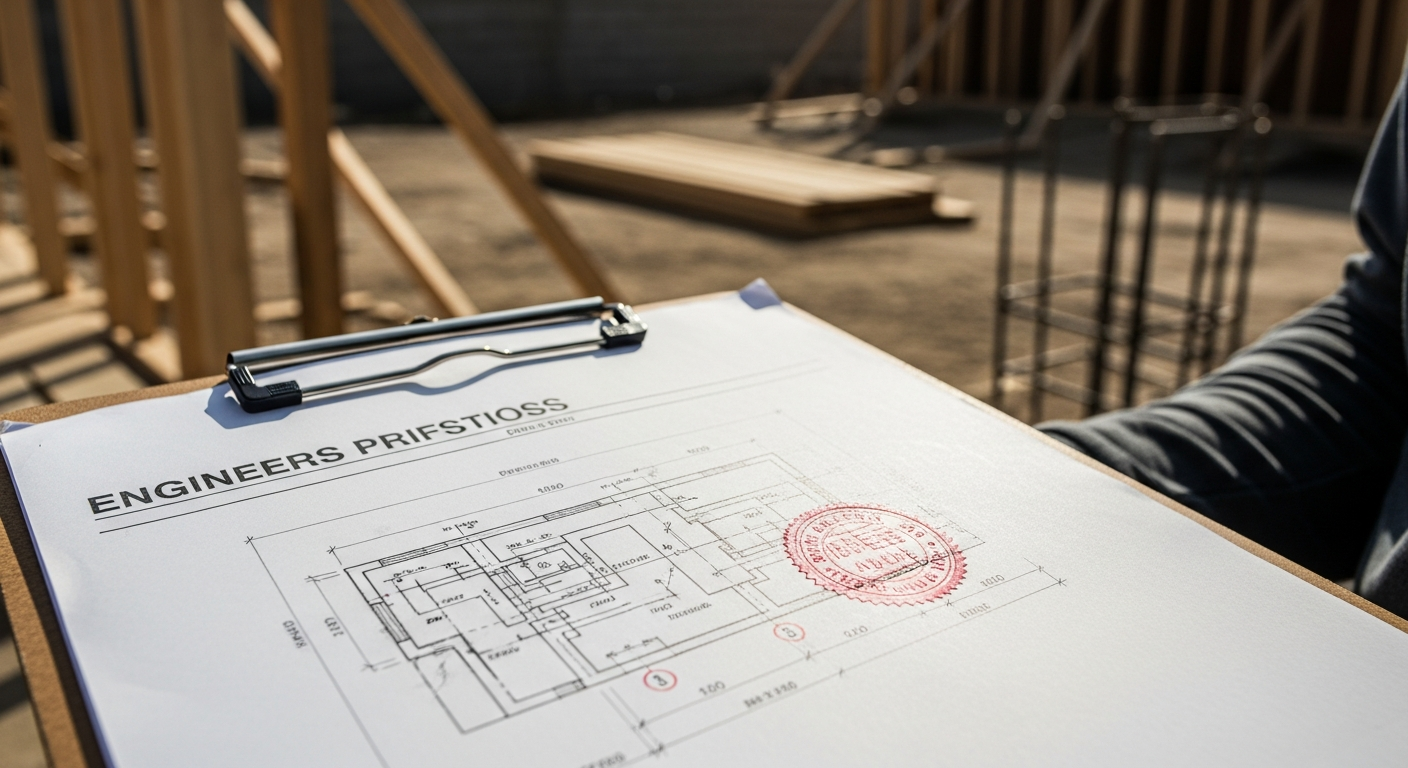
Both scopes are LADBS-permitted, both rely on a California-licensed engineer's stamped design, and both end with a final inspection. The differences are in the documentation and the sequence.
- Foundation repair starts with the engineer's site evaluation, soils review where the cause is geotechnical, and a stamped repair design. The permit application includes the design and the calculations supporting it. LADBS's published sequence applies: Groundwork — called for inspection of footing excavations before any concrete is poured — then Rough, then Final.
- Soft-story retrofit starts with a structural engineer's report against the ordinance criteria. The retrofit design is submitted as a permit application for LADBS plan check. The same published sequence applies: Groundwork, then Rough — called when all framing work has been completed and before the work is covered — then Final.
When both scopes overlap
Sometimes a property needs both, in sequence. A multi-family ordinance-covered building that also has a settling foundation under the open ground floor can't have its lateral retrofit installed effectively until the foundation underneath is stable. In those cases the scopes are coordinated — foundation work first, retrofit second — and the engineering is staged so the same engineer-of-record sees the property through both.
These coordinated jobs are the case where contractor selection matters most. A contractor who has done both scopes separately is fine; a contractor who has coordinated the two together is meaningfully better, because the construction sequencing is the difference between a clean job and a re-work.
What homeowners should do first
If you're seeing foundation symptoms — cracks, sloped floors, sticky doors — the first call is to a structural engineer for a site evaluation. The engineer's stamped report is the foundation document, both literally and figuratively, for everything that follows. Foundation-repair contractors should price against an engineer's report, not against their own walk-through.
If you've received a notice from the city identifying your property under the Mandatory Soft-Story Retrofit Ordinance, the first call is also a structural engineer — one with experience producing soft-story retrofit reports under the ordinance. The engineer's report determines the retrofit scope, and the retrofit contractor builds against it.
What to avoid
- A contractor who diagnoses foundation problems and proposes a repair method without an engineer's report. The diagnosis may be wrong; the repair may treat the symptom and not the cause.
- A retrofit proposal that doesn't reference the ordinance criteria or a structural engineer's report. The ordinance defines what counts as compliance; ad-hoc retrofits don't meet it.
- Mixing the two scopes in conversation. Foundation repair is not seismic retrofit; soft-story retrofit is not foundation work. A contractor who blurs them is either inexperienced or selling the wrong scope.
- Cosmetic crack repair as a substitute for foundation evaluation. Filling cracks doesn't fix the underlying movement; the cracks come back, sometimes wider.
Will my insurance cover any of this?
Foundation repair and earthquake retrofit are usually not standard homeowner-insurance coverages — separate earthquake policies (sold in California through CEA carriers in many cases) handle quake-related losses, and even then with specific terms. Talk to your insurance broker before assuming coverage either way — the answer depends on the specific policy and current California Earthquake Authority program terms.
Can foundation work be done while I live in the house?
Most perimeter foundation repairs can be sequenced so the household stays in the home, with limited disruption to specific rooms during specific phases. Whole-foundation replacement and major hillside underpinning are exceptions and can require relocation. The structural engineer and the contractor decide together what's compatible with continued occupancy, based on the specific scope.