What an ADU Build Contract Should Include in Los Angeles
A complete ADU build contract in Los Angeles defines the scope of work, payment schedule, permit responsibilities, change-order process, and warranty terms in writing. The contract protects both parties by documenting who handles LADBS plan check, what happens when the inspector flags an issue, and how additions to the original scope are priced and approved before the work proceeds.

Get the free Contractor Bid Comparison Checklist
Print it, put it next to your proposals, and find out what each bid actually includes - line by line, before you sign anything.
Get the free checklistWhat 'Contract Clauses' Actually Means in Los Angeles ADU Work
Contract clauses are the specific written terms that define scope, payment, permits, change orders, warranties, and dispute resolution for your ADU project. Each clause assigns responsibility for a particular part of the build, from who submits the LADBS application to what happens when the inspector requires an unexpected upgrade. The contract is the single document both parties rely on when questions arise during construction.
Hillstar Construction Inc, led by Lior Mazor who brings over 40 years of hands-on construction experience, writes contracts that address the realities of Los Angeles ADU construction—hillside grading, Title 24 energy compliance, LADWP service upgrades, and the inspection sequence LADBS requires.
- Scope of work: every task the contractor will perform, from demolition through final inspection approval.
- Payment schedule: tied to milestones, not calendar dates, and subject to the down-payment cap California law sets.
- Permit responsibility: who prepares the plans, submits to LADBS, schedules inspections, and responds to plan-check corrections.
- Change-order process: how additions or modifications to the original scope are documented, priced, and approved in writing before work begins.
- Warranty terms: what is covered, for how long, and what the homeowner must do to preserve the warranty.
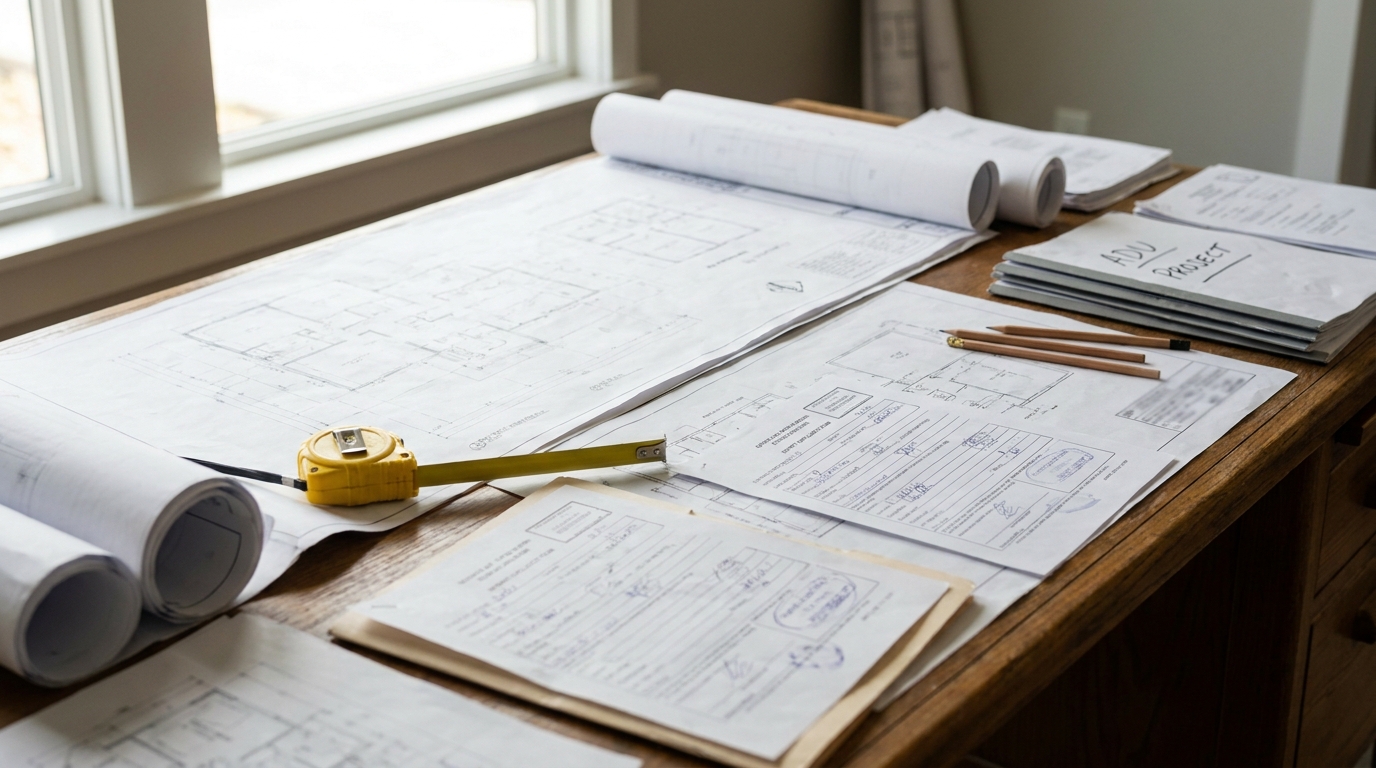
Comparing contractors for this project?
The free checklist walks you through every line a complete proposal should carry, so you can compare bids on scope instead of price alone.
Get the free checklistWhy the Scope-of-Work Clause Matters for Los Angeles ADUs
The scope-of-work clause lists every task the contractor will perform, from site preparation through the final LADBS inspection approval. It defines what is included in the contract price and what falls outside the agreement. A detailed scope prevents disputes when the homeowner expects finish carpentry the contractor never quoted or when the contractor assumes the homeowner will handle landscape restoration the contract does not mention.
ADU construction often involves grading, foundation work, framing, plumbing, electrical, HVAC, insulation, drywall, and exterior finishes. The scope should also state who provides and installs appliances, fixtures, and flooring. When the ADU sits on a hillside lot in Sherman Oaks or Encino, the scope must address retaining walls and drainage.
- Site preparation: clearing, grading, and any temporary shoring or access roads the hillside requires.
- Foundation and framing: materials, engineering if the slope or soil demands it, and rough carpentry through roof sheathing.
- Mechanical, electrical, and plumbing: new service lines, panel upgrades if the existing panel cannot support the ADU load, and Title 24 compliance documentation.
- Exterior finishes: stucco, siding, roofing, windows, and doors—materials and installation both specified.
- Interior finishes: drywall, paint, flooring, cabinets, countertops, and trim, with allowances for homeowner-selected upgrades documented separately.
- Exclusions: landscape restoration, furniture, window coverings, or any work the homeowner will arrange independently.
How Payment Schedules Protect Both Parties
The payment schedule ties each installment to a completed milestone, not a calendar date. California law caps the down payment a contractor may collect on home-improvement contracts, and the schedule must comply with that limit. Milestone-based payments ensure the contractor has the funds to purchase materials and pay subcontractors as the work progresses, while the homeowner retains leverage if the project stalls or quality falls short.
A typical ADU payment schedule includes a deposit at contract signing, an installment after the foundation is poured and inspected, another after framing and rough inspections are approved, one more after drywall and exterior finishes are complete, and a final payment when LADBS approves the final inspection.
What the Permit-Responsibility Clause Should Say
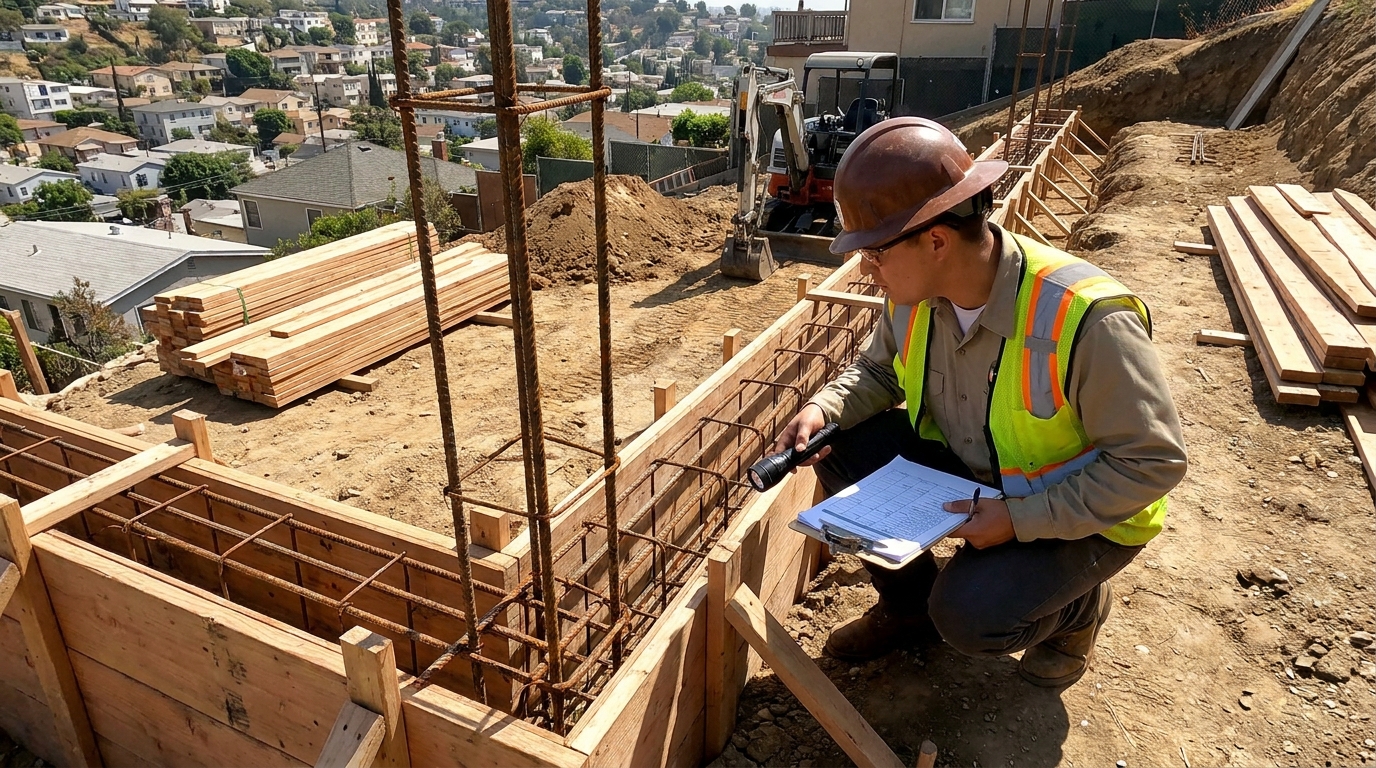
The permit-responsibility clause assigns who prepares the construction drawings, submits the application to LADBS, pays the permit fees, schedules inspections, and responds to any plan-check corrections. Most ADU contracts place permit responsibility on the contractor, because the contractor coordinates the architect or designer, the engineer if structural calculations are required, and the energy consultant who produces the Title 24 compliance forms.
The clause should also state what happens if LADBS plan check requires changes to the design or if the inspector flags an issue during the rough inspection. When the correction falls within the original scope, the contractor handles it at no additional charge. When the correction requires work outside the original scope, the change-order process governs pricing and approval.
- Plan preparation: who hires the architect, structural engineer, and Title 24 consultant, and who pays their fees.
- LADBS submission: who files the application, pays the permit fees, and tracks the plan-check process.
- Inspection scheduling: who calls for the Groundwork, Rough, and Final inspections LADBS requires.
- Correction response: who makes the changes plan check or the inspector requests, and whether those changes trigger a change order.
- Final approval: the contract defines the project as complete only when the inspector approves the final inspection and the permit is finaled.
Why the Change-Order Process Must Be in Writing
The change-order clause defines how modifications to the original scope are documented, priced, and approved before the work begins. ADU projects encounter unforeseen conditions—a water line that must be rerouted, soil that requires deeper footings, or a homeowner decision to upgrade the kitchen finishes mid-project. Without a written change-order process, disputes arise over whether the additional work was included in the original price or whether the homeowner ever agreed to the extra charge.
A clear change-order process requires the contractor to provide a written description of the additional work, the reason it is necessary or requested, and the cost before proceeding. The homeowner signs the change order, and both parties keep a copy.

What Warranty Terms Should Cover
The warranty clause states what the contractor will repair or replace if a defect appears after the project is complete, how long the warranty lasts, and what the homeowner must do to preserve coverage. California law provides a minimum warranty on construction work, but many contractors offer terms that exceed the statutory floor. The contract should distinguish between the contractor's workmanship warranty and the manufacturer warranties on materials and equipment.
A typical workmanship warranty covers defects in framing, plumbing, electrical, and finishes that result from the contractor's work, not from homeowner misuse or lack of maintenance.
- Workmanship coverage: defects in construction that appear within the warranty period and result from the contractor's work.
- Exclusions: normal wear, homeowner alterations, lack of maintenance, and damage from external causes.
- Manufacturer warranties: separate coverage on materials and equipment, transferred to the homeowner with documentation.
- Claim process: how the homeowner notifies the contractor, what documentation is required, and what response time the contractor commits to.
How Dispute-Resolution Clauses Work in Los Angeles Contracts
The dispute-resolution clause defines the steps both parties follow if disagreement arises during or after the project. Many contracts require mediation before either party may file a lawsuit, because mediation is faster and less expensive than litigation. The clause should state who pays the mediator's fees, where mediation will occur, and what happens if mediation does not resolve the dispute.
Some contracts include an arbitration clause, which requires disputes to be decided by an arbitrator rather than a judge or jury. The contract should not prevent the homeowner from filing a CSLB complaint if the contractor violates licensing law.
What to Ask the Contractor Before Signing
Before signing an ADU contract, ask the contractor to explain any clause you do not understand, confirm who handles each permit and inspection task, and verify that the payment schedule complies with California law. Ask how change orders are priced, what the warranty covers, and what happens if the project is delayed by weather, permit corrections, or material shortages.
Verify that the contract includes the contractor's CSLB license number—Hillstar Construction Inc holds license 972213—and that the license is active and in good standing. Confirm that the contractor carries liability insurance and workers' compensation coverage.
- License and insurance: verify the CSLB license number, confirm the license is active, and ask for proof of liability and workers' compensation coverage.
- Scope clarity: ask the contractor to walk you through the scope of work and point out what is included and what is excluded.
- Payment schedule: confirm that the down payment complies with California law and that each installment is tied to a completed, inspected milestone.
- Change-order process: ask how the contractor prices changes and how quickly you will receive a written change order for approval.
- Permit responsibility: confirm who submits to LADBS, who schedules inspections, and who responds to plan-check corrections.
- Warranty terms: ask what the warranty covers, how long it lasts, and how you report a problem if one arises.
Los Angeles-Specific Compliance and Permit Notes
ADU contracts in Los Angeles must account for LADBS permitting, Title 24 energy compliance, LADWP service coordination, and any overlay requirements that apply to the property. The contract should state that the contractor will obtain the building permit LADBS requires and that the ADU will be constructed to meet current code. If the property sits in an HPOZ or other historic overlay, the contract should address the separate clearance process those districts require.
Experienced contractors discuss the permit history during the walkthrough and advise the homeowner of any issues that might complicate the ADU application. The contract should not promise that the ADU permit will be approved or predict what LADBS will require. What the contract can promise is that the contractor will prepare accurate plans, respond to plan-check corrections, and build the ADU to match the approved drawings. Some ADU projects also involve bathroom remodeling in the main house when the homeowner wants to add a second bathroom or upgrade existing fixtures.
FAQ
Can the contractor start work before the LADBS permit is issued?
No. The contract should state that construction begins only after LADBS issues the building permit. Starting work before the permit is issued violates city code and can result in stop-work orders, fines, and delays.
What happens if the inspector requires work the contract does not mention?
If the required work falls within the original scope—correcting a framing detail to match the approved plans—the contractor handles it at no additional charge. If the work falls outside the original scope, the change-order process governs how it is priced and approved.
Does the contract need to mention Title 24 compliance?
Yes. The contract should state that the ADU will be built to meet Title 24 energy standards and that the contractor will provide the compliance documentation LADBS requires before the final inspection.
How do I know the payment schedule complies with California law?
Ask the contractor to confirm that the down payment does not exceed the cap state law places on home-improvement contracts. The CSLB website publishes the current limit, and the contractor should be able to explain how the schedule complies.
Ask AI Mickey about your project
Still have a question after reading? Ask. AI Mickey is Hillstar Construction Inc's AI assistant for homeowners — planning, hiring, and what to expect from a remodel. There is nothing to sign up for and no email required.
Before you go
The article is free and it stays free — come back to it whenever you need it. If you would like to know the people who wrote it, or keep it close, these doors are open. There is no form behind any of them.