Red Flags to Watch for When Hiring a Complete Remodel Contractor in LA
Red flags in a complete remodel contractor include no active CSLB license, refusal to pull permits, vague scope documents, no workers' comp insurance, and pressure to start before LADBS plan check clears. In Los Angeles, where Title 24 energy compliance and hillside geology add layers to every whole-house project, a contractor who skips documentation or dismisses city requirements creates liability the homeowner inherits.

Get the free Contractor Bid Comparison Checklist
Print it, put it next to your proposals, and find out what each bid actually includes - line by line, before you sign anything.
Get the free checklistWhat Does 'Red Flag' Actually Mean in a Los Angeles Complete Remodel?
A red flag is any contractor behavior or documentation gap that shifts risk from the contractor to the homeowner. In Los Angeles, where LADBS enforces Title 24 energy code, seismic retrofit requirements, and hillside grading rules, a contractor who avoids permits, refuses to provide insurance certificates, or pressures you to sign before scope is finalized is signaling that compliance and accountability are optional. That risk lands on the property owner when the city issues a stop-work order or when an injury occurs on site.
Complete remodels touch structural framing, plumbing risers, electrical panels, HVAC ductwork, and exterior envelope—every trade regulated by LADBS. A contractor who treats permit applications as bureaucratic nuisance rather than legal baseline is telling you how disputes will be handled later. Experienced contractors know that plan check delays, soils reports for hillside properties, and Title 24 calculations are part of the timeline, not obstacles to bypass.
None of these warning signs requires construction knowledge to catch. Every one shows up before any contract is signed, in how a bidder answers ordinary questions: a license number you can look up, insurance certificates you can confirm with the insurer, a permit plan you can hear explained, references you can call. Homeowners who slow down at this stage and check each answer against the public record protect themselves better than any contract clause can. The pattern matters more than any single item—a bidder who stumbles on one question may simply be disorganized, but a bidder who deflects on the license, the insurance, and the permit plan in the same conversation is showing you exactly how the project would run.

Comparing contractors for this project?
The free checklist walks you through every line a complete proposal should carry, so you can compare bids on scope instead of price alone.
Get the free checklistNo Active CSLB License or Refusal to Provide License Number
Every contractor performing home remodeling in California must hold an active Contractors State License Board license. If a bidder refuses to provide a license number, claims the license is 'pending,' or offers a handwritten number you cannot verify on the CSLB website, walk away. The license lookup shows workers' comp coverage and any disciplinary history you can review. Hillstar Construction Inc operates under CSLB license 972213, verifiable in real time on the state database.
In Los Angeles, unlicensed contractors cannot pull permits. That means any work they perform exists outside the city's inspection record, creating future sale complications and liability if structural or electrical defects surface. Homeowners who hire unlicensed labor lose CSLB's help in fixing the problem: the Board says it cannot require an unlicensed person to make repairs, and it advises homeowners whose main goal is recovering money paid to consider civil action.
Pressure to Start Before LADBS Permit Approval
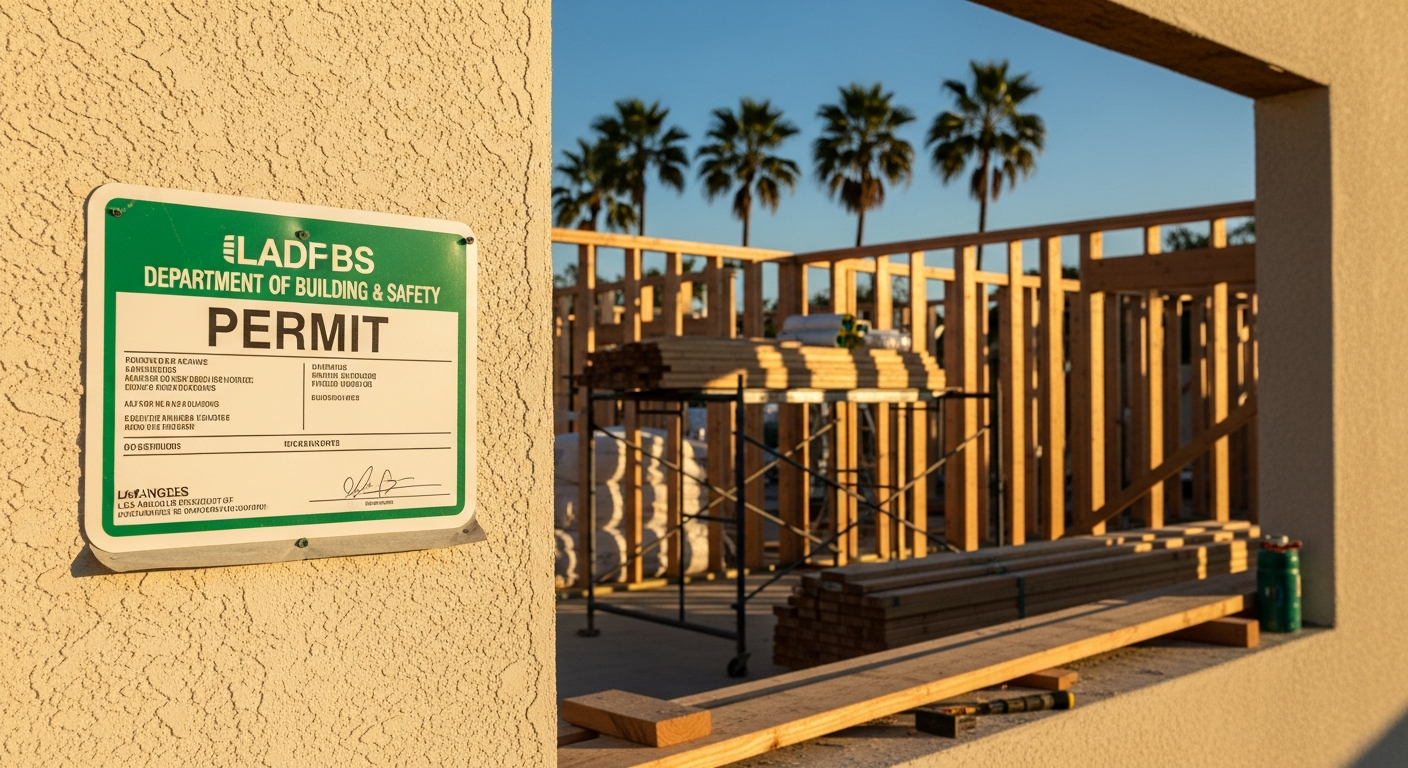
A contractor who suggests starting demolition or framing before LADBS issues the permit is creating a code violation the homeowner owns. Los Angeles requires permits for structural alterations, plumbing reroutes, electrical panel upgrades, and HVAC replacements. Plan check can take time, especially when soils reports, energy calculations, or fire-district compliance are required. A contractor comfortable working outside the permitted scope is comfortable leaving you with an unpermitted property.
Experienced contractors schedule the permit application early, use plan check time for material ordering and subcontractor coordination, and start demolition only after the permit is issued and posted at the job site. Pressure to 'get moving' before approval signals either inexperience with LADBS processes or intentional avoidance. Either scenario is a red flag.
Vague Scope Documents or No Written Contract
A complete remodel contract must specify which walls are being removed, which systems are being replaced, what Title 24 compliance measures are included, and how change orders are priced. If the contractor hands you a one-page estimate with line items like 'kitchen remodeling' and 'bathroom remodeling' with no material specs, no permit line item, and no payment schedule, you have no enforceable agreement when disputes arise.
California law requires written contracts for any project exceeding a small threshold. The contract protects both parties by defining scope, timeline expectations, lien waiver procedures, and dispute resolution. A contractor who resists detailed documentation is either hiding inexperience or planning to charge for every decision as a change order. Organized contractors provide plans, elevations, finish schedules, and allowance breakdowns before you sign.
No Proof of Workers' Compensation or General Liability Insurance
Every contractor with employees must carry workers' compensation insurance in California. If a framer falls off scaffolding and the contractor has no coverage, the homeowner's property becomes the claim target. General liability insurance covers property damage—a broken water line flooding the neighbor's basement, a dumpster damaging the driveway. A contractor who cannot produce current certificates of insurance within one business day is operating without coverage or using expired policies.
In Los Angeles, where hillside properties and older foundations create elevated risk, insurance is not optional. Ask for certificates naming your property address as the job site and listing coverage limits. Verify the policy is active by calling the insurer. A contractor who deflects this request is hiding a lapsed policy or no policy at all.

Dismissive Attitude Toward LADBS Inspections or Title 24 Compliance
A contractor who refers to LADBS inspectors as obstacles or suggests 'working around' Title 24 energy code is advertising future problems. Los Angeles enforces strict energy efficiency standards for remodels that alter the building envelope or replace HVAC systems. Compliance requires duct testing, insulation R-value documentation, and sometimes HERS rater verification. A contractor experienced in complete remodels knows these requirements and budgets time for them.
Inspections are checkpoints, not interruptions. Rough framing, rough plumbing, rough electrical, insulation, and final inspections ensure the work meets code before it's concealed. A contractor who skips inspections or fails them repeatedly is either cutting corners on materials or lacks the trade knowledge to pass. Either scenario leaves the homeowner with substandard work and no city sign-off.
Unwillingness to Provide References or Show Recent Los Angeles Projects
A contractor with a track record of successful complete remodels in Los Angeles will have references, photos, and permit records to share. If a bidder refuses to provide contact information for past clients, claims all prior work is confidential, or shows only out-of-state projects, you have no way to verify competence. Los Angeles construction is distinct—hillside grading, HPOZ design review, Title 24 compliance, and LADBS plan check processes differ from other jurisdictions.
Ask for three references from projects completed in the past two years, preferably in your neighborhood. Call those homeowners and ask about permit experience, change order frequency, cleanup, and whether the contractor returned for punch-list items. A contractor who has successfully navigated LADBS inspections, coordinated Title 24 compliance, and closed out permits will be eager to share that record.
Large Upfront Deposits or Cash-Only Payment Requests
California law limits the initial deposit a contractor can request. A contractor who demands half the project cost upfront, asks for cash payments, or refuses to provide receipts is either financially unstable or operating outside tax and licensing requirements. Legitimate payment schedules tie disbursements to completed milestones—foundation inspection, framing inspection, rough-in approval, final inspection.
Cash payments leave no paper trail for lien waivers, warranty claims, or dispute resolution. A contractor who insists on cash is avoiding income reporting and likely has no workers' comp coverage or valid license. Organized contractors accept checks or credit cards, provide itemized invoices, and issue conditional and unconditional lien waivers at each payment milestone.
What Experienced Los Angeles Contractors Do Differently
Contractors who have completed dozens of whole-house remodels in Los Angeles approach the process with documentation, transparency, and respect for city requirements. They provide CSLB license numbers without prompting, schedule the LADBS permit application before demolition, and explain Title 24 compliance as part of the base scope. They carry current insurance, provide certificates on request, and walk you through the inspection sequence before work starts.
They also acknowledge what they don't control. Hillside soils reports, HPOZ design review, and plan check timelines depend on city departments and third-party consultants. A contractor who promises a specific completion date before permits are approved is either inexperienced or dishonest. Realistic contractors confirm the schedule during permit prep, after the city has reviewed the plans and identified any additional requirements.
The difference shows in how change orders are handled. Experienced contractors document every scope adjustment in writing, provide pricing before the work starts, and update the payment schedule accordingly. They don't surprise you with invoices for work you didn't approve. They don't interpret silence as consent. They treat your property and your budget with the same care they'd expect on their own home.
FAQ
How do I verify a contractor's CSLB license before signing a contract?
Visit the Contractors State License Board website and enter the license number the contractor provided. The lookup shows license status, workers' comp coverage, and any disciplinary actions. If the contractor refuses to provide a license number or the lookup shows an inactive or suspended license, do not hire them.
What should I ask a contractor about LADBS permits during the initial meeting?
Ask who will prepare the permit application, when it will be submitted, and what the contractor's experience is with plan check in your neighborhood. Ask if the contractor has worked with HPOZ review, hillside grading permits, or Title 24 compliance on similar projects. A contractor familiar with LADBS processes will answer these questions without hesitation.
Why does a contractor need to see proof of workers' comp and liability insurance?
Workers' comp protects you if a worker is injured on your property. General liability covers property damage caused by the contractor's work. Without these policies, the homeowner becomes the liability target. Always request current certificates of insurance and verify coverage with the insurer before work begins.
What does a realistic payment schedule look like for a complete remodel in Los Angeles?
Payments are tied to completed milestones and inspection approvals—typically a deposit at contract signing, payments after rough framing inspection, rough plumbing and electrical inspection, insulation and drywall, and final payment after the city approves the final inspection and finals the permit. Large upfront deposits or cash-only requests are red flags.
Ask AI Mickey about your project
Still have a question after reading? Ask. AI Mickey is Hillstar Construction Inc's AI assistant for homeowners — planning, hiring, and what to expect from a remodel. There is nothing to sign up for and no email required.
Before you go
The article is free and it stays free — come back to it whenever you need it. If you would like to know the people who wrote it, or keep it close, these doors are open. There is no form behind any of them.