How to Verify a Contractor License Before Hiring in Encino
A valid CSLB license is the baseline for any complete remodeling project in Encino, but the license number alone doesn't tell the whole story. Homeowners who skip the verification step—or who assume a business card equals compliance—often discover problems only after the first payment clears. Understanding what the license check reveals, and what it doesn't, protects both the project and the property.
What CSLB Verification Actually Confirms
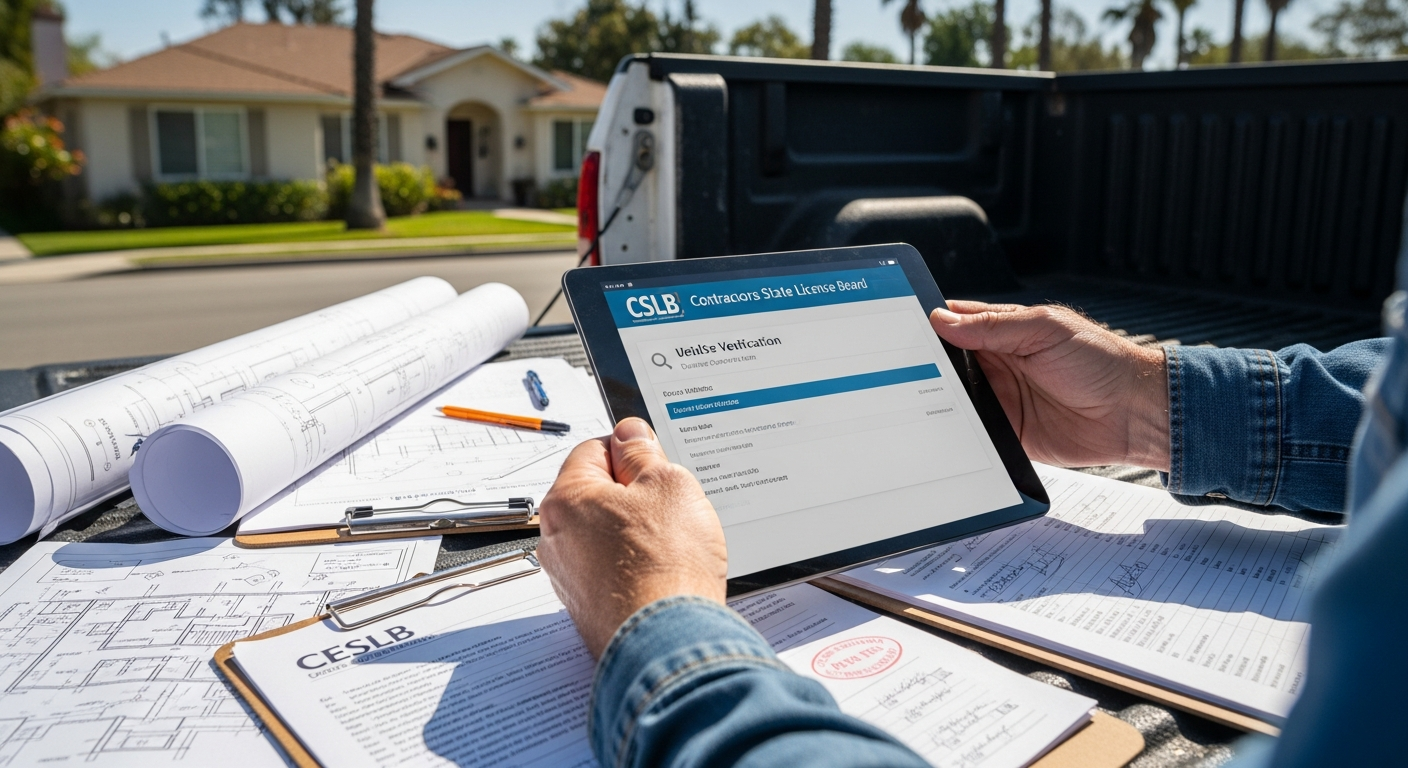
The Contractors State License Board maintains a public database that shows license status, classification, bond information, and disciplinary history. When you enter a contractor's license number on the CSLB website, you see whether the license is active, what work classifications it covers, and whether any complaints resulted in formal action. A Class B general contractor license—like Hillstar's CSLB #972213—allows the holder to manage complete home remodeling projects that involve multiple trades. Specialty licenses cover narrower scopes: C-10 for electrical, C-36 for plumbing, C-20 for HVAC. If the project includes structural changes, kitchen remodeling, or bathroom remodeling, the general contractor either holds those classifications or hires licensed subs for each trade.
The database also displays the contractor's bond and workers' compensation status. California requires a surety bond that protects homeowners if the contractor abandons the job or violates the contract. Workers' comp coverage protects you from liability if someone is injured on your property. Both should show as current. If either field reads 'exempt' or 'not on file,' ask why before signing anything. Some sole proprietors with no employees can self-certify exemption from workers' comp, but that exemption disappears the moment they bring a helper onto the site. Experienced contractors keep both bond and insurance current year-round because lapses trigger automatic license suspension.
Where Encino Homeowners Trip Up
Encino's mix of mid-century ranches and newer hillside homes attracts both legitimate contractors and unlicensed operators who rely on word-of-mouth referrals. The most common mistake is accepting a business card or website as proof of licensing. A logo, a truck wrap, and a polished estimate mean nothing if the license number doesn't check out. Some unlicensed individuals list a valid license number that belongs to someone else—a former employer, a relative, or a contractor in another state. Always verify the name on the CSLB record matches the name on the contract. If the contractor says he works 'under' another license, ask for that license holder's written authorization and confirm that person will actually supervise the work.
Another pitfall is hiring someone who holds an active license but operates outside its classification. A C-33 painting contractor cannot legally frame walls or install plumbing, even if he has done it before. A handyman without any license cannot perform work above a certain scope, and the scope threshold is lower than most homeowners assume. LADBS permit applications require the contractor's license number, and LADBS ties specific license classifications to specific permit types. A license that does not cover the scope of work is a problem to catch before the application goes in. Organized contractors confirm classification coverage during the initial walkthrough, so there are no surprises when the permit package goes in.
- Verify the license number on the CSLB website, not just the business card.
- Confirm the name on the license matches the name on your contract exactly.
- Check that the license classification covers the full scope of your project.
- Look for any disciplinary actions or outstanding citations in the public record.
- Ask for proof of current workers' comp and liability insurance, then call the carrier to confirm coverage dates.
What to Ask Before Signing the Contract
Start with the license number and write it down. Then visit the CSLB website and pull the full record. If the contractor hesitates to provide the number or offers to 'send it later,' that hesitation is the answer. Legitimate contractors print the license number on every estimate, proposal, and contract because state law requires it. Next, ask how long the license has been active. A brand-new license isn't disqualifying, but it does mean the contractor has less documented history. Longer tenure usually correlates with steadier work and fewer complaints, though exceptions exist in both directions.
Ask whether the contractor will pull the permits or expects you to act as owner-builder. LADBS allows homeowners to pull permits for their own properties, but doing so makes you the legal contractor of record. If something goes wrong—code violations, liens, injuries—you carry the liability. Experienced contractors pull permits under their own license because they know the code, they have relationships with inspectors, and they understand how to schedule inspections so the job keeps moving. If a contractor suggests you pull the permit to 'save money,' that suggestion is a red flag. It usually means he wants to avoid the paper trail or he isn't confident his work will pass inspection.
Ask for references from projects similar in scope and location. An Encino hillside remodel involves different challenges than a flat-lot addition in the Valley. Soil reports, drainage, and fire-zone requirements all come into play on sloped properties. A contractor who has navigated those issues before will have a clearer sense of what the city will require. Call at least two references and ask specific questions: Did the project finish on schedule? Were there any surprise costs? How did the contractor handle problems when they came up? If the contractor cannot or will not provide references, that absence tells you something.
Encino-Specific Compliance and Permit Notes
Encino falls under LADBS jurisdiction, so all structural work, electrical, plumbing, and mechanical systems require permits. Even projects that seem minor—like converting a garage or enclosing a patio—trigger permit requirements if they involve adding square footage or altering the building envelope. The city's online permit portal shows the permit history for any address. Before you hire anyone, search your own address and see what permits exist. If prior work was completed outside the permitted scope, you may need to legalize it before starting new construction. Contractors who understand the local permit landscape factor that research into the initial walkthrough.

Hillside properties in Encino often require additional engineering and geotechnical reports. If your lot has any slope, the contractor should mention soils and drainage during the first conversation. LADBS will not issue a permit for foundation work, retaining walls, or room additions on a hillside without stamped engineering drawings and sometimes a geology report. Those reports take time to commission and cost money, but they are not optional. Contractors who skip that discussion or promise to 'handle it later' either don't know the code or plan to work outside it. Either scenario ends badly.
Some Encino neighborhoods have homeowners associations with architectural review committees. Even if the city approves your plans, the HOA may require separate approval for exterior changes, paint colors, roofing materials, or landscaping. The contractor should ask whether an HOA governs your property and should be willing to attend the architectural review meeting if needed. Experienced contractors have been through that process before and know how to prepare drawings that satisfy both the city and the HOA. Skipping HOA approval can result in fines and a mandate to undo completed work, so it's worth addressing up front.
Red Flags That Show Up During Verification
A suspended or expired license is an automatic disqualifier. If the CSLB record shows the license lapsed, the contractor cannot legally work until it is reinstated. Some contractors let their licenses expire during slow periods and reactivate them when work picks up, but that gap leaves you unprotected. If the license shows multiple suspensions or a pattern of complaints, read the disciplinary actions carefully. A single resolved complaint from years ago may not be a concern, but repeated violations for the same issue—unlicensed subcontractors, abandoned jobs, failure to pay subs—indicate a pattern.
- Suspended, expired, or inactive license status.
- Mismatched names between the license record and the contract.
- No bond or workers' comp on file, or 'exempt' status without a clear explanation.
- Multiple disciplinary actions for the same type of violation.
- Refusal to provide the license number in writing or delays in producing it.
If the contractor's business address on the CSLB record is a P.O. box or a residential address in another state, ask why. CSLB requires every licensee to keep a current business street address on file, and if a contractor uses a P.O. box for mail, CSLB requires a separate business street address in addition to it — a P.O. box alone does not satisfy the requirement. An out-of-state address raises questions about whether the contractor is actually operating in California or just holding a license. Some contractors work remotely and hire local crews, which is legal, but you want to know that arrangement before you sign.
What the License Check Doesn't Tell You
A clean CSLB record confirms the contractor is licensed, bonded, and has no formal disciplinary history, but it doesn't measure quality, reliability, or communication. Some contractors maintain spotless records because they settle disputes quietly or because unhappy clients never filed formal complaints. The license check is the starting point, not the finish line. You still need to verify insurance, check references, review past projects, and confirm the contractor's process for handling permits, inspections, and changes. Organized contractors welcome those questions because they know their systems hold up under scrutiny.
The CSLB database also doesn't show whether the contractor carries general liability insurance beyond the minimum bond. The bond covers a narrow set of scenarios—mostly contract violations and unpaid bills—but it does not cover property damage or injuries. A separate liability policy protects you if the contractor's crew damages your home or if someone is hurt on the job. Ask for a certificate of insurance and call the carrier to confirm the policy is active and lists your address as the job site. Contractors who carry robust insurance are usually more careful on site because they know their premiums depend on their safety record.
How Hillstar Handles Licensing and Compliance
Hillstar Construction Inc holds an active Class B general contractor license in California, CSLB #972213. The license number—CSLB #972213—appears on every estimate, contract, and permit application. The company maintains current workers' comp coverage, and documentation is available for review before any contract is signed. Every project starts with a verification that the scope matches the license classification and that all required permits can be obtained under Hillstar's license. If specialty work falls outside the general contractor classification, licensed subcontractors are brought in and their credentials are verified the same way.
Permit applications go in under Hillstar's license, and the company coordinates all inspections with LADBS. Homeowners receive copies of approved permits and inspection records as the project progresses. If the city flags an issue or requests a revision, Hillstar handles the resubmittal and any required changes. That process keeps the project on the city's official record and ensures the work can be verified by future buyers, appraisers, or inspectors. Organized contractors treat permits as part of the job, not an obstacle to avoid.
FAQ
How do I verify a contractor's license in California?
Visit the CSLB website and enter the license number in the public search tool. The record will show the license status, classifications, bond and workers' comp status, and any disciplinary actions. Confirm the name on the license matches the name on your contract exactly.
What does it mean if a contractor's license is suspended?
A suspended license means the contractor cannot legally perform work until the suspension is lifted. Suspensions happen for various reasons: unpaid fees, lapsed insurance, unresolved complaints, or code violations. Hiring a contractor with a suspended license leaves you with no bond protection and no recourse through the CSLB if something goes wrong.
Can a contractor work under someone else's license in Encino?
A contractor can work as an employee or subcontractor under another license holder's supervision, but the license holder must actively supervise the work and sign the contract. If the person you're hiring is not the license holder, get written confirmation from the actual licensee that they will oversee the project and appear on the permit.
What should I do if I already hired an unlicensed contractor?
Stop work immediately and consult an attorney. Contracts with unlicensed contractors are generally unenforceable in California, and you may be entitled to a full refund of any payments made. If work has already been completed, you may need to hire a licensed contractor to inspect it, obtain permits retroactively if possible, and correct any code violations before the city discovers them.