

Planning Your Kitchen Layout
The kitchen layout shapes how the room is used every day. Before any tile or cabinet decisions, the floor plan and the path between sink, range, and refrigerator should be the first thing on the table.
Older homes in Los Angeles often have walls, soffits, or service routing that limit what can be moved. A clear-eyed look at the existing space helps narrow the layout to what's actually possible on that house.
- Working triangle between sink, range, and refrigerator
- Counter space on either side of the range and sink
- Clear paths around an island so two people can pass
- Pantry, trash, and small-appliance storage placed near the cook zone
Permits and Inspections in Los Angeles
Most kitchen remodels in Los Angeles require permits when the work touches electrical, plumbing, gas, or structural elements. The Department of Building and Safety reviews the plans and inspects the work as it progresses.
A licensed general contractor handles the permit submittals and coordinates inspections so the rough-in and final stages line up with the trades on site.
- Electrical permit for new circuits, panels, and dedicated outlets
- Plumbing permit for new fixtures, drains, and gas lines
- Mechanical permit for hood vents and ductwork
- Building permit when walls, headers, or structural members change
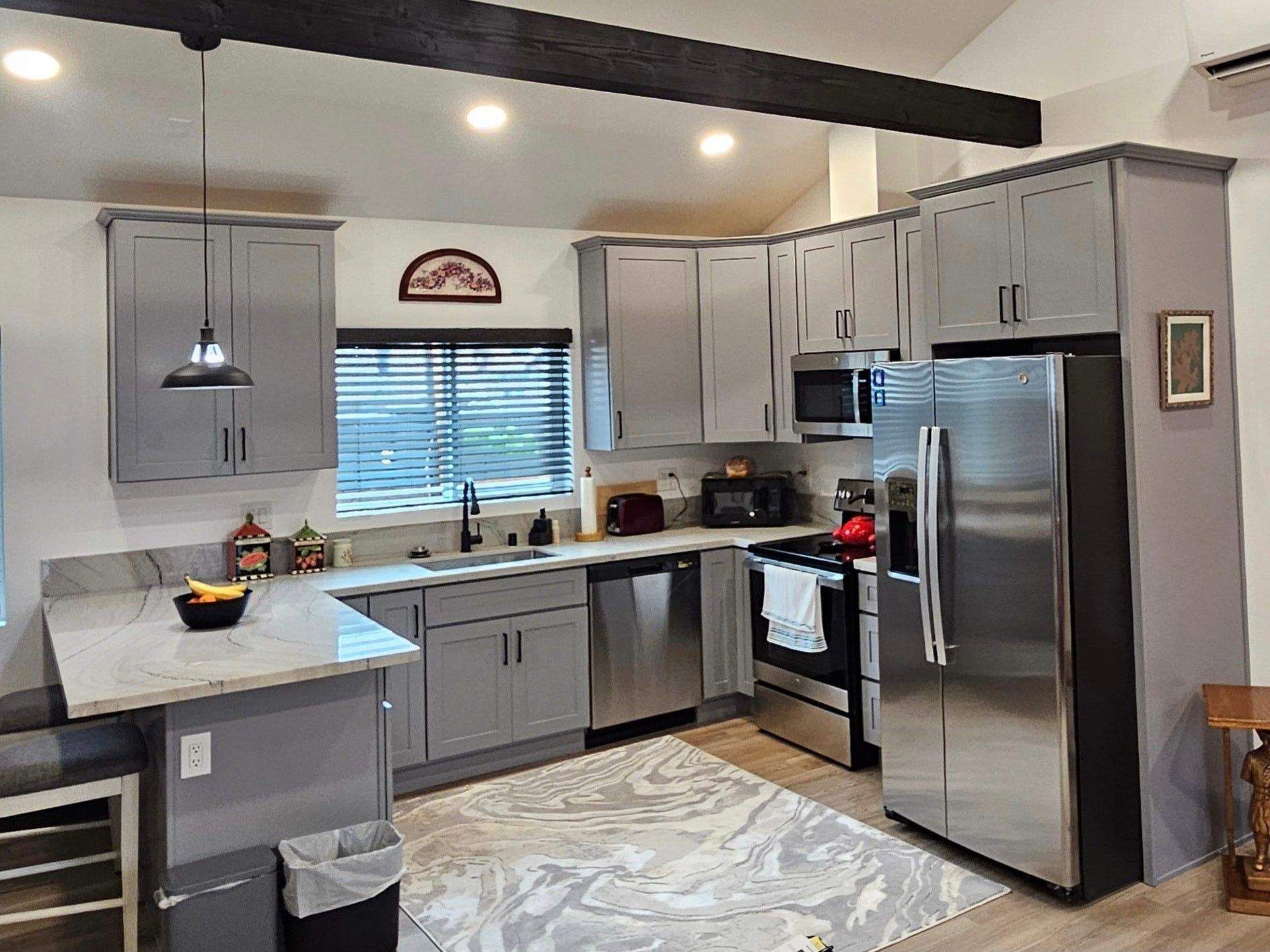
Choosing Materials That Fit Your Home
Materials decide how a kitchen looks on day one and how it holds up over the years. The right choice depends on the home's style, the way the kitchen is used, and the conditions inside the room itself.
A walk-through with the contractor and the supplier helps homeowners see real samples in the space before locking anything in.
- Cabinet construction, hardware, and finish quality
- Countertop options for the way the kitchen is actually used
- Backsplash material and the maintenance it asks for
- Flooring that handles spills, foot traffic, and the rest of the home's design