Reaching an LA Contractor After Hours or on Weekends — What Actually Works
Most Los Angeles contractor websites list business hours that end at five o'clock, but homeowner questions do not follow that schedule. A roof starts dripping at eight on a Sunday evening, or you are standing in your half-demolished kitchen on Saturday afternoon second-guessing the cabinet finish you approved three days earlier. The question is not whether you need to reach someone — the question is which channel will actually connect you to a person who can help, and what kind of help is realistic after the office closes.

The Real Situations That Come Up After Hours
Contractors hear the same handful of after-hours scenarios over and over. A hillside property in Woodland Hills gets hit by an evening storm and water is pooling near the foundation — the homeowner wants to know if they should call a plumber, a roofer, or just wait until morning. A mid-project home remodeling client in Encino realizes on Saturday that the subcontractor scheduled for Monday needs access through a locked side gate, and no one confirmed the key handoff. A Sherman Oaks homeowner approved tile samples on Thursday, spent the weekend staring at the box in the garage, and now wants to change the selection before the installer shows up Tuesday. None of these are true emergencies in the sense that requires an immediate truck roll, but all of them feel urgent to the person standing in the house.
The other common after-hours contact is the pre-project inquiry — someone browsing contractor websites on a Sunday afternoon who wants to schedule a walk-through or ask preliminary scope questions before committing to a site visit. That inquiry does not need an instant answer, but it does need to land somewhere other than a generic voicemail box that might not get checked until Wednesday.
Why Most LA Contractor Sites Only Show Weekday Hours
The typical Los Angeles general contractor website lists hours that run Monday through Friday, ending at four or five in the afternoon. That does not mean the contractor is unreachable outside those hours — it means the office phone is staffed during that window. Most small contractors are on jobsites all day, and the office number rings to a part-time admin or goes straight to voicemail. After five o'clock or on weekends, that voicemail might sit unattended until the next business day. The contractor is probably still working — walking a site, reviewing plans, coordinating with the permit expediter — but the intake channel is closed.

Larger firms sometimes route after-hours calls to an answering service, but those services are trained to take messages, not to answer construction questions. The homeowner leaves a callback number, and the loop closes whenever someone in the office picks up the note. For urgent situations that is not fast enough, and for non-urgent questions it creates unnecessary friction — the homeowner has to explain the issue twice, once to the service and once to the actual contractor.
The Practical Channels That Work Outside Business Hours
The channels that actually connect homeowners to help after hours fall into a few categories. Website chat is the most common — a small dialog box in the corner of the contractor's site that opens a text conversation. Some of those chat widgets are just contact forms in disguise, dumping the message into an email queue that no one monitors on weekends. Others route to a live person or to an intake assistant that can triage the question and escalate if needed. The difference is whether the system is designed to handle real-time questions or just collect leads.
Voicemail-to-text is another option — the homeowner calls the main number, leaves a message, and the system transcribes it and sends it as a text or email to the contractor's phone. That gets the message in front of someone faster than waiting for them to dial into a voicemail box, but it still depends on the contractor checking their phone. Evening and weekend phone routing is less common but more effective — the after-hours line forwards to a mobile number or to a service that can page the on-call person. That works when the contractor has set up the infrastructure and committed to monitoring it.
- Website chat that routes to a live intake assistant, not just a form
- Voicemail transcription that pushes messages to the contractor's mobile device
- After-hours phone forwarding to an on-call number
- Text-message intake for quick triage questions
How Hillstar Handles After-Hours Intake
Hillstar's after-hours system uses two parallel channels. The website chat is handled by an intake assistant (Mickey, Hillstar's website assistant) that routes questions to a Hillstar representative in real time. That means a homeowner who opens the chat window on a Saturday afternoon is not typing into a void — the message goes to someone who can answer basic questions, schedule a callback, or escalate to the project manager if the situation requires it. The chat does not replace a site visit or a detailed scope conversation, but it closes the loop faster than leaving a voicemail and hoping for a Monday callback.
The after-hours phone line uses a similar intake assistant so calls do not die into a generic voicemail. The system asks a few triage questions — is this about an active project or a new inquiry, is there an immediate safety concern, does the caller need a callback or just want to leave information — and routes the call accordingly. For active projects the system can page the project manager directly. For new inquiries it schedules a callback during business hours and confirms the appointment via text. The goal is to make sure every contact lands somewhere useful, even if the full answer has to wait until someone can walk the site.
What to Expect for Response Time
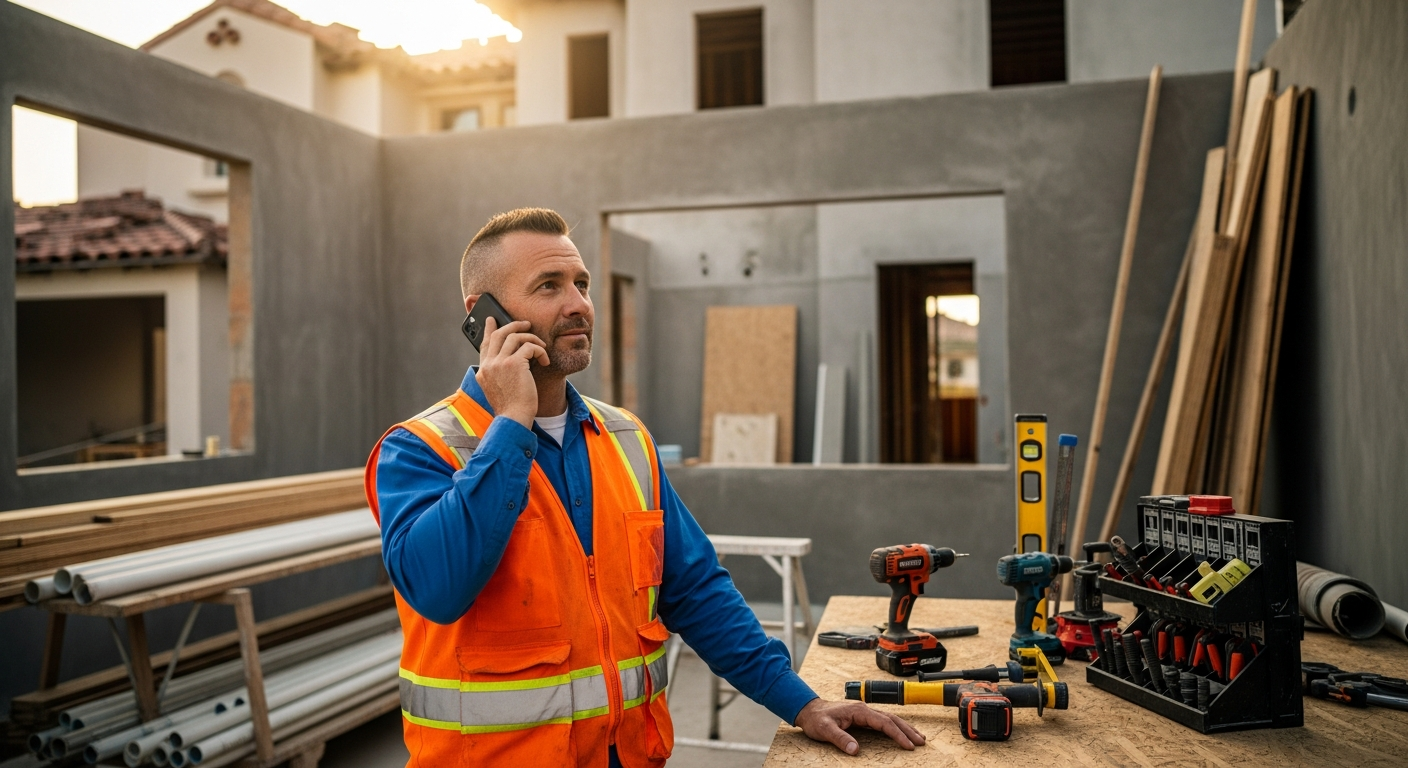
Response time after hours depends on the nature of the question and the contractor's workload. A true emergency — active water intrusion, a downed power line near the construction zone, a structural failure — gets an immediate callback, usually within the hour. Most contractors maintain an on-call rotation for those situations, and the intake system knows how to escalate. A mid-project coordination question — confirming Monday's start time, clarifying a material delivery, asking whether the inspector needs access to the attic — typically gets a response the same evening or early the next morning. The contractor checks their phone between jobsite stops, and a quick text or voicemail closes the loop.
A new-inquiry question — asking about kitchen remodeling scope, requesting a walk-through appointment, wondering whether an ADU is feasible on a specific lot — usually gets a callback within one business day. That is faster than the typical Monday-morning email backlog, but it is not instant. The contractor needs to review the property details, check the schedule, and sometimes consult with the permit expediter or the design team before committing to a timeline. Expecting a same-day quote or a detailed scope discussion over a Saturday chat is not realistic — those conversations require preparation and often a site visit.
What NOT to Expect Over Chat or After-Hours Phone
After-hours channels are not a substitute for the full project intake process. A homeowner cannot get a binding estimate over chat — the contractor needs to walk the property, measure the space, review the existing conditions, and confirm what is behind the walls before committing to a number. Change orders cannot be approved over the phone on a Sunday — those require updated drawings, a revised scope document, and often a conversation with the city about whether the change triggers additional permit review. Anything that needs a site visit or a formal document has to wait until the contractor is back in the office with access to the full project file.
The after-hours system is designed to handle triage, scheduling, and basic clarification. It can confirm that the plumber is scheduled for Tuesday, or reassure the homeowner that the roof leak they are seeing is from condensation and not a structural failure. It cannot approve a finish change, revise a contract, or commit to a new scope item without the full team reviewing the request. Homeowners who understand that distinction get better results — they use the after-hours channel for what it is good at and save the complex questions for the next business-day conversation.
- No binding estimates or pricing discussions — those require a site visit
- No change-order approvals — those need updated drawings and permit review
- No detailed scope planning — that happens during the walk-through
- No same-day scheduling for complex work — the contractor needs to coordinate subcontractors and confirm material availability
Honest Tradeoffs — When After-Hours Contact Makes Sense
After-hours contact makes sense when the question is time-sensitive but does not require a truck roll. A homeowner who notices water pooling near the foundation on a Sunday evening should call — the contractor can walk them through temporary mitigation steps and schedule a roofing inspection for first thing Monday morning. A client who realizes on Saturday that the tile installer needs a gate key on Monday should text — the project manager can confirm the handoff plan and avoid a wasted trip. A pre-project inquiry from someone who wants to schedule a walk-through can go through the website chat — the intake assistant can check the calendar and lock in an appointment without waiting for the office to open.
After-hours contact does not make sense when the question requires research, a site visit, or a multi-party conversation. A homeowner who wants to know whether their Encino property can support a second-story addition needs to wait for the contractor to review the lot survey, check the zoning overlay, and consult with the structural engineer. A client who wants to change the bathroom remodeling layout mid-project needs to wait for the contractor to redraw the plans, confirm that the plumbing rough-in can accommodate the new fixture locations, and verify that the change does not trigger additional LADBS review. Those conversations cannot happen over a Saturday phone call — they require the full team and access to the project documents.
Neighborhood Examples — When After-Hours Calls Actually Happen
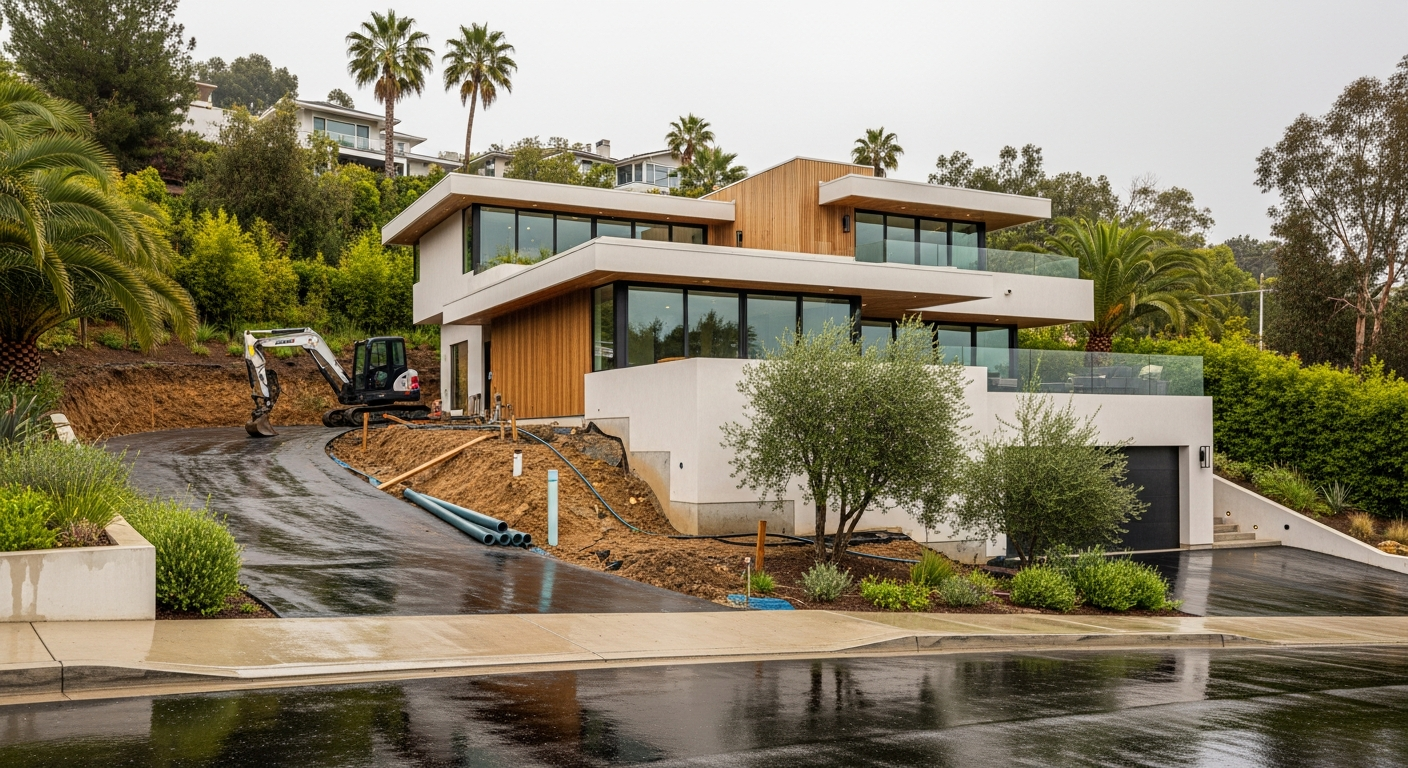
Woodland Hills hillside properties generate a predictable spike in after-hours calls during the rainy season. A homeowner notices water running toward the foundation after an evening storm and wants to know whether they need emergency mitigation or whether it can wait until morning. The contractor walks them through checking the grading, confirms that the water is surface runoff and not a roof leak, and schedules a site visit to review the drainage plan. That ten-minute phone call prevents a panic-driven call to a random emergency service and keeps the project on track.
Encino mid-project coordination questions often come up on weekends when the homeowner is home and notices something that does not match their expectation. The framing looks different from the drawings, or the electrical rough-in does not have an outlet where they thought one was planned. The contractor explains that the drawings show the code-minimum layout and that additional outlets require a change order, or confirms that the framing matches the permit set and the visual difference is just the perspective from inside the space. That clarification prevents a Monday-morning confrontation and keeps the relationship on solid ground.

Sherman Oaks HOA approval timing creates after-hours questions when the homeowner realizes on a weekend that the architectural committee meets Tuesday and the submittal packet is not complete. The contractor confirms what documents are still needed, explains that the HOA review is separate from the LADBS permit process, and schedules a Monday-morning call to finalize the packet. That weekend text prevents a missed deadline and avoids a month-long delay waiting for the next committee meeting.
What Separates Organized After-Hours Systems from Chaos
The difference between a functional after-hours system and a frustrating one is whether the intake process is designed to route questions to the right person. A generic voicemail box dumps every call into the same queue, and the contractor has to listen to each message, figure out which project it relates to, and decide whether it needs an immediate callback or can wait. A structured intake assistant asks enough questions to triage the call — active project or new inquiry, safety concern or scheduling question, callback needed or just leaving information — and routes it accordingly. That saves the contractor time and gets the homeowner a faster answer.
The other key element is whether the system escalates true emergencies. A water leak, a gas smell, a structural failure — those need an immediate response, not a Monday-morning callback. The intake assistant knows how to recognize those situations and page the on-call person directly. For everything else the system schedules a callback during business hours and confirms the appointment. That keeps the after-hours channel from turning into a free-for-all where every question is treated as urgent, and it ensures that real emergencies get the attention they need.
FAQ
Does Hillstar answer the phone on weekends?
Hillstar's after-hours phone line uses an intake assistant that routes calls based on urgency. True emergencies get an immediate callback, mid-project coordination questions typically get a response the same evening, and new inquiries are scheduled for a callback during business hours. The system ensures that every call lands somewhere useful rather than sitting in a voicemail box until Monday.
How fast do contractors typically reply to after-hours messages?
Response time depends on the nature of the question. Safety concerns and active water intrusion get callbacks within the hour. Mid-project coordination questions usually get a response the same evening or early the next morning. New-inquiry questions about scope or scheduling typically get a callback within one business day, since those conversations require access to project files and the full team.
Can I get an estimate quote online before a walk-through?
No contractor can provide a binding estimate without walking the property. The after-hours intake system can schedule a walk-through appointment and answer basic scope questions, but the actual estimate requires measuring the space, reviewing existing conditions, and confirming what is behind the walls. Homeowners who understand that distinction get more accurate information and avoid surprises later in the project.
What should I do if I notice a problem with my remodel on a Sunday?
If the problem is a safety concern — water intrusion, gas smell, structural failure — call the after-hours line immediately. If it is a coordination question or a finish-selection concern, use the website chat or leave a voicemail with enough detail for the contractor to understand the issue. Most mid-project questions can wait until the next business day, but the intake system ensures that your message reaches the right person rather than disappearing into a generic queue.