Whole-House Remodel vs Room-by-Room: Which Fits in Woodland Hills
Woodland Hills sits on hillside terrain where a single permit decision can cascade through the entire project. Homeowners often ask whether to tackle the whole house at once or spread the work across seasons. The answer depends on how the property's systems are interconnected, what LADBS already has on file, and whether you can live through construction or need to stage the work in phases.

What Whole-House and Room-by-Room Actually Mean in Woodland Hills
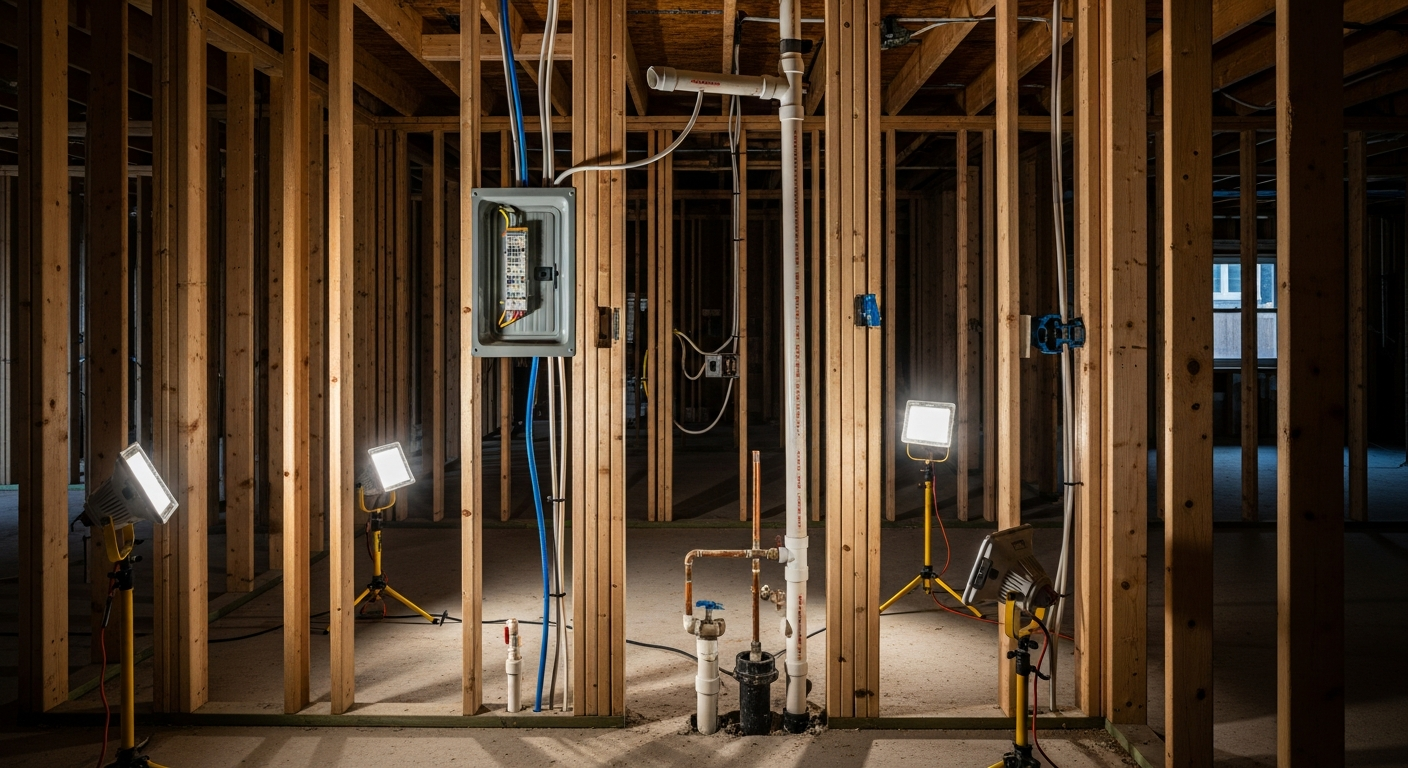
A whole-house remodel pulls permits that touch structure, electrical, plumbing, and mechanical across the entire footprint. The contractor opens walls, reroutes systems, and coordinates inspections in a single sequence. Room-by-room work isolates each scope behind its own permit, so the kitchen closes while the rest of the house stays open, then the bathrooms follow later. In Woodland Hills the distinction matters because hillside lots often share a single main panel, a common sewer lateral, or a roof plane that spans multiple rooms. When one system serves the whole property, splitting the work into separate permits can mean redundant plan-check fees, multiple LADBS inspector visits, and longer calendar time even if the hammer-days stay the same.
Experienced contractors look at the existing conditions first. If the house was built in the nineteen-sixties or seventies, the electrical panel may sit at capacity and any new load triggers a service upgrade. That upgrade requires a trench to the street, coordination with LADWP, and a separate inspection. Trying to permit a kitchen first and then a bathroom six months later means the panel work gets duplicated or deferred. The same logic applies to sewer laterals on hillside properties where gravity flow dictates a single path to the city main. Opening one bathroom now and another later can mean two separate trench permits if the contractor did not map the full lateral during the first phase.
Where Homeowners Trip Up on Scope and Staging
The most common mistake is assuming room-by-room work costs less because the initial invoice is smaller. In practice, mobilizing a crew twice, pulling two sets of permits, and scheduling two rounds of inspections often adds overhead that exceeds the savings from spreading payments. Hillstar Construction Inc sees this on Woodland Hills hillside homes where the driveway is steep and material deliveries require a crane or hand-carry. Bringing the crane once for a whole-house job is straightforward; bringing it twice for separate phases doubles the logistics cost and the calendar disruption. Those slope-driven logistics are exactly what remodeling on a hillside lot in Woodland Hills walks through in detail.
Another pitfall is underestimating how one room's work affects adjacent spaces. Opening a kitchen wall to move plumbing may reveal that the bathroom on the other side shares the same stack. If that bathroom is not part of the current permit, the contractor cannot touch the stack without amending the scope or deferring the kitchen work until a second permit is ready. On older Woodland Hills properties, structural members often span multiple rooms, so removing a load-bearing wall in the living area requires temporary shoring that extends into the dining room. If the dining room is staged for a later phase, the shoring stays in place longer, the homeowner lives around it, and the final finish work waits.
- Electrical panel upgrades that serve the whole house cannot be split across permits without redundant plan-check cycles.
- Sewer lateral work on hillside lots often requires a single trench permit covering all fixtures, not separate permits per bathroom.
- Structural shoring for load-bearing walls may extend into rooms not included in the current phase, delaying finish work.
- HVAC ductwork routed through attic spaces typically serves multiple rooms, so isolating one zone can leave the system incomplete until the next permit closes.
Living Through Construction vs Moving Out
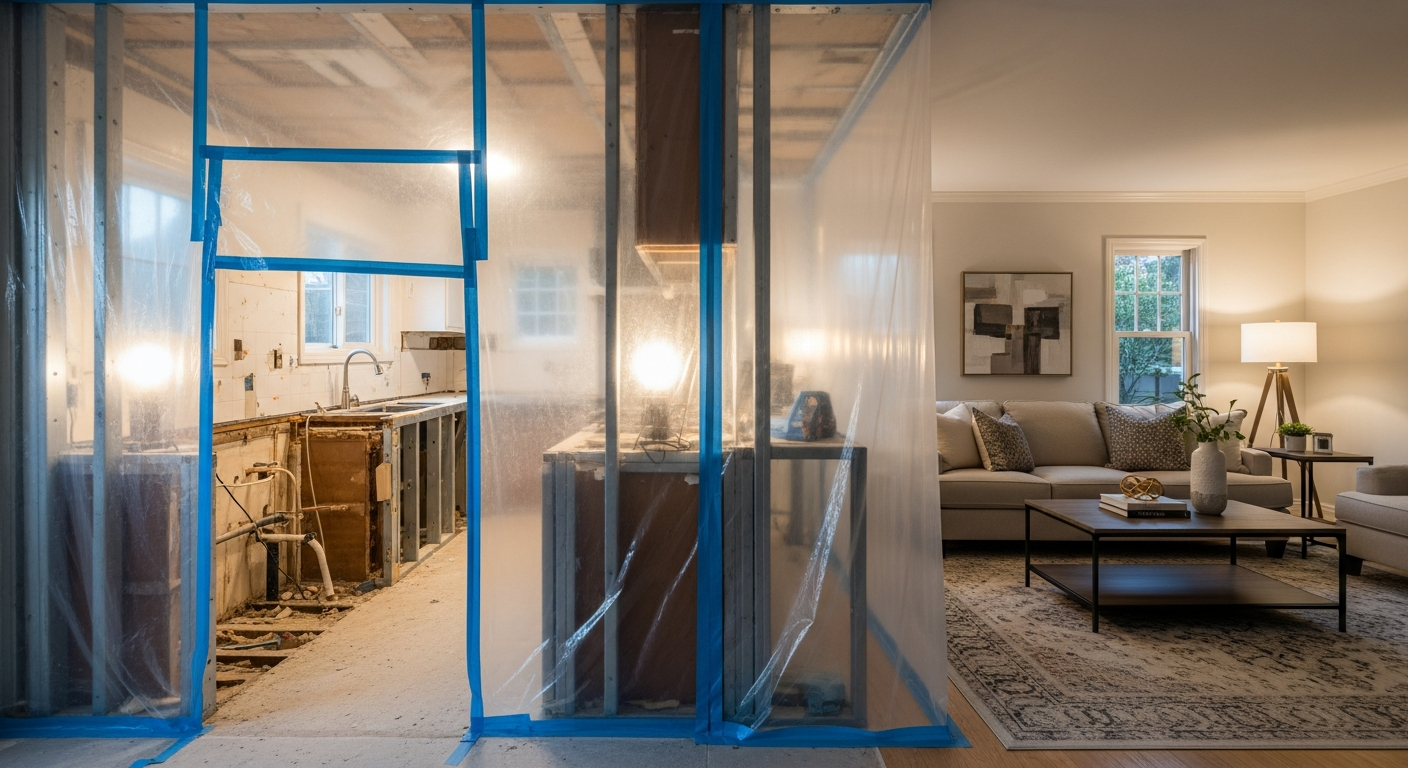
Whole-house projects usually mean the homeowner relocates for the duration. The contractor can work faster without coordinating around occupied bedrooms, the dust stays contained to the construction zone, and inspections happen on the crew's schedule rather than the family's availability. Room-by-room staging lets the homeowner stay in place, but it also means the contractor must seal off work areas, limit noise during certain hours, and schedule deliveries around school drop-offs or remote work calls. On Woodland Hills hillside streets where parking is tight and neighbors are close, the logistics of a phased remodel can stretch the calendar significantly.
Experienced contractors ask during the walkthrough whether the homeowner has a place to stay. If the answer is yes, a whole-house approach often makes sense because the crew can move through the property in the most efficient sequence—demo everything, rough in all systems, close all walls, then finish all surfaces. If the homeowner must stay, the contractor maps out which rooms can close first, where temporary kitchen and bathroom facilities will go, and how to maintain a safe path through the house. That planning takes time up front but prevents the frustration of discovering mid-project that the only bathroom is behind a plastic sheet and the laundry hookups are disconnected.
Permit Strategy and LADBS Coordination
A whole-house remodel needs a building permit for the structural work, along with the plumbing, electrical, and heating permits the scope calls for. The work is then inspected in the stages LADBS's own homeowner guide sets out — groundwork, rough, and final. Room-by-room permits split that work into separate files, each with its own plan-check queue and its own inspection calendar, so the contractor keeps the two scopes clearly separated on the drawings and each permit stands on its own.
On Woodland Hills hillside properties, grading work in the hillside grading area requires a grading permit, and grading plan checks are performed by both the Structural Plan Check and the Grading Sections. Splitting the project into phases does not remove those requirements. The same is true of Title 24 energy compliance: Part 6 of Title 24 is the State of California energy regulation, and the plans for each permit have to show the energy-conservation details for the work in that scope.
What to Ask the Contractor Before Signing
The walkthrough is where the realistic scope comes into focus. Ask the contractor to map out which systems serve multiple rooms and whether those systems can be isolated for phased work. If the answer is no, a whole-house approach may be the only way to avoid redundant costs. Ask how the permit strategy affects the inspection schedule and whether LADBS will allow overlapping permits on the same property. Some jurisdictions flag concurrent permits as a red flag for unpermitted work, so the contractor needs to explain how the phasing will be documented.
Ask whether the contractor has worked on Woodland Hills hillside lots before and what challenges came up with access, staging, and material delivery. Hillside projects often require hand-carrying materials up steep driveways or using a crane to lift bundles over the roofline. If the contractor plans to mobilize twice for separate phases, ask how that affects the logistics cost and whether the savings from phased payments offset the added overhead. Ask what happens if the first phase uncovers conditions that change the scope of the second phase—does the contract allow for amendments, or does the homeowner need to renegotiate?
- Can the electrical panel, plumbing stack, and HVAC ductwork be isolated for room-by-room work, or do they serve the whole house?
- How many separate permits will LADBS require, and what is the plan-check timeline for each?
- If the homeowner stays in the house, where will temporary kitchen and bathroom facilities be located?
- What is the contractor's experience with Woodland Hills hillside access, and how does phasing affect material delivery costs?
- Does the contract include a mechanism for adjusting scope if the first phase reveals conditions that change the second phase?

When Whole-House Makes Sense
Whole-house remodeling works best when the homeowner can relocate, the property's systems are interconnected, and the goal is to finish everything in one continuous sequence. Hillstar Construction Inc sees this on Woodland Hills homes where the electrical panel is undersized, the sewer lateral needs replacement, and the roof is near the end of its service life. Tackling all three at once means one coordinated permit package, one set of inspections, and one mobilization. The contractor can coordinate the roofing crew with the electrician so the new panel conduit is installed before the roof deck is closed, and the plumber can trench the sewer lateral while the driveway is already open for the electrical service upgrade.
Another scenario is when the homeowner wants to reconfigure the floor plan. Moving walls, combining rooms, or opening up sightlines usually requires structural work that spans multiple areas. Trying to phase that work means temporary shoring stays in place longer, finish surfaces remain incomplete, and the homeowner lives in a construction zone for an extended period. A whole-house approach lets the contractor demo everything, install all new framing, and close all walls in a logical sequence. The dust and disruption are intense but short, and the homeowner moves back into a finished space rather than a patchwork of completed and deferred rooms.
When Room-by-Room Makes Sense
Room-by-room staging works when the homeowner cannot relocate, the property's systems are already separated by room, and the budget needs to be spread across multiple years. Hillstar Construction Inc sees this on Woodland Hills homes where the kitchen and bathrooms are on opposite ends of the house, each with its own plumbing stack and electrical subpanel. The contractor can pull a kitchen remodeling permit, complete that work, and close the permit before starting a separate bathroom remodeling permit. The homeowner lives in the rest of the house, the kitchen is functional again, and the next phase waits until the budget allows.
Another scenario is when the homeowner wants to test the contractor's work before committing to a larger scope. Starting with a single bathroom or a powder room gives both parties a chance to see how communication, scheduling, and quality align. If the first phase goes smoothly, the homeowner can proceed with confidence into the kitchen or primary suite. If issues arise, the scope is contained and the homeowner can adjust expectations or change contractors before the whole house is opened up. That approach adds time and overhead, but it reduces the risk of being locked into a bad experience across the entire property.
Budget and Payment Structure Differences
Whole-house contracts typically use a fixed price or cost-plus structure with one detailed scope of work and progress payments tied to milestones: deposit at contract signing, then payments after rough framing, rough mechanical, drywall, and final inspection. Room-by-room projects can use the same model but often break into separate contracts for each phase, which means renegotiating scope and pricing every time the next room is ready to start. Phased work can also create budget creep — a condition like a rotted subfloor discovered during the kitchen phase gets priced and mobilized again when the same problem surfaces in the bathroom phase a year later. Opening the affected rooms together lets the contractor price the repair once and complete it in one mobilization.
Woodland Hills Compliance and Hillside Considerations
Woodland Hills sits in the hillside area, where grading work requires a grading permit from LADBS, the Baseline Hillside Ordinance governs maximum residential floor area and height, and plans with structural alterations must be stamped by a licensed engineer or architect. If the remodel includes new footings, a retaining wall, or changes to the driveway grade, the grading plan check is performed by both the Structural Plan Check and the Grading Sections. Phasing the work does not remove those requirements.
Title 24 energy compliance applies to both whole-house and room-by-room projects. Part 6 of Title 24 is the State of California energy regulation, and residential plan submittals have to show the energy-conservation details for the work being permitted. The contractor explains what that means for the project during the walkthrough and confirms the approach during permit prep.
HOA rules in some Woodland Hills neighborhoods limit construction hours, require advance notice for material deliveries, and restrict street parking for contractor vehicles. Phasing the work across multiple seasons means the HOA sees the same truck twice, the same dumpster twice, and the same dust control measures twice. Some associations charge a construction deposit per permit, so splitting the project into separate phases can double that cost. The contractor reviews the HOA's CC&Rs during the walkthrough and factors those constraints into the permit strategy.
What Experienced Contractors Look For
The first thing an experienced contractor checks is the property's permit history. LADBS keeps online building records going back to 1905, so the permit history of a Woodland Hills address can be pulled and read before the scope is set. If work was done without permits, unpermitted work can draw an Order To Comply from the city, with fees and penalties on top of the permits that still have to be obtained — and dealing with that can take longer than the remodel itself, so what the record shows can change the whole-house vs room-by-room decision.
The second thing the contractor checks is the condition of the existing systems. If the electrical panel is full, the plumbing stack is cast iron, or the HVAC ducts are uninsulated flex, those systems will need upgrades regardless of whether the remodel is whole-house or room-by-room. The contractor explains which upgrades can be deferred and which must happen now to meet code. That conversation shapes the permit strategy and helps the homeowner understand the true scope before signing.
The third thing the contractor checks is access and staging. Woodland Hills hillside lots often have narrow driveways, limited street parking, and steep grades that require special equipment. If the contractor needs to bring a crane or a concrete pump, doing it once for a whole-house job is more efficient than doing it twice for separate phases. The contractor walks the site, measures the driveway width, and confirms whether the street has parking restrictions or time limits. That information goes into the logistics plan and affects the permit strategy.
FAQ
Does a whole-house remodel in Woodland Hills require a single permit or multiple permits?
A whole-house remodel needs a building permit for the structural work, along with the plumbing, electrical, and heating permits the scope calls for, and the permit set must show the complete scope of work. The work is then inspected in stages — groundwork, rough, and final. Room-by-room projects are permitted separately, each with its own plan-check cycle and inspection schedule.
Can I live in my Woodland Hills home during a whole-house remodel?
Most whole-house remodels require the homeowner to relocate because the contractor needs access to all rooms, utilities are often disconnected, and dust control is difficult when the entire property is open. Room-by-room staging allows the homeowner to stay, but it extends the calendar and requires careful coordination to maintain safe, functional living spaces.
How does hillside terrain in Woodland Hills affect the whole-house vs room-by-room decision?
Hillside lots often have shared systems—one main electrical panel, one sewer lateral, one roof plane—that serve multiple rooms. Splitting the work into separate permits can mean redundant inspections, duplicated trenching, or deferred upgrades that complicate the second phase. The contractor evaluates the property's layout during the walkthrough and explains how terrain and access affect the permit strategy.
What happens if I start with one room and decide to expand the scope later?
The contractor can pull a second permit for additional rooms, and each permit goes through plan check and inspections on its own. If the first phase uncovered conditions that affect the second phase—such as an undersized panel or a shared plumbing stack—the contractor plans the second scope around what the first phase revealed. The contract should include a mechanism for adjusting scope based on what the first phase reveals.