
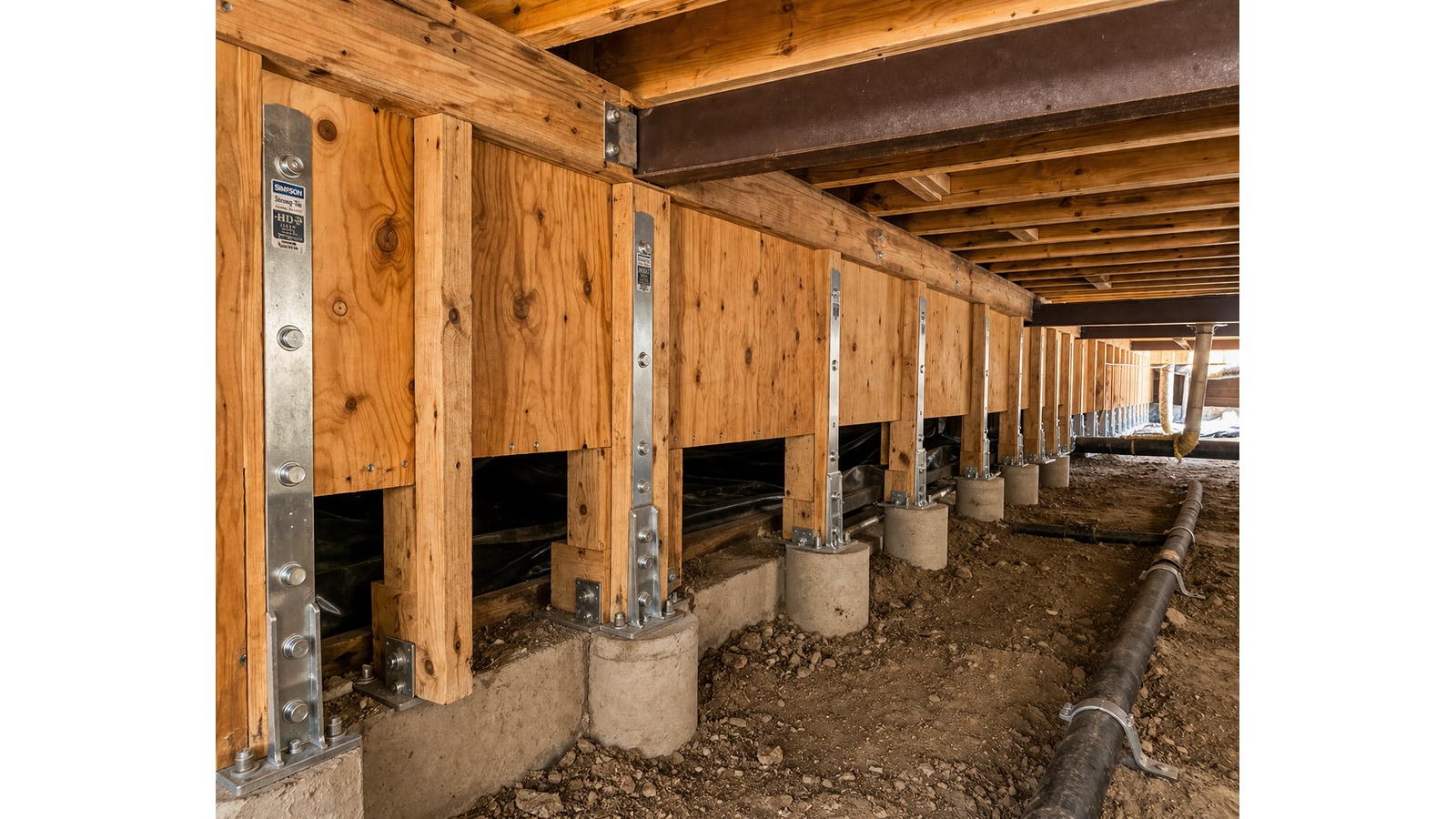
A soft-story building is one where the lower level is structurally weaker than the floors above it. In Los Angeles, that shows up most often in two ways: older multi-family wood-framed buildings with parking tucked under living units, and older single-family homes raised on cripple walls and post-and-pier supports. Either way, the seismic problem is concentrated at that lower level — when the ground shakes, the floors above push and pull on a base that was never engineered for the loads. This post walks through what soft-story retrofit looks like on a Los Angeles property and what to ask a contractor before signing.
What makes a building “soft-story”
The shorthand version: the ground floor — or, on a raised single-family home, the cripple-wall level — has noticeably less wall, sheathing, and bracing than the floors above. Common examples around Los Angeles include older multi-family wood-framed buildings with parking on the ground floor, hillside houses on cripple walls, and homes with a wide carport opening under the living space. The structural problem is concentrated at that level, which is why the retrofit work concentrates there too.
Why the City of Los Angeles requires retrofit on certain buildings
Los Angeles passed mandatory soft-story retrofit ordinances after past earthquakes exposed how those structures performed. The ordinances target specific building types and ages. If your property is on the list, the city sends a formal notice, and the retrofit becomes a code compliance project. Even when the building is not on the mandatory list, owners of older single-family homes with cripple walls or unbolted mudsills frequently choose to retrofit voluntarily.
What the retrofit work actually looks like
The exact scope depends on the engineer’s design and the conditions on site, but a typical Los Angeles soft-story retrofit usually combines several of the following:
- New steel moment frames or concrete shear walls at a tuck-under garage or carport opening.
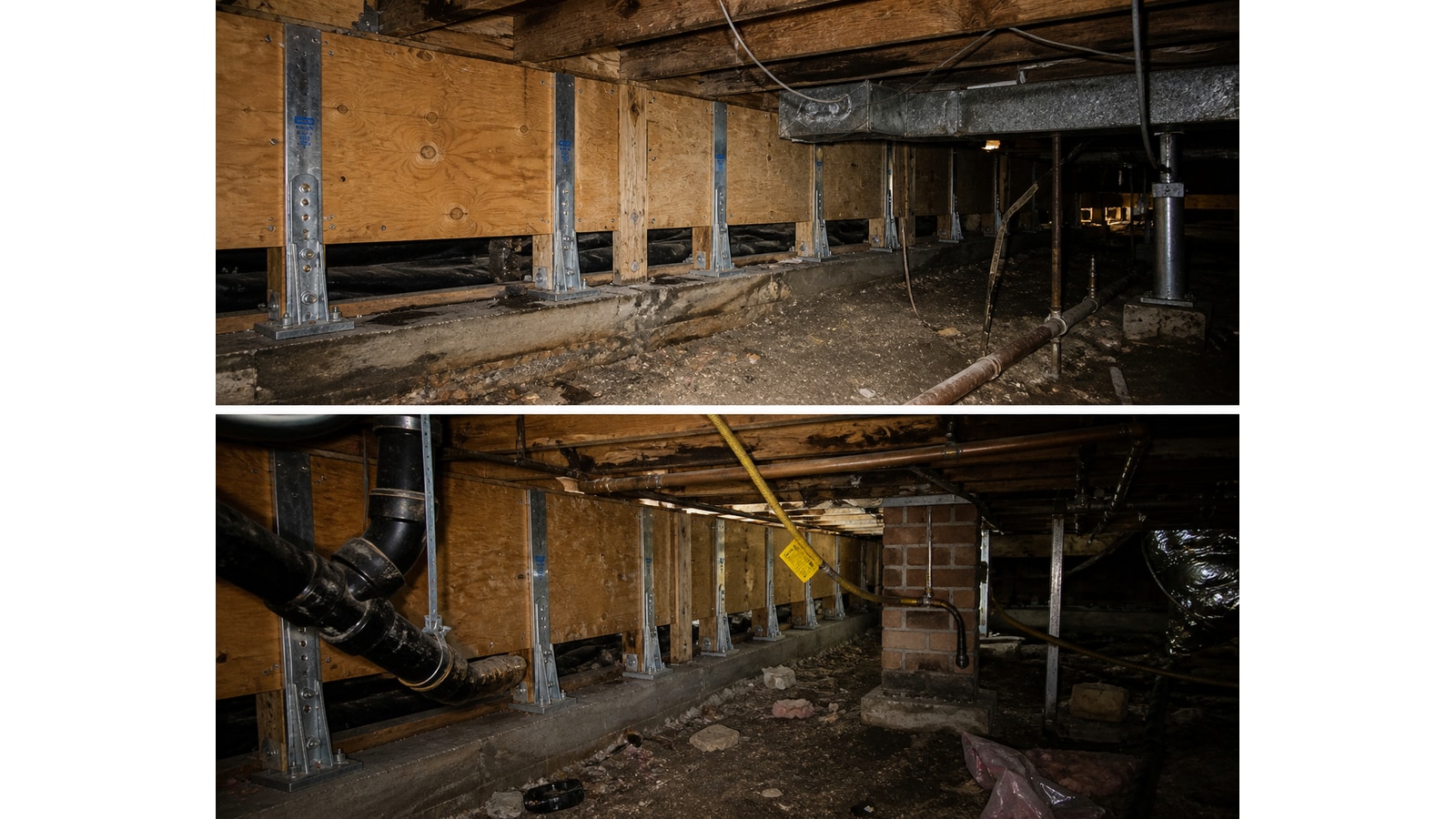
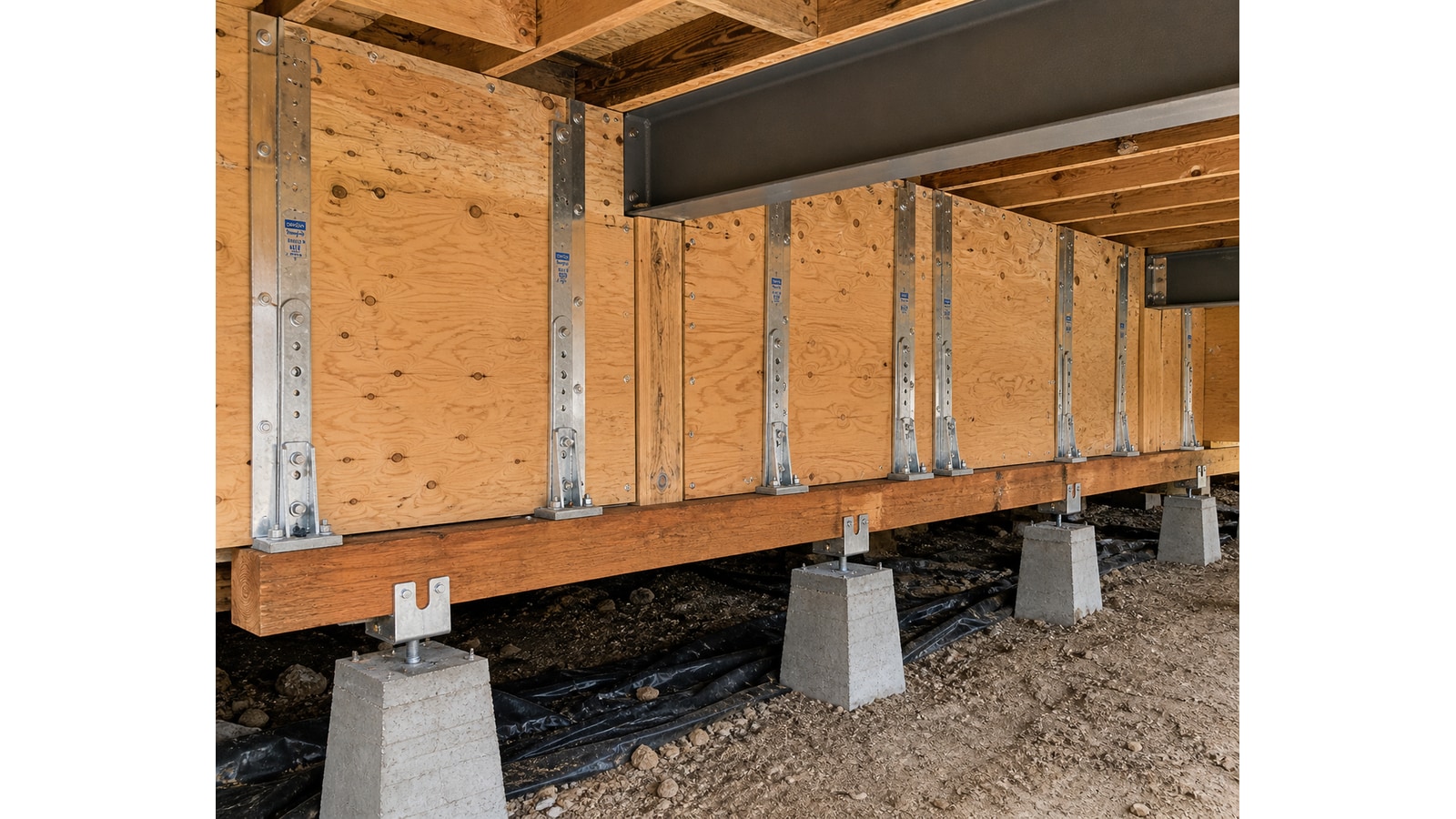
- Anchor bolts and galvanized hold-downs tying the wood framing to the foundation.
- New plywood shear panels on existing cripple walls.
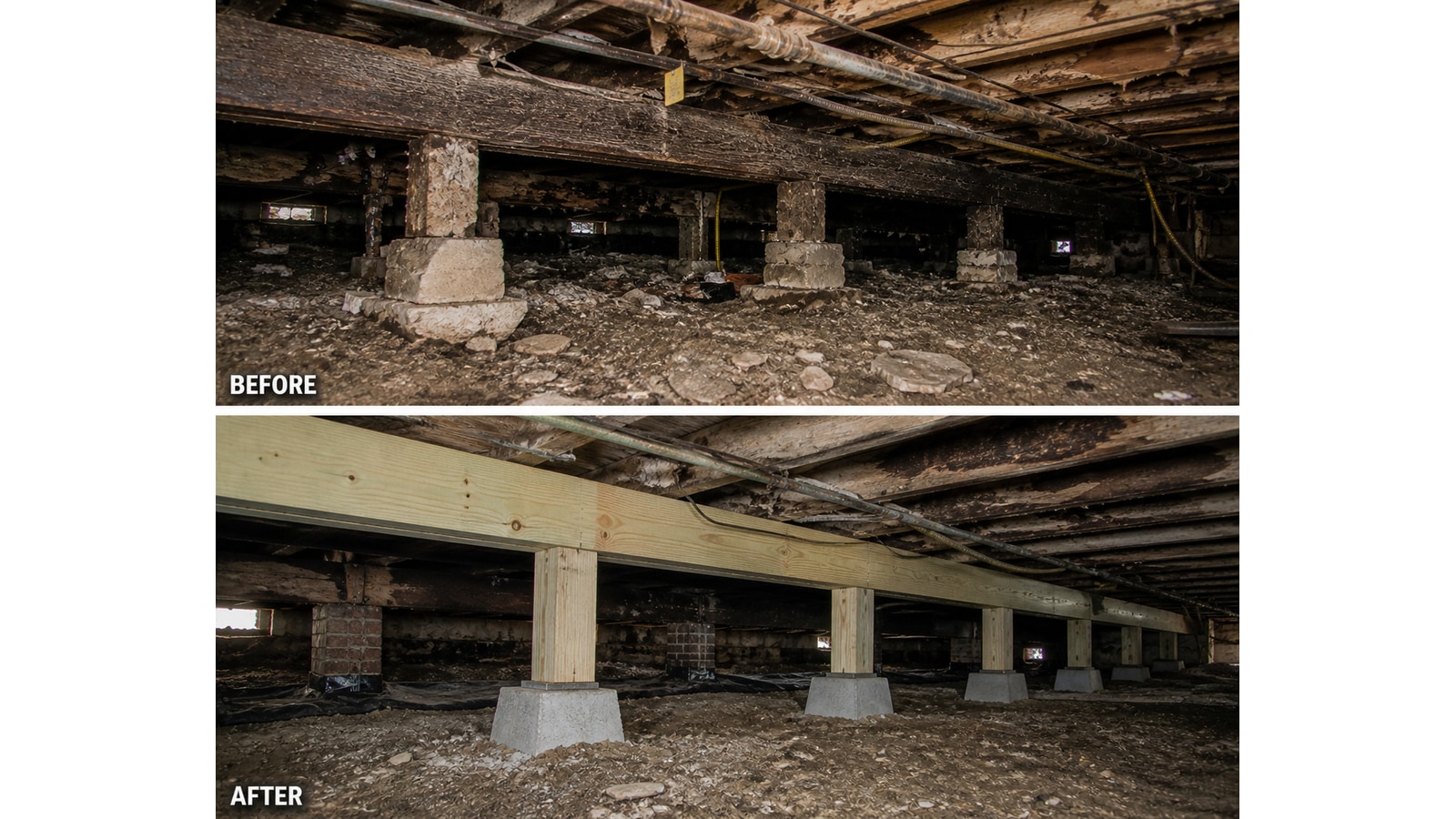
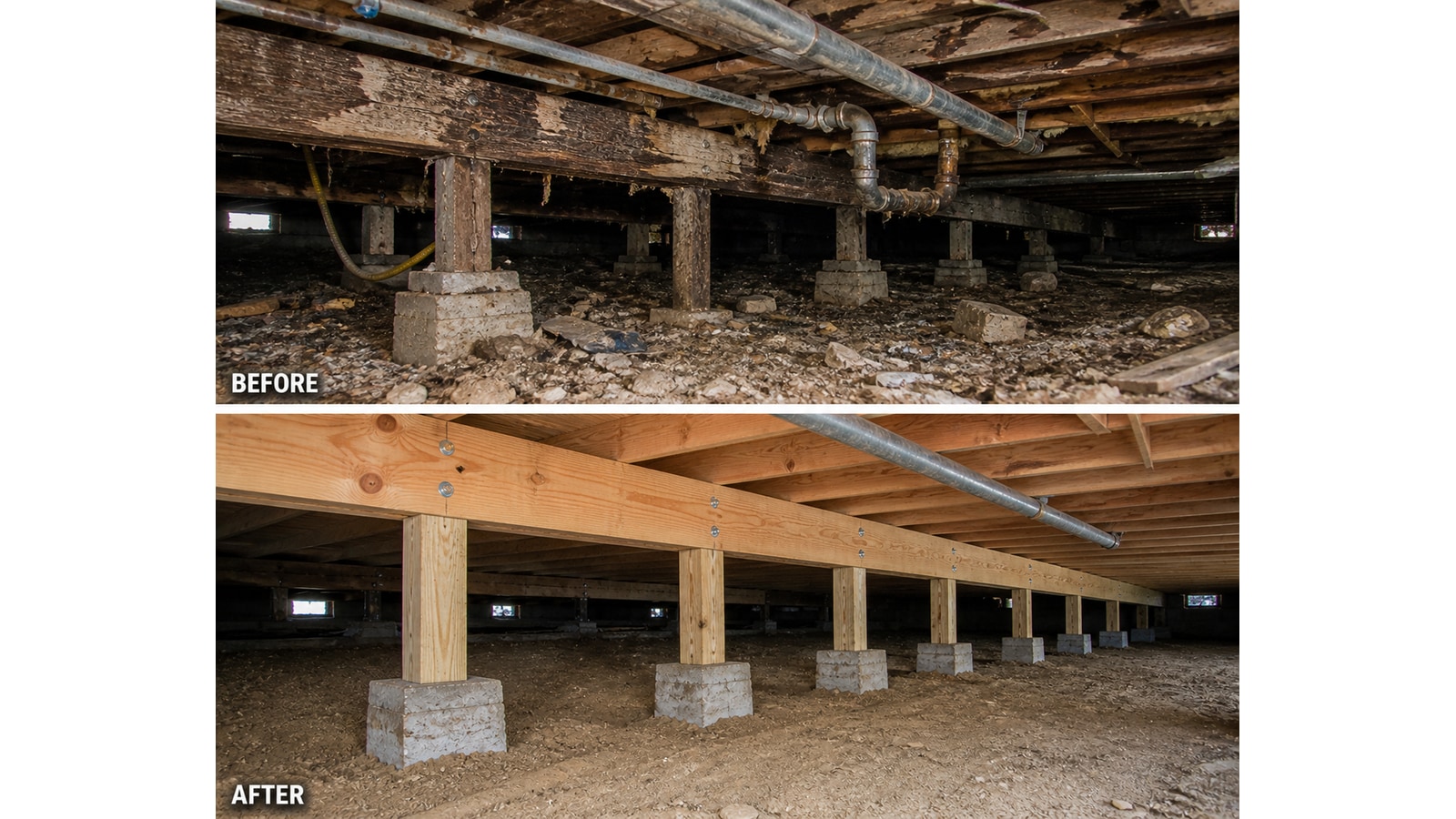
- Replacement of failing post-and-pier supports with new concrete pier pads, wood posts, and steel post bases.
- Reinforcement at the connections between the lower level and the upper floors.
Most of the work is concentrated at the lower level — the crawl space, the cripple-wall framing, and the foundation. Upper floors are usually left in place. Demolition is limited to drywall, finishes, and crawl-space access in the impacted areas.
Cripple-wall bracing and hold-downs in detail
On a typical raised single-family home, the cripple wall is a short wood-framed wall that sits between the concrete foundation and the floor of the first story. Older cripple walls were often stick-framed without sheathing and without bolts tying the mudsill to the concrete. A retrofit adds plywood shear panels to the cripple-wall studs, galvanized hold-down brackets at regular intervals, and anchor bolts through the sill plate into the foundation below. The result is a continuous load path from the foundation through the cripple wall to the floor framing above.
When a steel beam or moment frame is added
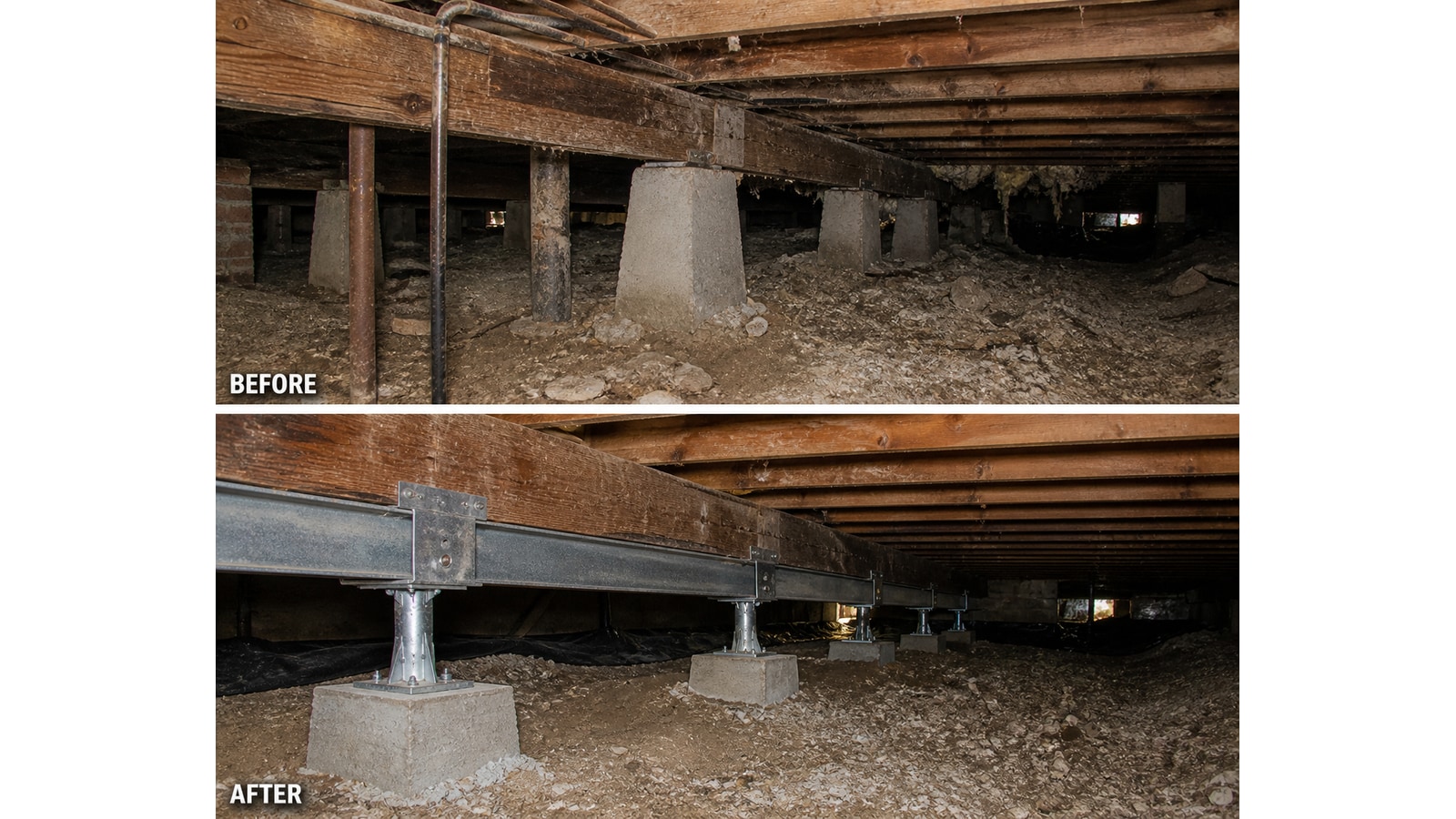
On buildings with a wide tuck-under opening — a carport, a multi-family parking level, or a long open span where bracing cannot be added without blocking the use of the space — the engineer may specify a steel moment frame or a steel beam carrier. The new steel sits on engineered footings and ties into the existing wood framing above. This is the part of a soft-story retrofit that most homeowners picture when they hear the term.
Plans, permits, and inspections
A soft-story retrofit is engineered work. The project starts with a structural engineer producing stamped plans showing exactly what is being added and where. The plans go through plan check at LADBS, and the construction is inspected at each phase — anchor installation, frame welding, shear-panel nailing, hold-down placement, and final. Building owners generally hire a licensed general contractor who coordinates with the structural engineer and the city.
What to confirm before the retrofit begins
- Whether the property is on the city’s mandatory retrofit list.
- Whether the structural engineer’s plans have completed plan check.
- How long the parking level or impacted floors will be unusable during construction.
- How utilities, gas lines, and existing fire sprinkler heads will be protected during the work.
Choosing a contractor for retrofit work
Soft-story retrofit is straightforward for a contractor who has done the work before, and full of small judgment calls for a contractor who has not. Ask about welding qualifications, how they sequence the demolition and new structural work, and whether they have completed retrofit projects in your neighborhood. A contractor familiar with the LA retrofit ordinance will name the structural engineer they typically work with and walk you through the inspection schedule.
FAQ
How do I know if my building is required to retrofit?
The city sends a formal notice to owners of buildings on the mandatory soft-story list. If you are unsure, a contractor or structural engineer familiar with the LADBS process can check the public records and confirm whether your property is on the list.
Will the building need to be vacated during the retrofit?
Most of the work is at the lower level. The floors above usually remain occupied. Parking and storage at the impacted level may need to be cleared during construction. The exact answer depends on the design and the specific scope of work.
Does a single-family hillside home need a soft-story retrofit?
Not always under the mandatory ordinance, but many older hillside homes have cripple walls or post-and-pier conditions that benefit from voluntary retrofit work. A structural engineer can review the existing framing and recommend a scope.
Who designs the retrofit?
A licensed structural engineer produces the stamped retrofit plans. The general contractor builds from those plans and coordinates the inspections. Both roles are required for the project to clear the city’s plan-check and inspection process.