
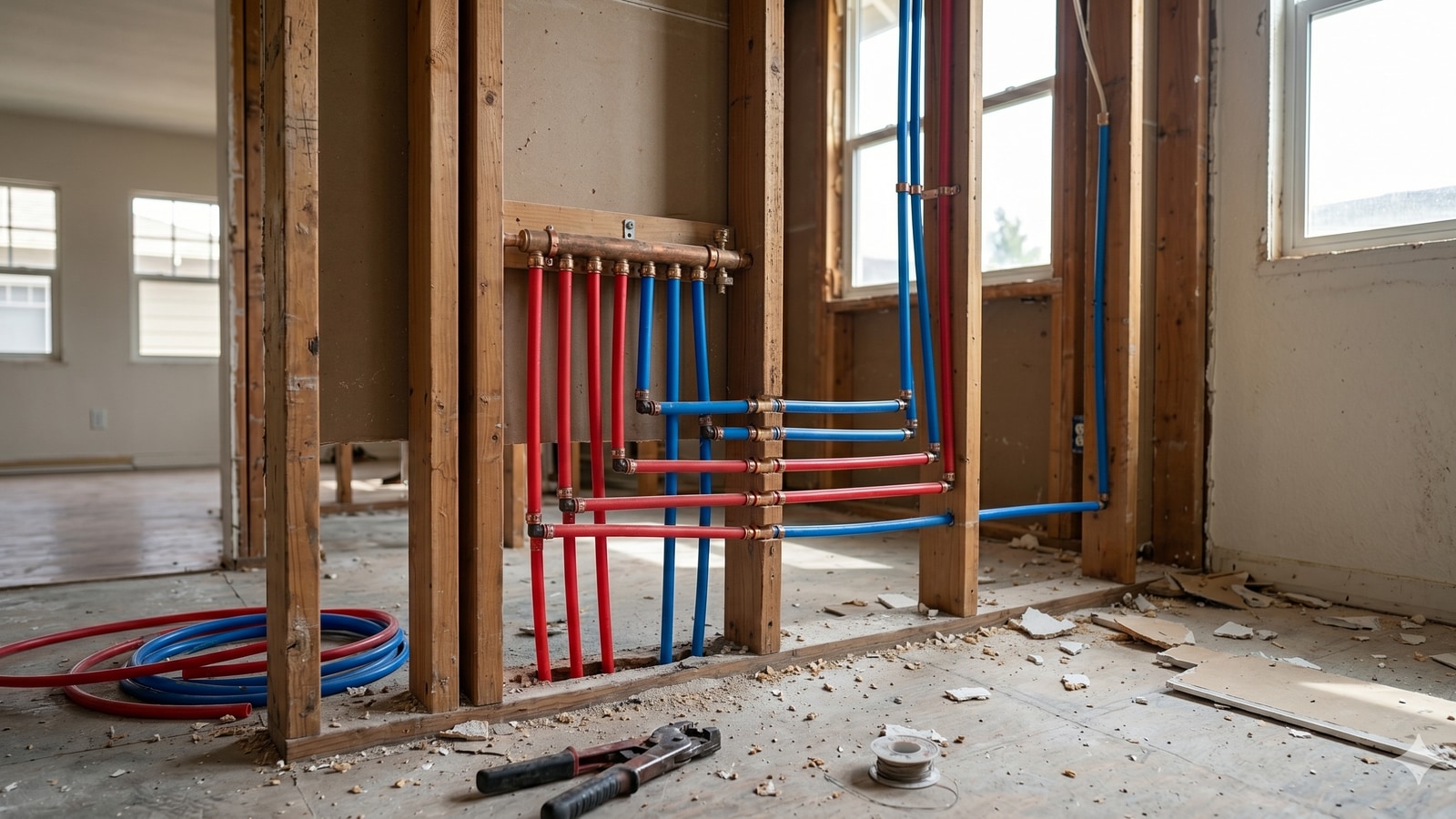
Many older Los Angeles homes still have the original galvanized steel water lines from when they were built. Inside those lines, decades of mineral build-up restrict flow, lower pressure at the fixtures, and eventually leak. A whole-house repipe replaces those original lines with copper or PEX. This post walks through when the work is worth doing and how it is coordinated with the rest of the house.
Why older LA homes get repiped
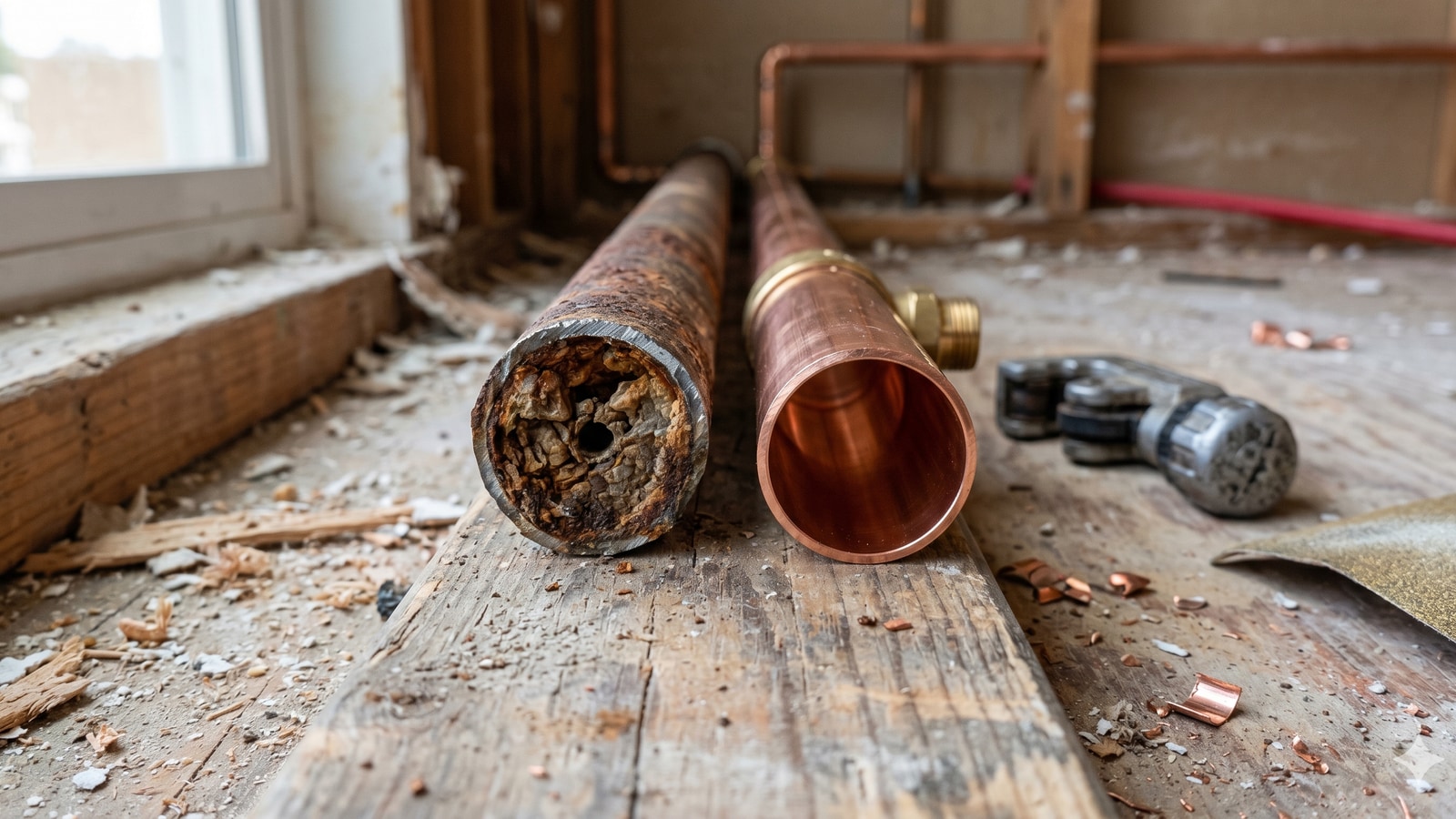
Galvanized pipe corrodes from the inside out. The signs accumulate slowly: weak shower pressure, rust-colored water at first draw, and eventually pinhole leaks in walls. By the time a homeowner notices the second or third leak, the rest of the system is usually in similar condition. Repiping replaces the entire system at once instead of chasing leaks one at a time.
When a repipe is the right call
Three questions usually settle the decision. First, how many leaks has the house had? A single failure on an otherwise sound system can sometimes be handled as a targeted repair; our guide to slab leak detection and repair walks through those options when the failure is hiding under concrete. Once a homeowner is paying for the second or third leak, each fix is buying time on a system that is failing everywhere at once. Second, what do the fixtures say? Weak pressure and rust-colored water at first draw do not improve with spot repairs. Third, what else is planned? If a kitchen, bathroom, or whole-home remodel will open walls in the next year or two, the repipe belongs in the same window.
Copper vs PEX
The two main material options for a residential repipe are copper and PEX, and the choice is more practical than ideological:
- Copper has a long track record in Los Angeles homes, holds up well to chlorinated water, and runs cleanly through tight spaces with experienced installers.
- PEX is flexible, faster to install through existing walls and ceilings, and tolerant of minor freeze events. It uses fewer fittings and routes more easily through framing.
- Some homes end up with a hybrid scope — copper on visible runs and stub-outs, PEX on long concealed runs through the attic or crawl space.
A contractor familiar with Los Angeles plumbing inspections can name which combination tends to clear plan check on the first pass for the kind of home being repiped.
What the scope of work actually includes
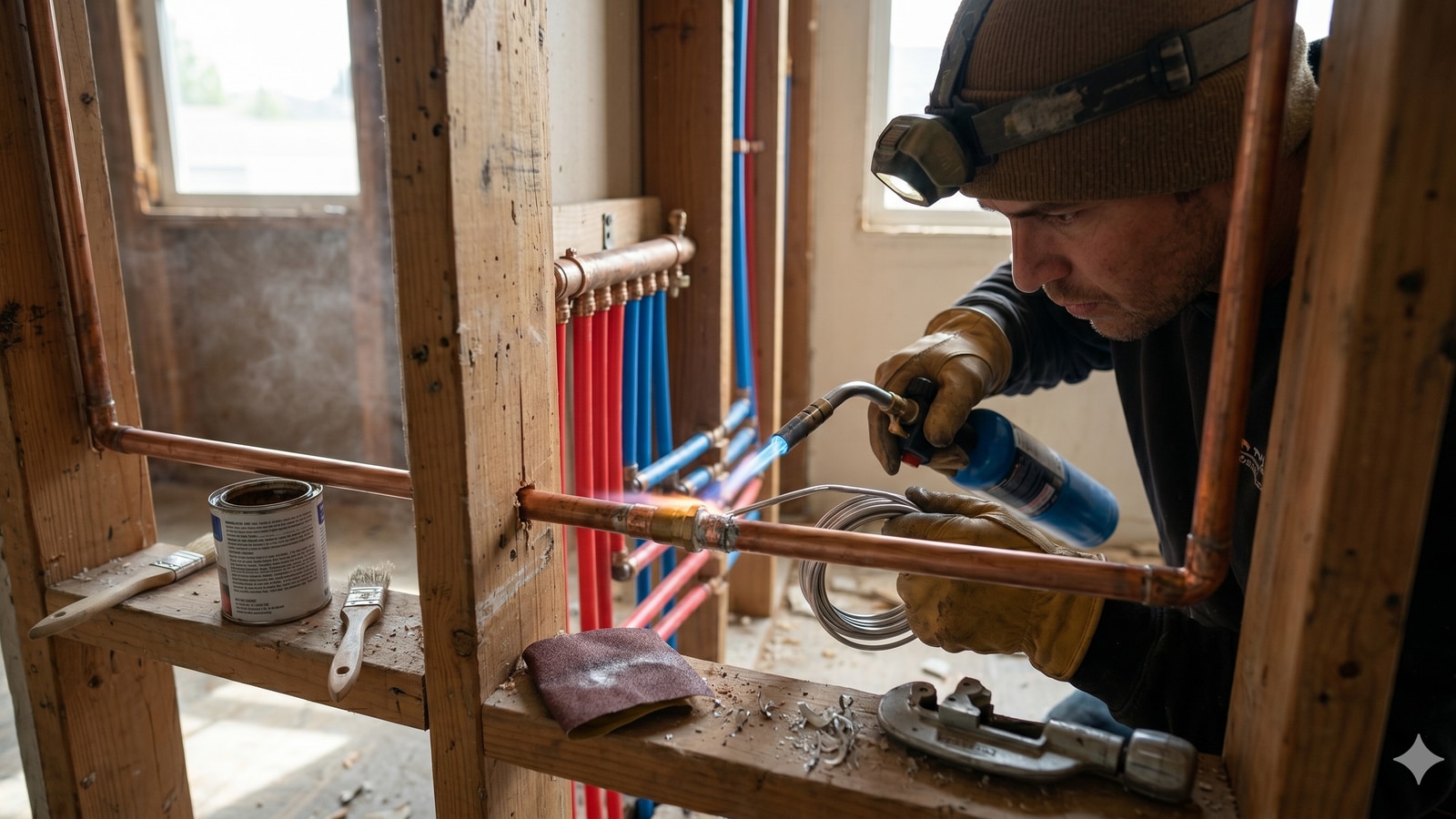
A typical whole-house repipe scope includes:
- New supply lines from the water meter to every fixture.
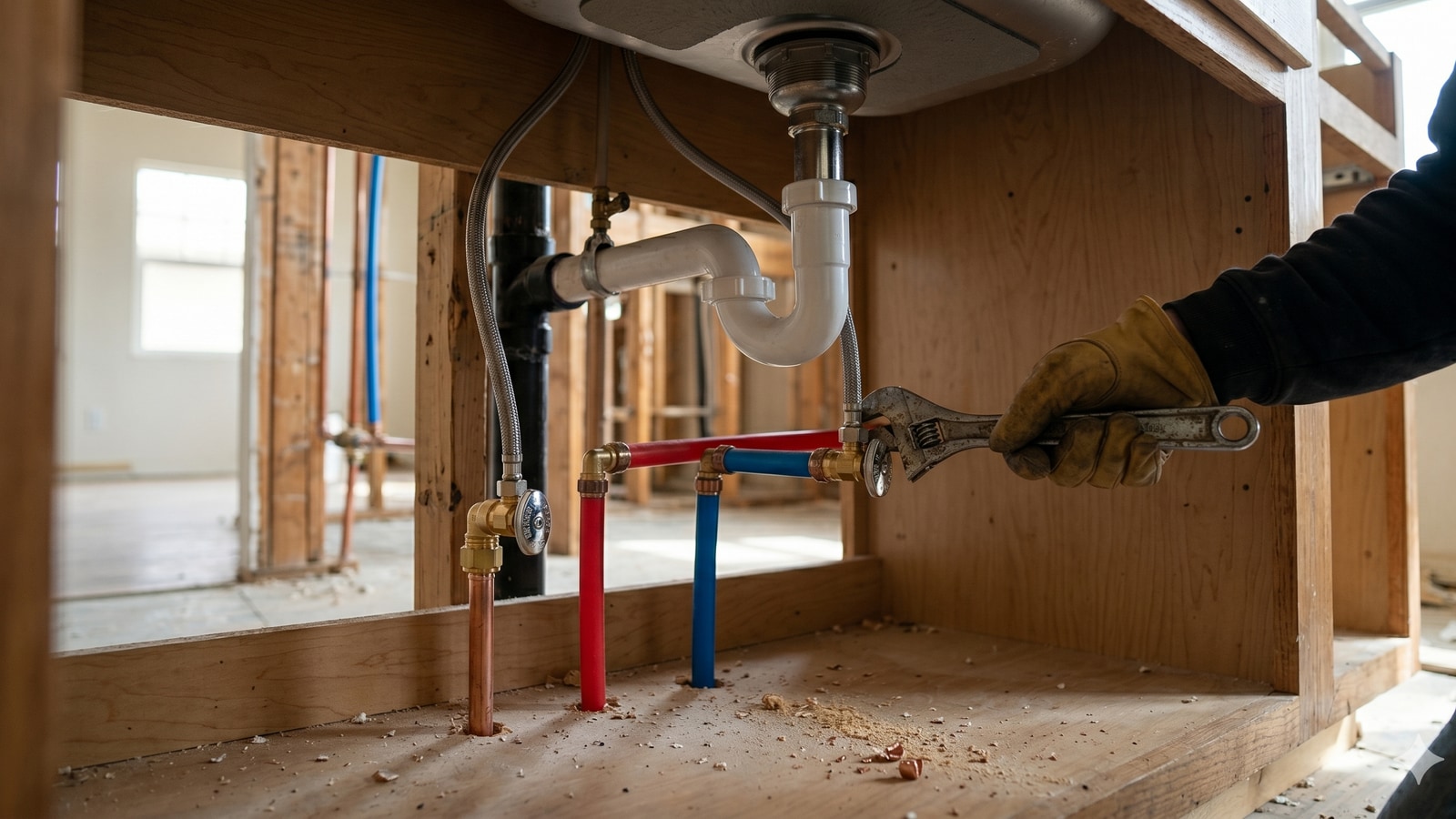
- New shut-off valves at each fixture.
- Pressure-regulating valve replacement if the existing one is at end of life.
- Tying the new system into the existing water heater, or coordinating with a water heater replacement if the old unit is also due.
The drain lines are a separate scope. Repipe usually means the supply side. If the cast-iron drain lines are also at end of life, that becomes its own line item, often phased after the supply repipe.
What the work sequence looks like
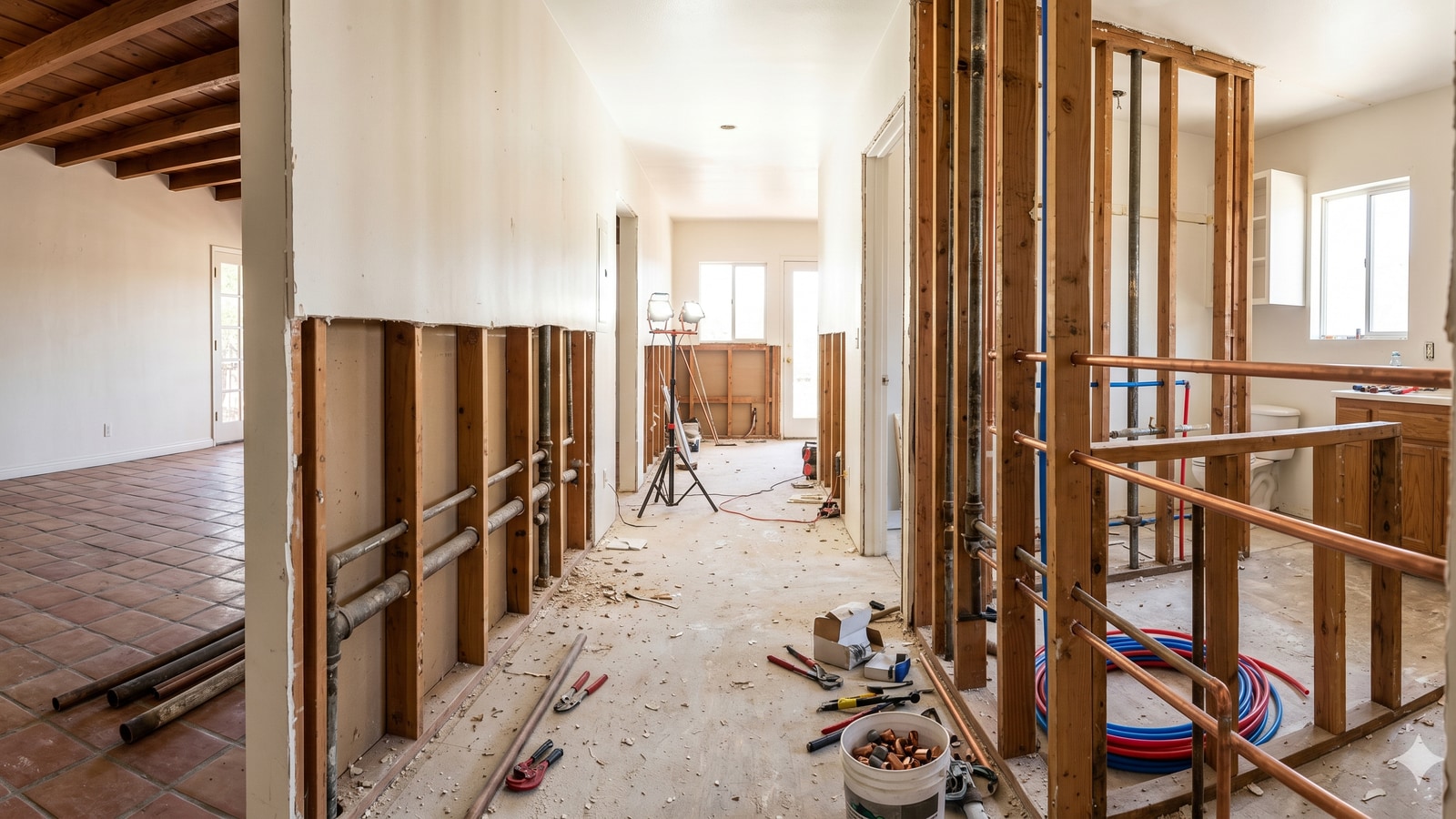
A repipe runs in a predictable order. The contractor walks the house, maps fixture locations and routing for the new lines, and puts the scope in writing. The plumber pulls the permit, and drywall comes open only where new lines need to pass or connect. The new system goes in section by section, with water off in the working section rather than the whole house. The rough-in inspection happens while the walls are still open; the final inspection closes out the plumbing scope, and only then does patching start.
Drywall, finish, and the “after” phase
Repipe involves opening drywall in select locations to route the new lines and connect them to fixtures. After the plumber finishes and the inspections pass, the drywall, texture, and paint go back. A coordinated contractor handles the patching and finish work as part of the same project so the homeowner is not chasing two different trades to close out the job.
Permits and inspections
Whole-house repipe is permitted work in Los Angeles. The plumber pulls a permit, runs through rough-in and final inspections, and the work is documented on the property record. Skipping the permit creates a paper-trail gap on the property record — un-permitted plumbing work hidden in finished walls is hard to verify later when the home is being inspected for any reason.
FAQ
How do I know if my home has galvanized supply lines?
A plumber can check at the water heater, under sinks, and at exposed lines in the garage or crawl space. The pipe color, threading, and magnet test give a clear answer. If the lines turn out to be copper or PEX already, the home likely had a previous repipe.
Will I lose water service during the repipe?
Water is shut off in working sections only — not the whole house at once — and the plumber sequences the work so the home stays usable through the project. The contractor confirms the section-by-section plan before work starts.
Does a repipe affect my homeowner’s insurance?
Removing aging galvanized lines from a home generally reduces the leak risk that insurers care about. The homeowner should confirm directly with their carrier whether the repipe affects their policy.
Should I do the repipe at the same time as a remodel?
When a remodel is going to open the walls anyway, repiping at the same time avoids opening them twice. Coordinating the plumbing rough-in with the remodel scope is usually the cleanest sequence.