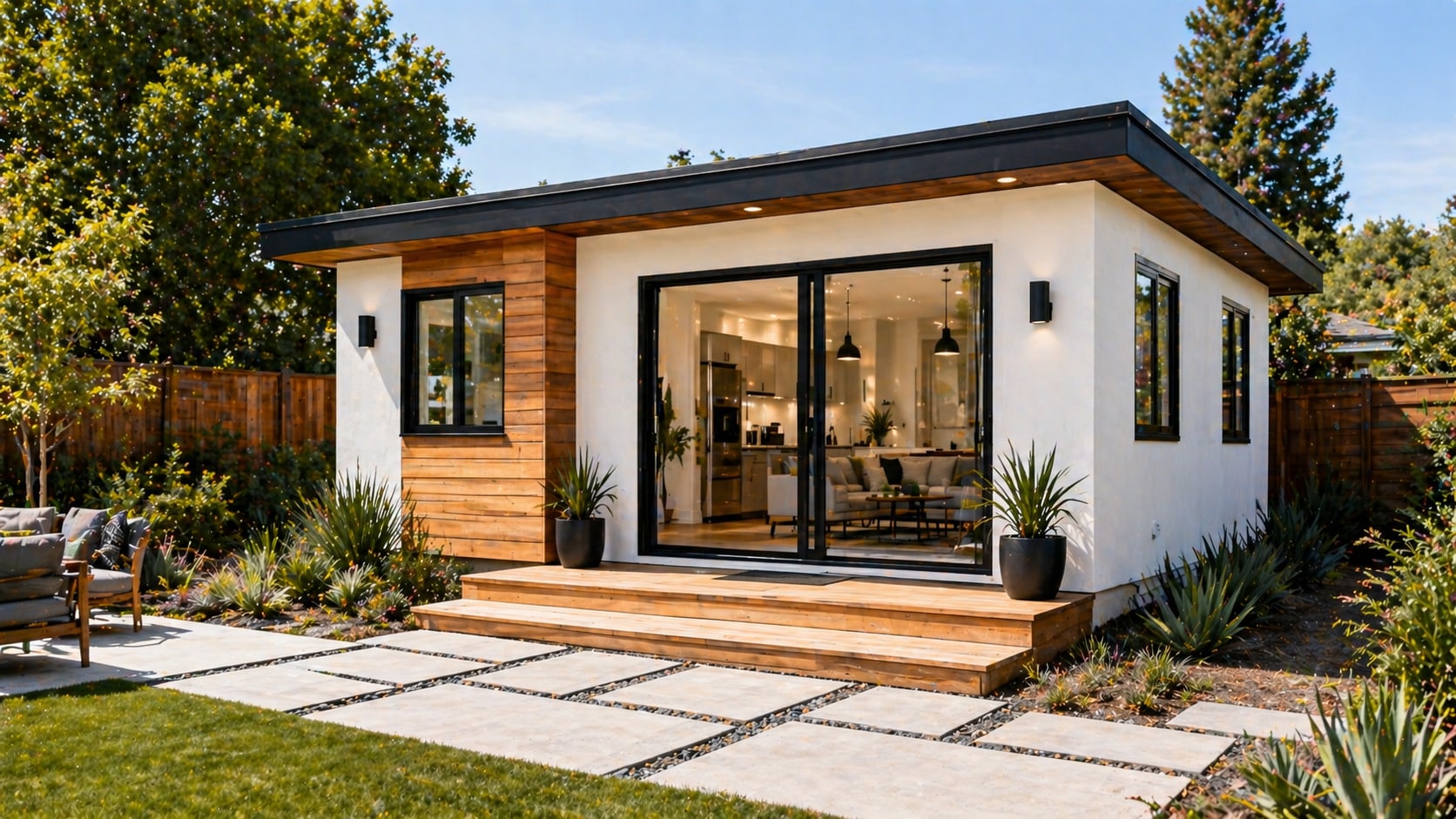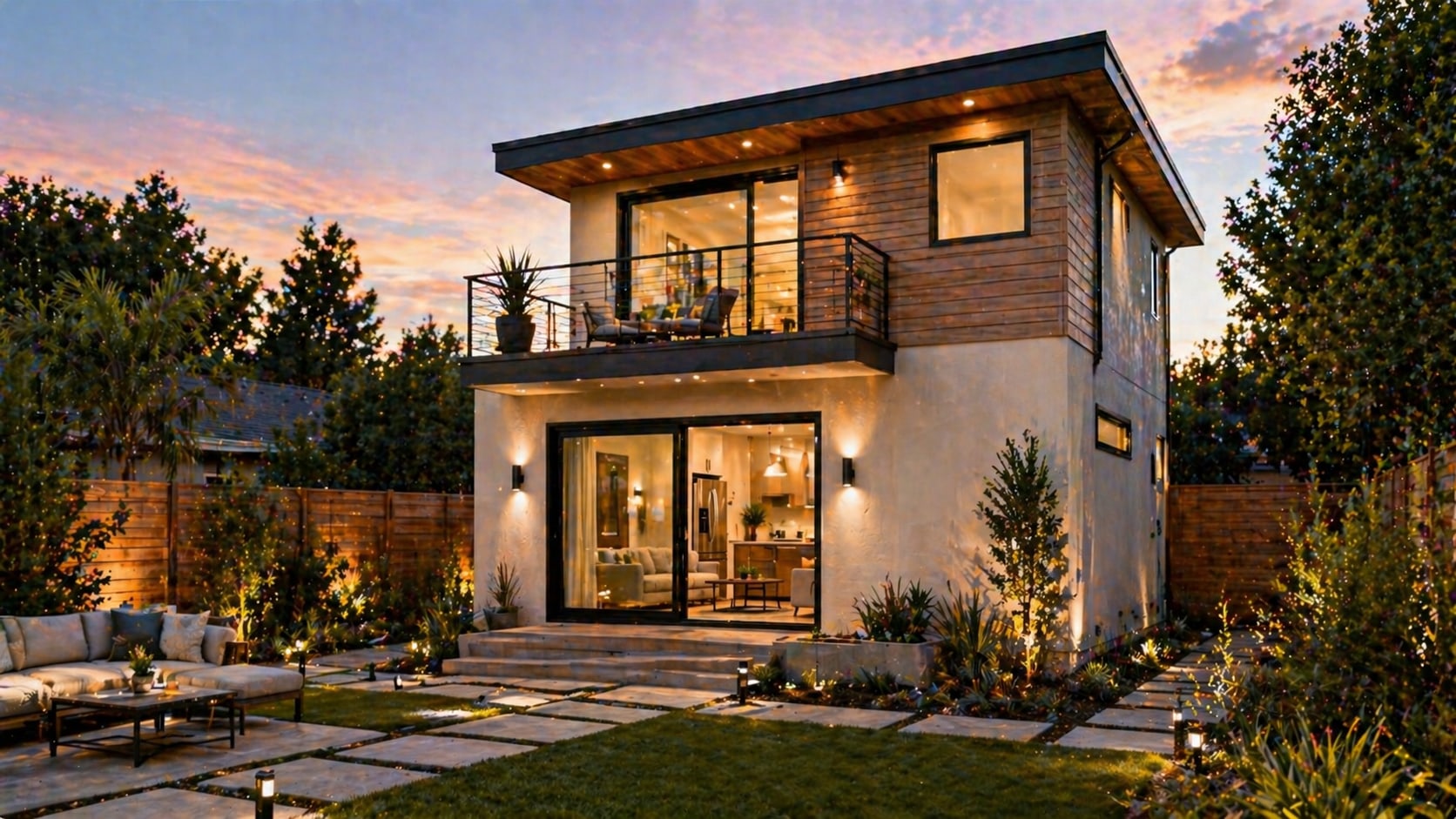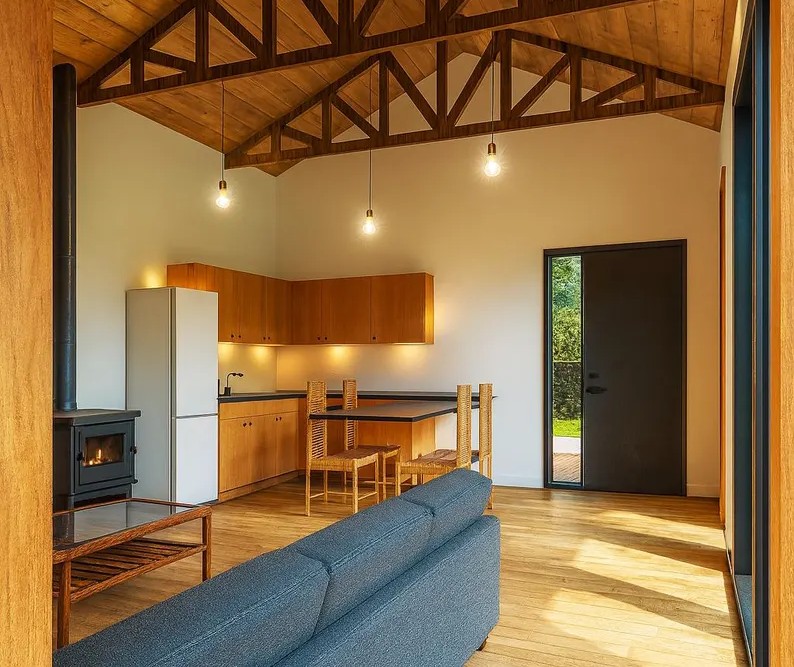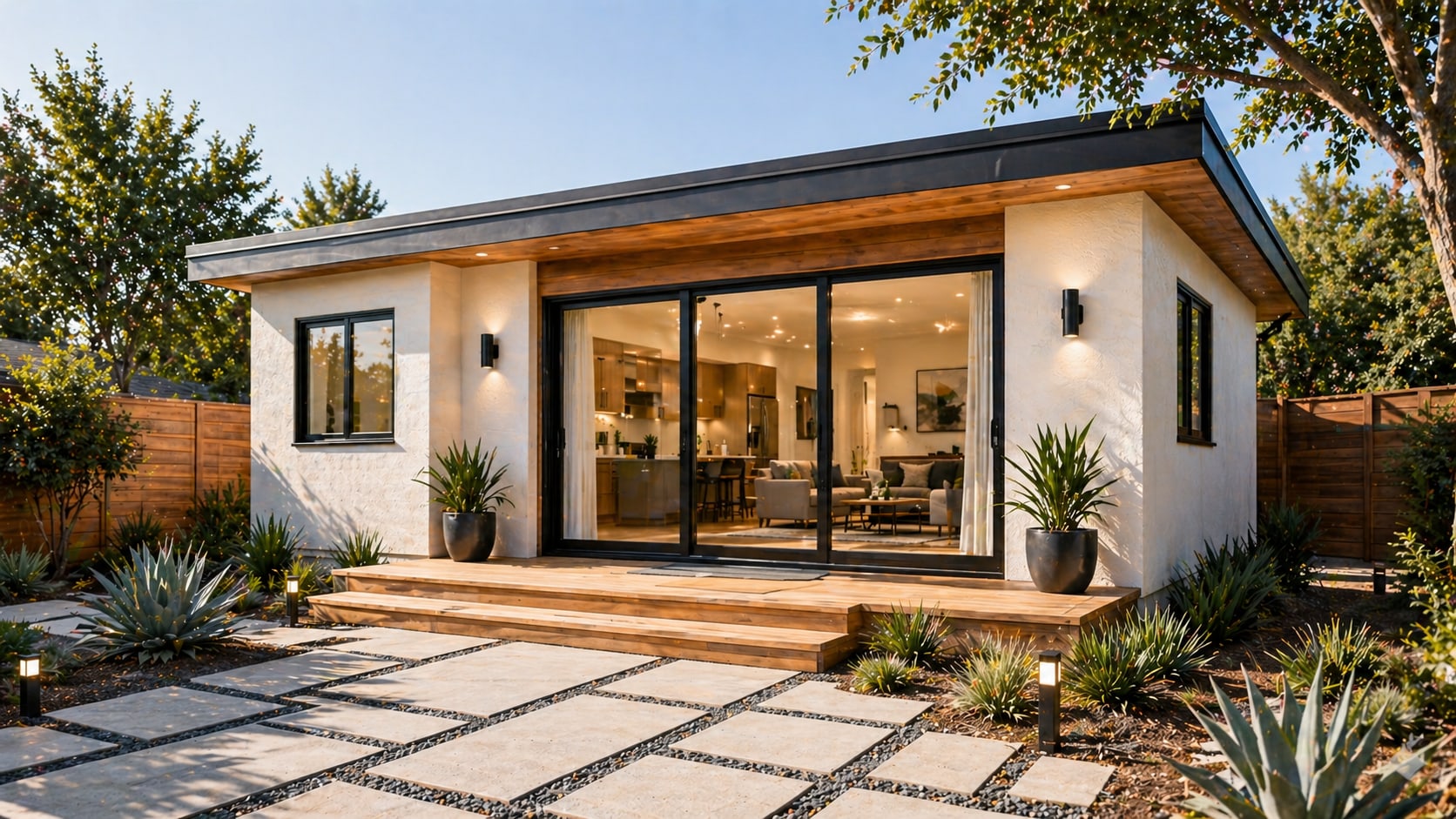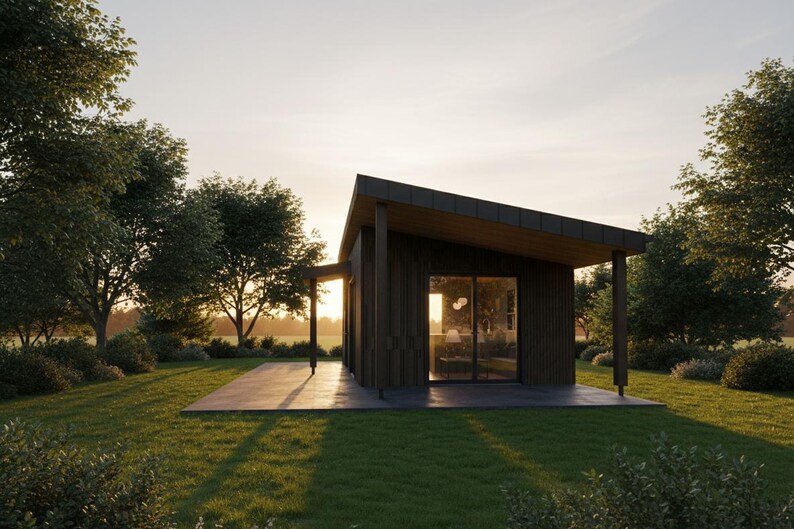
Dark board-and-batten Hillstar ADU with fire-pit patio — completed project
Glendale · City of Glendale · Community Development

Glendale ADU Contractor — Licensed & Local

Designing, permitting, and building detached ADUs, garage conversions, and Junior ADUs for Glendale homeowners — including Verdugo foothill lots, canyon parcels, and historic districts. City of Glendale permit submittals handled in-house. CSLB License #972213.

CSLB #972213Licensed & insured
15+ yearsGeneral contracting
5.0 · 17 reviewsOn Houzz
24-hour responseOn every inquiry
City of GlendalePlanning + B&S, in-house
Local ADU work

Hillstar Construction is a licensed Glendale ADU contractor. We've built detached ADUs, garage-conversion ADUs, above-garage units, and Junior ADUs (JADUs) for Glendale homeowners across Adams Hill, Rossmoyne, Verdugo Woodlands, Glenoaks Canyon, Chevy Chase Canyon, Crescenta Highlands, Sparr Heights, Riverside Rancho, Moorpark, and College Hills. Glendale ADUs aren't LA-City ADUs with a different return address — they touch the City of Glendale Community Development Department, historic-preservation review on designated parcels, Glendale's hillside standards on Verdugo and canyon lots, the city's Indigenous Tree Ordinance, and Chapter 7A fire-zone compliance on the foothill lots where it applies.

Every project starts with a free on-site consultation, a clear written scope, and a straight answer about what your lot can actually support — including a protected-tree and hillside-status check at visit one.

Why a local contractor

Why a Local Glendale Contractor Matters on an ADU

Glendale ADUs carry more local-jurisdiction complexity than most flat-lot LA-county projects. They touch the City of Glendale Community Development Department (not LADBS), Glendale's hillside standards on Verdugo and canyon parcels, historic-preservation review where the parcel sits in a designated district, Glendale's Indigenous Tree Ordinance on lots with native oaks, sycamores, California bay, alder, or black walnut, and Chapter 7A Wildland-Urban Interface standards on foothill lots inside the Very High Fire Hazard Severity Zone. A contractor who runs the LA-city playbook loses time in Glendale plan check when the rules apply differently — or when a native-tree permit becomes the critical-path item.

We build Glendale ADUs to respect the character of the street: Spanish Colonial Revival and Mediterranean in Rossmoyne and Adams Hill, Craftsman in Cottage Grove and Ard Eevin Highlands, post-war ranch in Verdugo Woodlands and Sparr Heights, and contemporary on the canyon and foothill lots. The ADU should read as part of the property — not a subdivision infill unit dropped onto a character street.

When a detached ADU isn't realistic — because of an indigenous-tree root zone, a tight hillside buildable envelope, or historic-district lot geometry — a home addition or scoped whole-home remodel in Glendale is sometimes the cleaner path.

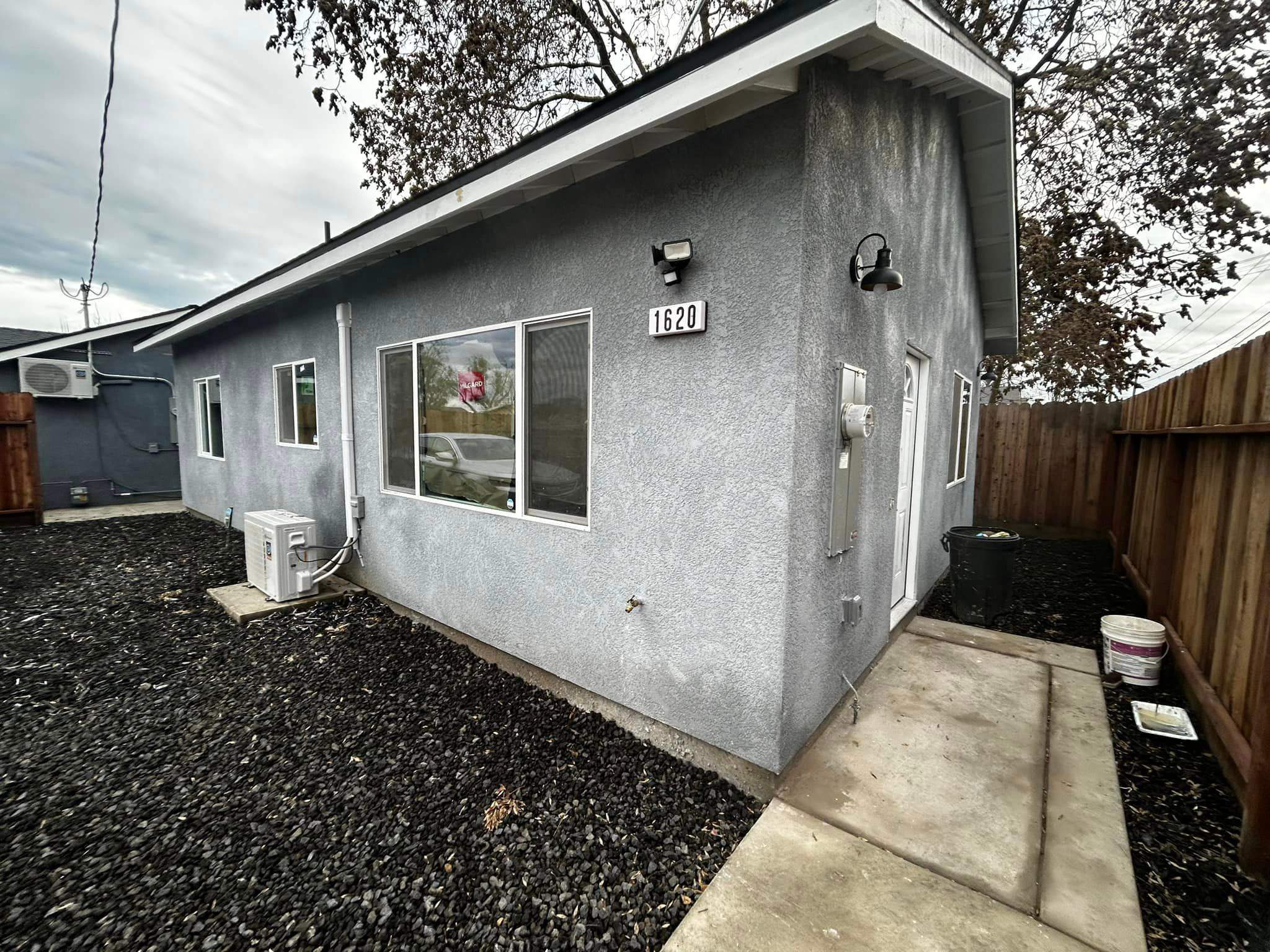
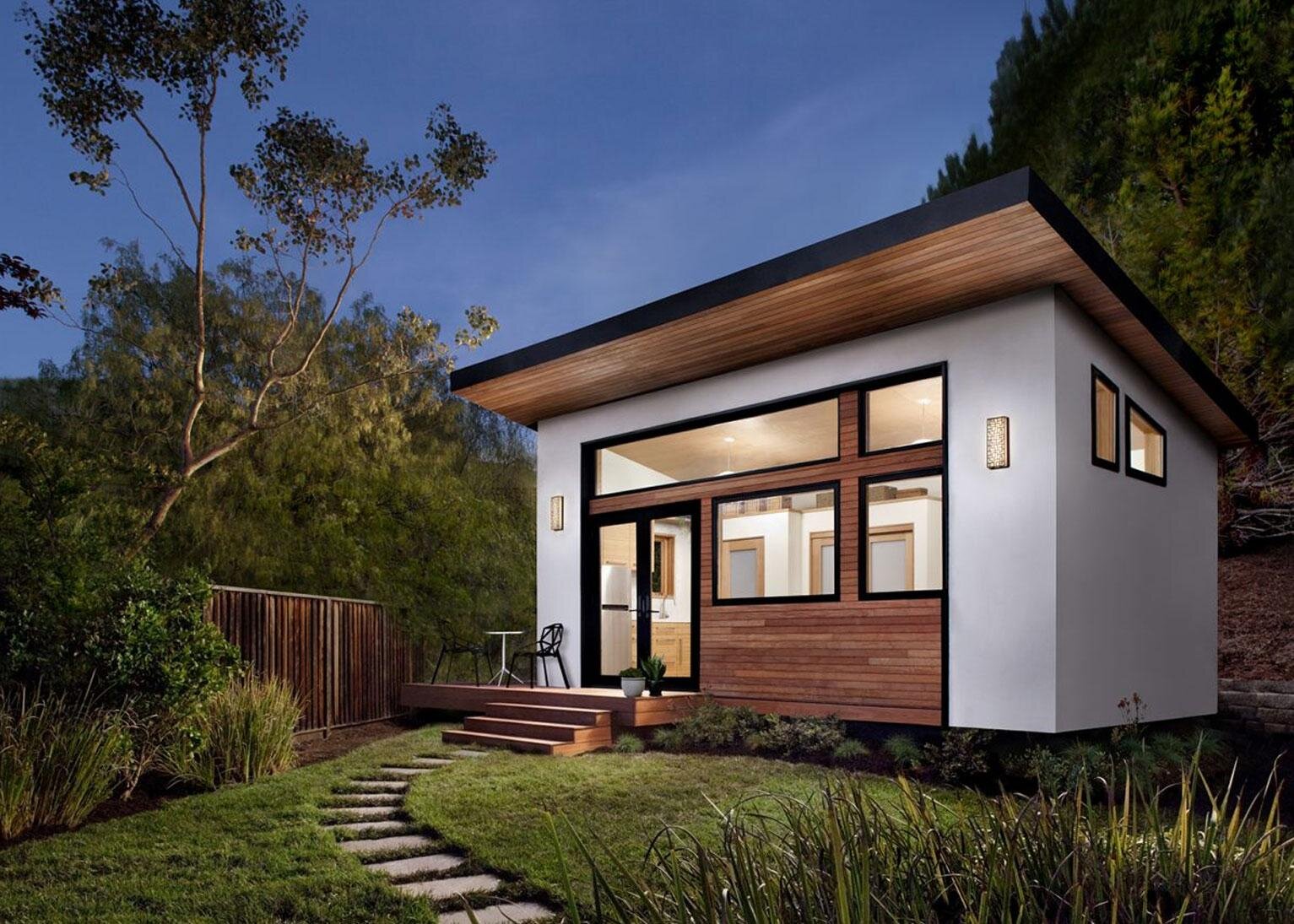
Clean Hillstar-built ADU front elevation with modern lantern detail — completed Glendale-area project
ADU rules at a glance

ADU Rules That Apply to Glendale Lots

ADU rules are set by California state law plus the Glendale Municipal Code. The baseline rules below apply to virtually every Glendale lot. The specific envelope on your property depends on zoning, hillside status, historic-preservation designation, indigenous-tree inventory, and fire-zone classification — all of which we confirm at the first site visit.

ADU size

State law requires Glendale to allow a detached ADU of at least 850 square feet for a studio or one-bedroom, or at least 1,000 square feet for two or more bedrooms. Larger envelopes are generally achievable on suitable lots, subject to local standards at plan submittal. The realistic size on your specific property depends on lot area, yard depth, existing structures, hillside grading rules, and indigenous-tree root-protection zones.

Setbacks

State law limits required side and rear setbacks to no more than four feet for a new detached or attached ADU. No setback is required where you convert an existing garage to an ADU in its existing footprint.

Permits — City of Glendale, not LADBS

Glendale issues ADU permits through the City of Glendale Community Development Department — Planning Division and Building & Safety Division — not LADBS. State law requires the city to determine application completeness within 15 business days and approve or deny a complete ADU application within 60 days. Historic-preservation review, hillside review, Indigenous Tree Permit, and Glendale Water & Power utility coordination happen in parallel where they apply. The Los Angeles area permit guide explains the broader regional permit flow.

Historic districts & preservation

Glendale has designated historic districts and landmark properties — including Ard Eevin Highlands, Royal Boulevard, Cottage Grove, and Rossmoyne — and individually designated historic resources across the city. Exterior work on a designated parcel typically requires historic-preservation review that looks at roof form, siding, windows, and visibility of the ADU from the public right-of-way. We design to pass the first time.

Hillside standards

Parcels in the Verdugo Mountains foothills, Glenoaks Canyon, Chevy Chase Canyon, Crescenta Highlands, and the northern slopes fall under Glendale's hillside standards — adding grading quantity limits, height-above-grade provisions, retaining-wall rules, and driveway-slope requirements on top of the standard ADU rules. Hillside ADUs take longer to design and permit but remain buildable on most qualifying lots.

Indigenous Tree Ordinance

Glendale's Indigenous Tree Ordinance protects native trees on private property — coast live oak, valley oak, California sycamore, California bay, white alder, and California black walnut above the size thresholds in the ordinance. An ADU sited in the protection zone of a protected tree can require an Indigenous Tree Permit, arborist review, a tree-protection plan, or a shift in the building envelope. We inventory protected trees at the first site visit and locate the ADU to respect their root zones from the first drawing.

Chapter 7A (fire zone)

Parcels in the Verdugo foothills, Chevy Chase Canyon, Glenoaks Canyon, and Crescenta Highlands sit inside a Very High Fire Hazard Severity Zone and are treated as Wildland-Urban Interface (WUI) under Chapter 7A of the California Building Code — ignition-resistant siding and soffits, dual-pane tempered or multi-pane glazing, ember-resistant vents, Class A roof assembly, and defensible-space compliance. These are code, not upgrades.

ADU types

ADU Types That Fit Glendale Lots

Glendale lots vary widely — compact R1 parcels in Adams Hill and Cottage Grove, deeper lots in Rossmoyne and Sparr Heights, generous estate-scale lots in Verdugo Woodlands and parts of Chevy Chase Canyon, and sloped parcels across the Verdugo foothills and Glenoaks Canyon. No single ADU configuration fits every property. Here's how we match type to lot in practice:

Detached new-build ADU

Common on deeper Glendale lots with enough buildable rear yard to place an 800–1,200 square-foot structure with state-minimum setbacks and — on historic-district parcels — a design that responds to the district's character. On foothill and canyon lots, the buildable envelope is defined by Glendale's hillside grading and height rules plus Chapter 7A setbacks. Detached new-builds offer the most design flexibility and the cleanest separation between main house and ADU.

Garage conversion

A strong option on Glendale lots with original detached garages — common throughout Adams Hill, Cottage Grove, and the older pre-war tracts. State law allows garage-to-ADU conversions with no required setback from the existing structure's footprint, which shortens permitting, and in a historic district a sensitive garage conversion often passes preservation review more cleanly than a new detached build. We verify foundation, drainage, and structural condition first — older Glendale garages sometimes need reinforcement to carry habitable-use loads.

Above-garage ADU

Useful on narrower Glendale lots or where the yard is tight but the garage footprint can carry a second-story habitable unit. Works within state setback and height rules plus Glendale's hillside design provisions where the parcel is hillside-classified.

Junior ADU (JADU)

A JADU is carved out of the existing primary home — up to 500 square feet — with its own entrance and efficiency kitchen. Often the right answer on historic-district parcels where exterior expansion is constrained, on lots where indigenous trees limit the detached-ADU envelope, or where a broader home remodeling project is already underway and a JADU fits inside the reworked floor plan. JADUs continue to have owner-occupancy requirements under state law.

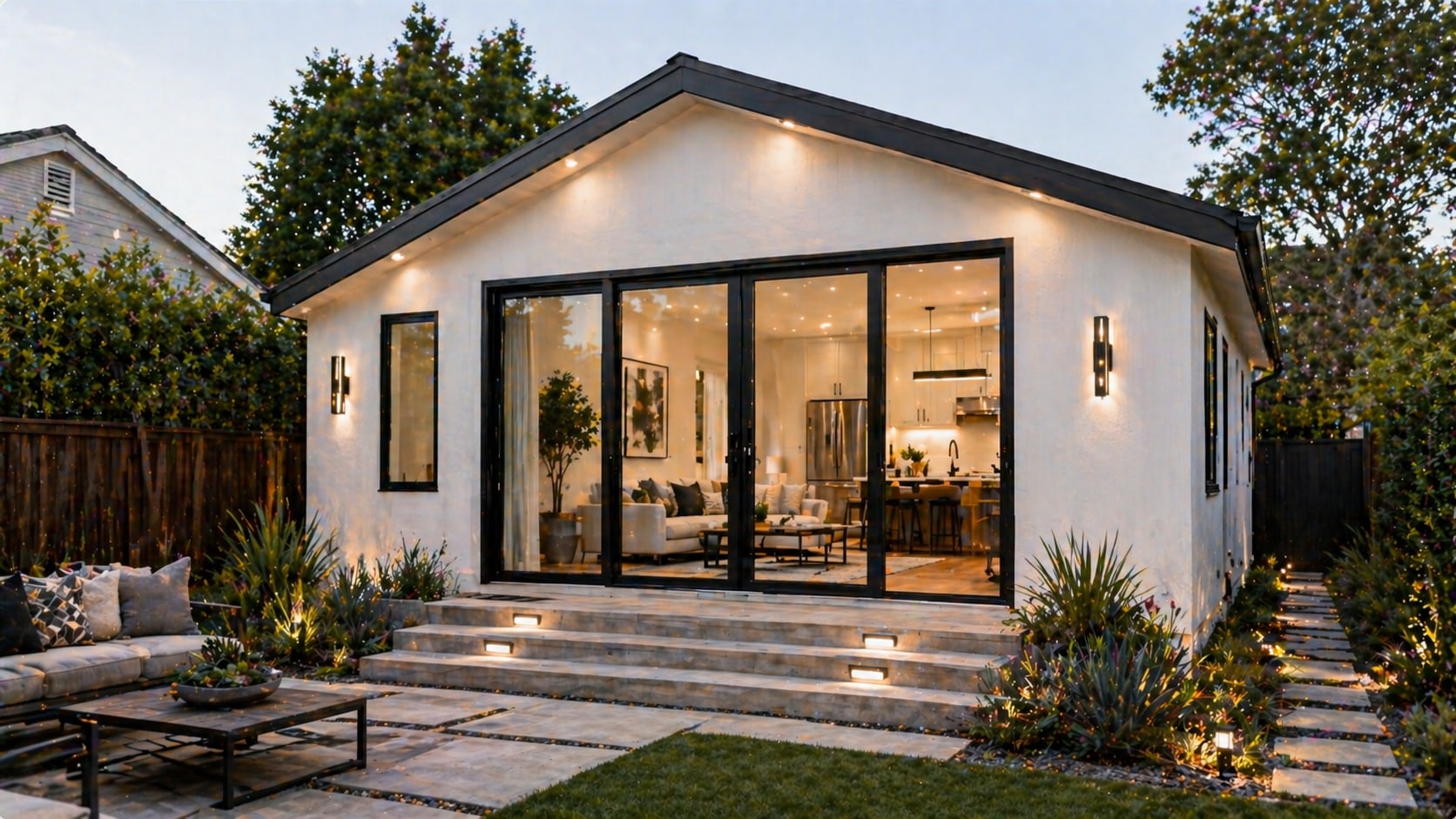
Hillstar-built ADU rear elevation with French doors and skylight — completed project
Timeline & process

Timeline, Cost & Our Process in Glendale

A realistic Glendale ADU timeline from first site visit to certificate of occupancy is roughly 8 to 14 months. Historic-preservation review, hillside review, Indigenous Tree Permit where it applies, and Chapter 7A detailing on foothill parc…

1Site visit

Free on-site consultation

Zoning, setback, lot-condition, and feasibility check on your property. Straight answer on what your lot can actually support — no obligation.

2Design

Plans & written scope

Floor plans, elevations, site plan, and a written scope with a clear price. Decisions on detached new-build vs. garage conversion vs. JADU happen here.

3Permits

Glendale + review

We submit to the City of Glendale Community Development Department — Planning and Building & Safety. State law: 15 business days to completeness, 60 days to approval on a complete application. Historic and hillside review run in parallel where they apply.

4Build

Construction & final inspection

Direct access to your project manager from kickoff to certificate of occupancy. No surprise change orders unless construction uncovers something that genuinely requires one.

Cost depends on ADU type, finish level, site conditions, and utility routing. Our cost and ROI guide for building an ADU in Los Angeles lays out the numbers. The full ADU construction process and the LA area permit guide cover the end-to-end flow.
★★★★★

Hillstar was great! We did a garage conversion and Lior was the best. He helped us plan every detail.

— Jeffrey Rhodes, January 2019
★★★★★

Lior was such a pleasure to work with for our guest house remodel. He was so easy to get in touch with, incredibly responsive and finished the job early.

— Amy Christine, February 2019
Frequently asked

Glendale ADU — Frequently Asked Questions

Straight answers to the questions we hear most often before the first site visit.

Does my Glendale lot qualify for an ADU?

Most Glendale lots qualify. California state law (Government Code §65852.2) requires every California city to allow at least one ADU on single-family residential lots, and Glendale's single-family R1 zones — including the foothill and canyon areas — fall under that rule. What changes per lot is the type and size of ADU that fits — not whether you can build one. We confirm exact zoning, hillside classification, historic-preservation status, fire-zone designation, and indigenous-tree inventory during the first site visit.

Where do I get a Glendale ADU permit — is it LADBS?

No. Glendale is its own incorporated city and issues ADU permits through the City of Glendale Community Development Department — Building & Safety and Planning divisions — not LADBS. The state-law timelines apply: the city must determine application completeness within 15 business days and approve or deny a complete ADU application within 60 days. We handle the Glendale submittal, plan-check corrections, historic review where applicable, hillside review where applicable, and final inspection — end to end.

My Glendale home is in a historic district — can I still build an ADU?

Yes. Glendale's historic districts and designated landmarks — including Ard Eevin Highlands, Royal Boulevard, Cottage Grove, and Rossmoyne — do not block ADUs, but exterior work on designated properties typically requires historic-preservation review so the addition reads in character with the district. That means the ADU design needs to respond to the street: roof form, siding, window type, setback, and how the unit reads from the public right-of-way and the alley. We design Glendale historic-district ADUs to pass review the first time.

Does Glendale's hillside designation apply to my ADU?

It can, especially on parcels in the Verdugo Mountains foothills, Glenoaks Canyon, Chevy Chase Canyon, Crescenta Highlands, and the northern slopes. Glendale's hillside standards add grading, height, retaining-wall, and driveway-slope provisions on top of standard ADU rules. Hillside ADUs are more design-intensive but remain buildable on most qualifying lots. We confirm hillside status at the first site visit so the scope and timeline are realistic.

Do Glendale's tree-protection rules affect my ADU project?

Yes. Glendale's Indigenous Tree Ordinance protects native trees on private property — oaks, sycamores, California bay, alder, and black walnut above the size thresholds in the ordinance. An ADU sited inside the protection zone of a protected tree can require an Indigenous Tree Permit, arborist review, or a shift in the building envelope. This is particularly common on lots in Glenoaks Canyon, Verdugo Woodlands, and Crescenta Highlands. We inventory protected trees at the first site visit and site the ADU to respect their root zones from the first drawing.

Is any part of Glendale in a Very High Fire Hazard Severity Zone?

Yes — large portions of the Verdugo foothills, Chevy Chase Canyon, Glenoaks Canyon, and Crescenta Highlands fall within a Very High Fire Hazard Severity Zone (VHFHSZ) and are treated as Wildland-Urban Interface (WUI) under Chapter 7A of the California Building Code. Where that applies, the ADU must be built with ignition-resistant exterior materials, dual-pane tempered or multi-pane glazing, ember-resistant vents, and a Class A roof assembly, with defensible-space compliance around the structure. We confirm your parcel's fire-zone classification at the first site visit and build to Chapter 7A where required.

Why homeowners pick Hillstar

What you actually get with us

No surprise change orders unless construction uncovers something that genuinely requires one. Direct access to your project manager from kickoff to certificate of occupancy.

One licensed contractor

CSLB #972213. Design, permitting, construction, and final inspection under a single license — not a network of subs you have to coordinate.

Permits handled in-house

City of Glendale submittal, plan-check corrections, and utility coordination run in-house. You don't chase plans between an architect and a separate permit expediter.

24-hour response

Every inquiry gets a real answer within 24 hours. Every project gets a named project manager you can reach directly — not a call center.

5.0 on Houzz

17 reviews, 5.0-star average. Every project from first site visit through final inspection is the same licensed team, start to finish.

Planning an ADU in Glendale?

Free on-site consultation — including a protected-tree and hillside-status check. Honest answer about what your lot can support.

Hillstar Construction · Office: 22647 Ventura Blvd #173, Woodland Hills, CA 91364 · 310-975-7590 · CSLB #972213

Get Your Free Estimate
Call Now Free Estimate