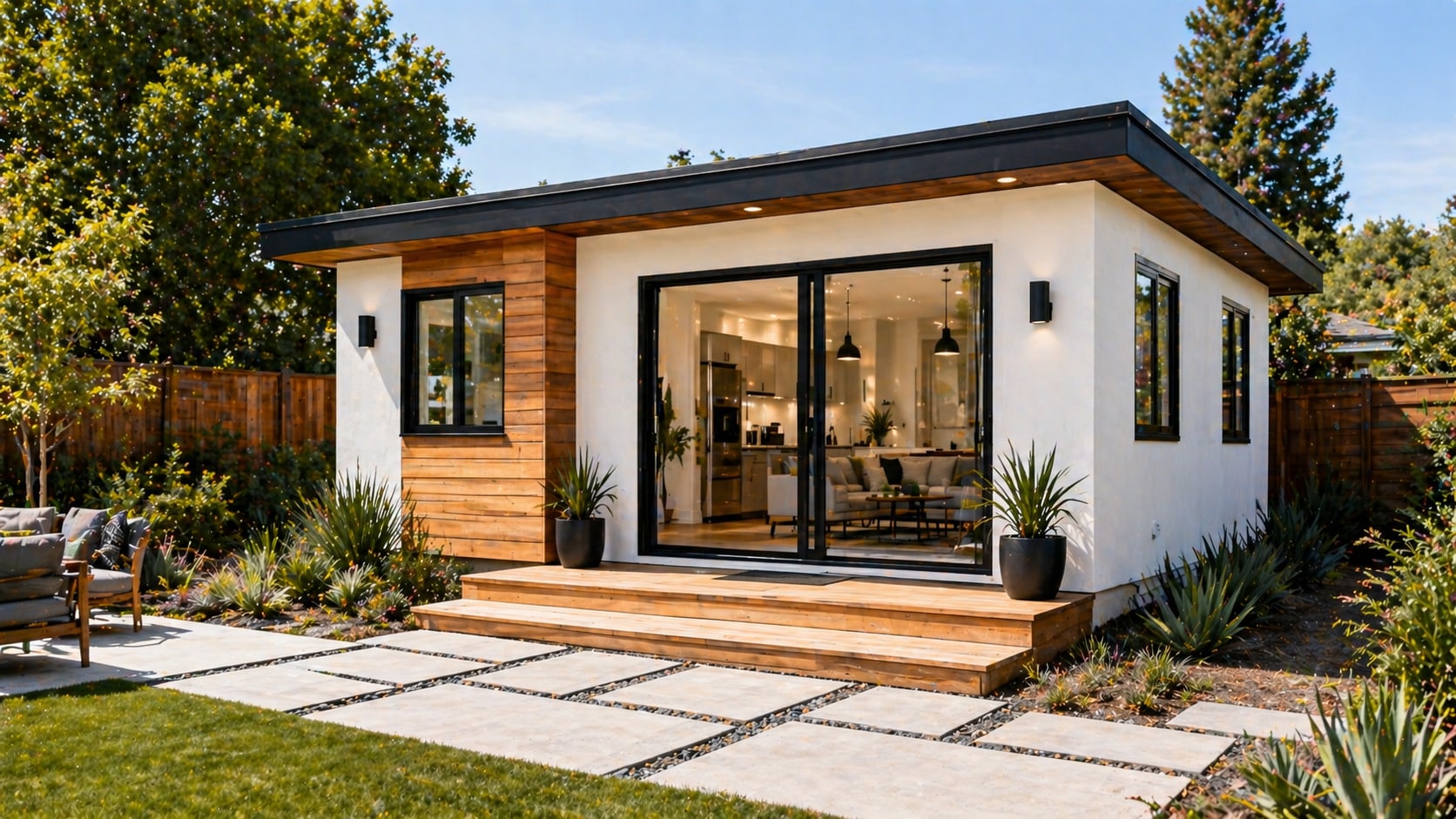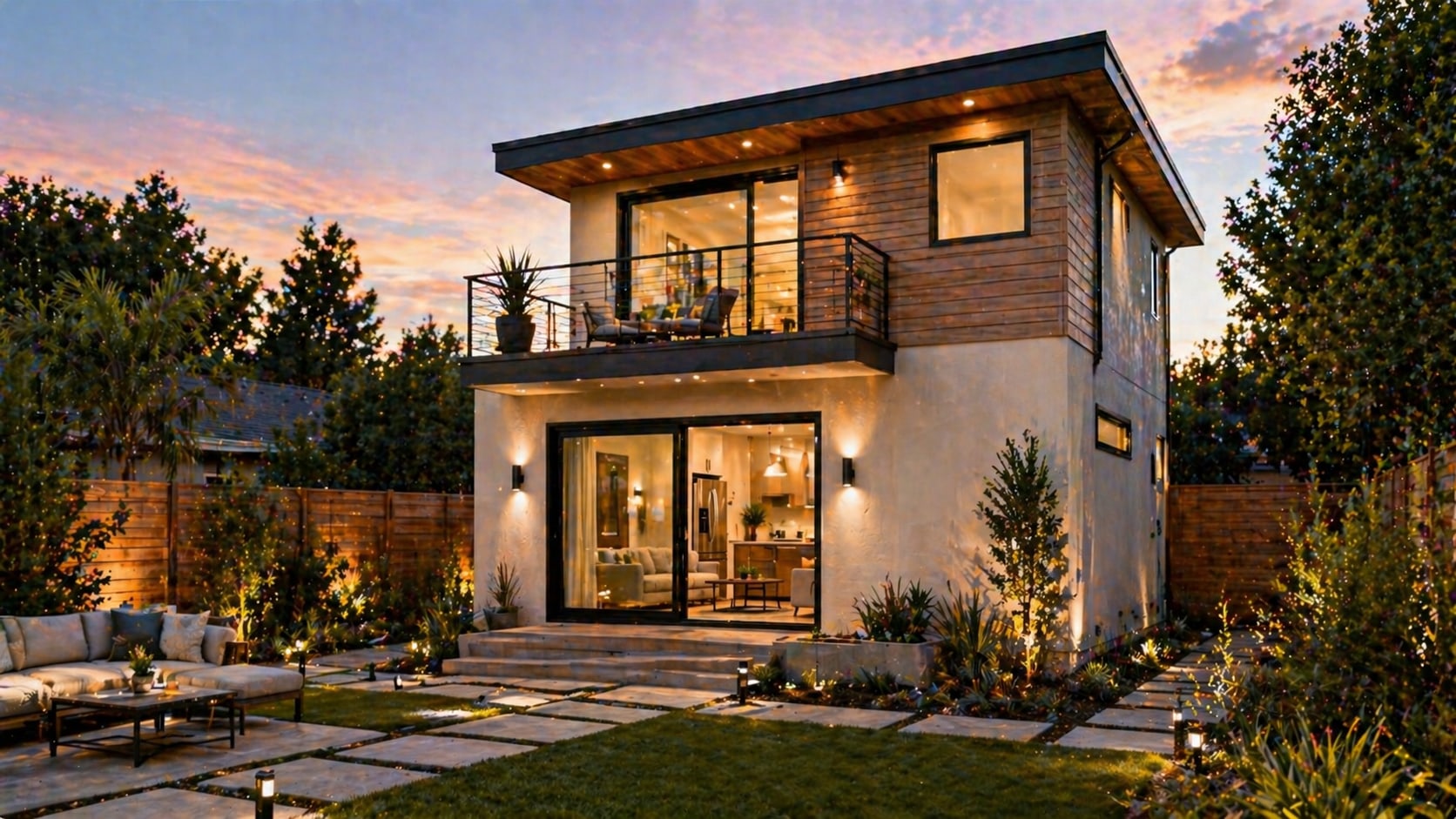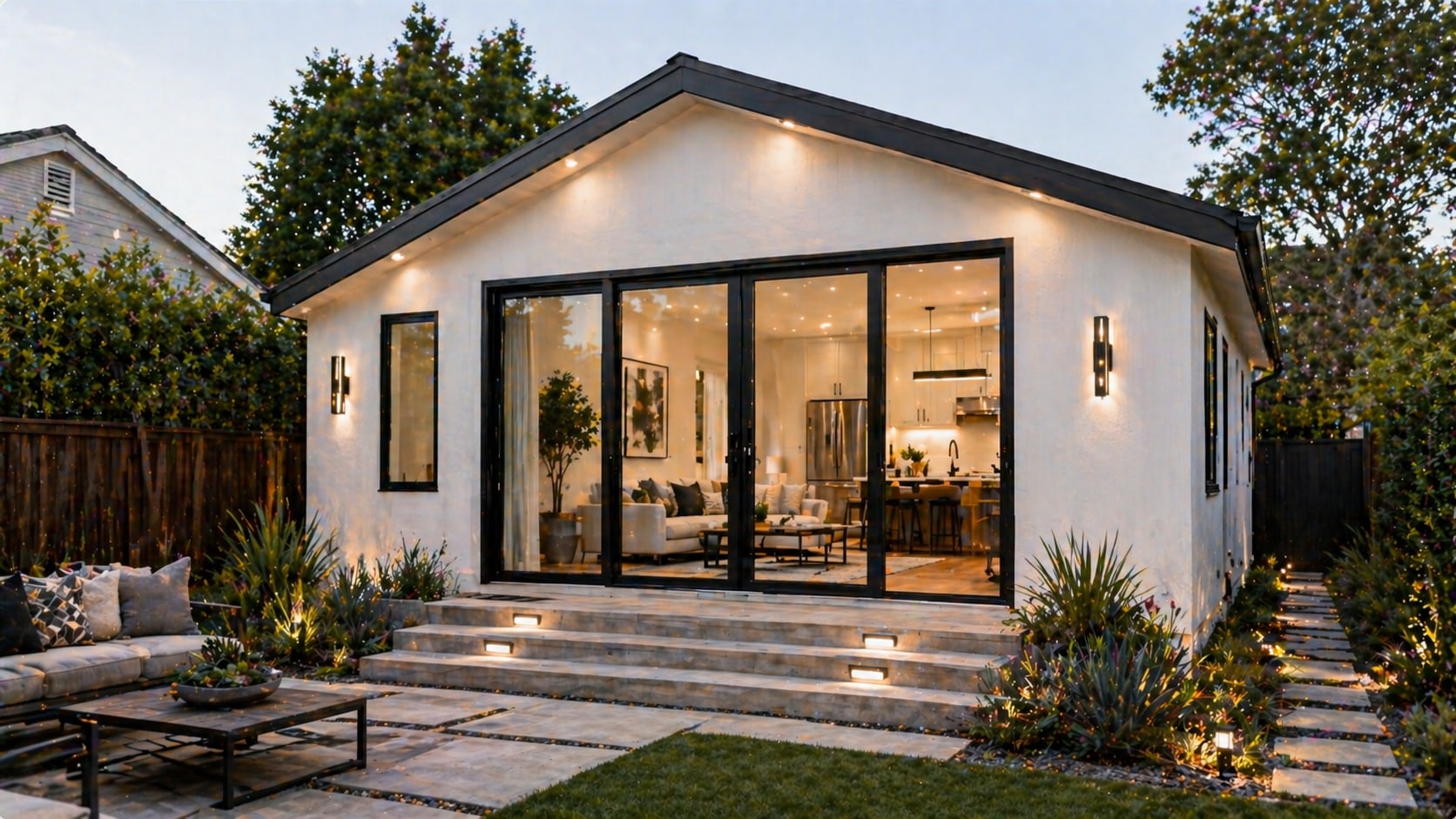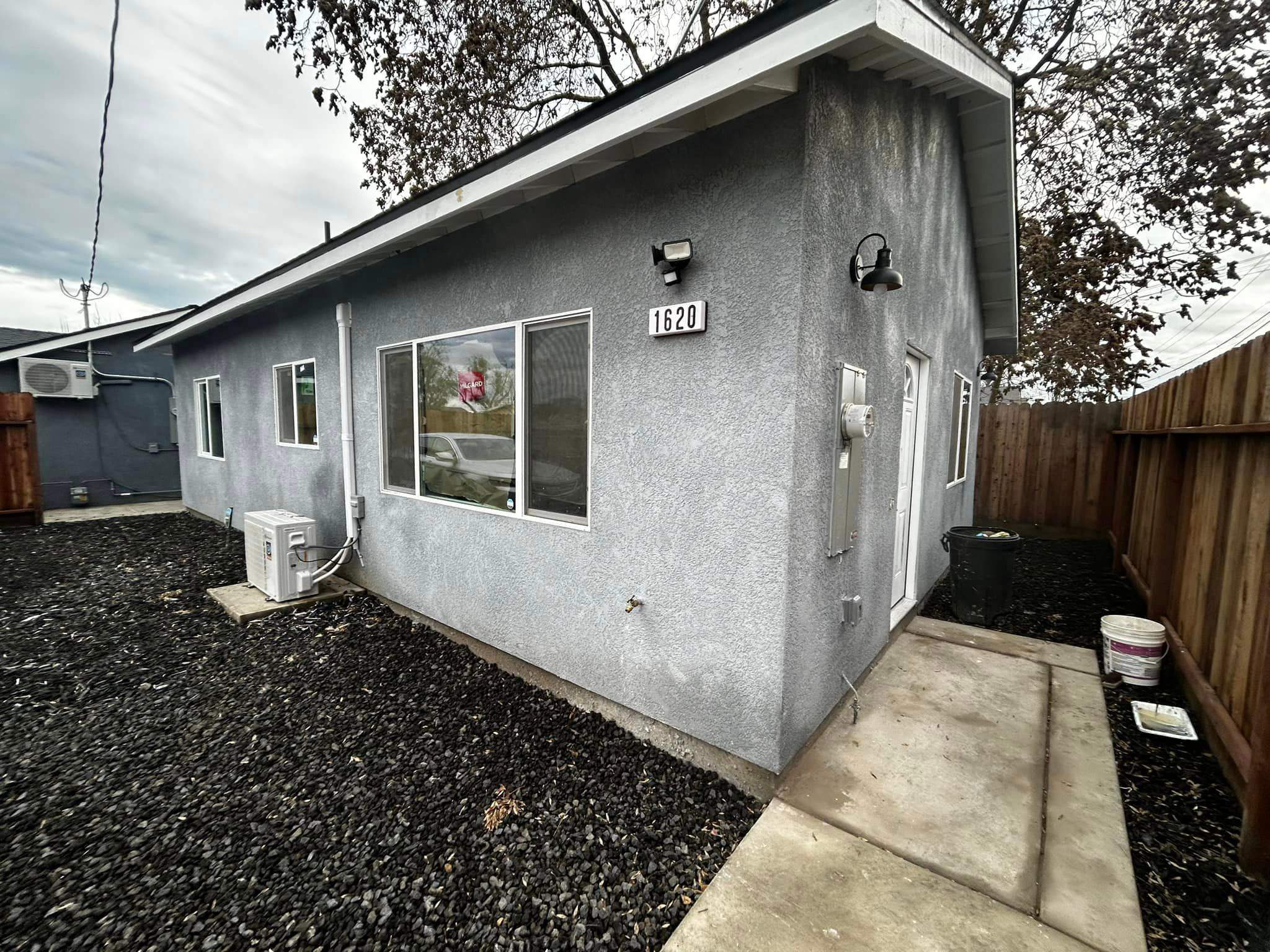
Designing, permitting, and building detached ADUs, guest houses, barn-adjacent units, and Junior ADUs for Hidden Hills estates — inside a gated, equestrian community with its own planning code, HCA architectural review, and Very High Fire Hazard Severity Zone rules. CSLB License #972213.
Hillstar Construction is a licensed Hidden Hills ADU contractor. We've built detached ADUs, garage and guest-house conversions, above-garage units, and Junior ADUs (JADUs) for Hidden Hills estates across Long Valley, Knolls, Saddle Creek, Eldorado Meadow, Round Meadow, and lots bordering Las Virgenes and the Mureau Road corridor. A Hidden Hills ADU is not a standard LA-county ADU with a gate out front. It touches the City of Hidden Hills planning code, Los Angeles County Building & Safety (which handles contract building services for the city), architectural review by the Hidden Hills Community Association (HCA), recorded equestrian trail easements, Very High Fire Hazard Severity Zone compliance under Chapter 7A, and the neighborhood's estate-scale architectural vocabulary.
Every project starts with a free on-site consultation inside the gate, a clear written scope, and a straight answer about what your lot can actually support — including an equestrian-easement, trail-adjacency, and HCA-guideline review at visit one.
Hidden Hills is one of the most specialized ADU jurisdictions in Los Angeles County. A Hidden Hills ADU is not reviewed by LADBS, and planning does not run through an unincorporated LA County process. Planning review goes through the City of Hidden Hills; building permits are handled through Los Angeles County Building & Safety under the contract services agreement with the city; architectural review runs through the Hidden Hills Community Association (HCA); and every parcel sits inside a Very High Fire Hazard Severity Zone that triggers Chapter 7A of the California Building Code. A contractor who has never built inside the gate often discovers the HCA architectural guidelines only after the first city submittal comes back for redesign.
We build Hidden Hills ADUs to read as part of the estate: ranch, hacienda, Mediterranean, Traditional, and Cape Cod vocabularies that match the primary residence, respect the equestrian trail network, and keep the neighbors' view from the trail clean. The ADU should feel like it was always on the property — not a contemporary infill box dropped onto a ranch estate.
When a detached ADU isn't realistic — because of trail-easement geometry, HCA setback from the primary residence, mature oak canopy, or hillside grading constraints — a primary-residence addition or scoped whole-estate remodel in Hidden Hills is sometimes the cleaner path.
ADU rules for Hidden Hills come from three overlapping sources — California state law, the City of Hidden Hills planning code, and the Hidden Hills Community Association (HCA) architectural guidelines — plus Chapter 7A of the California Building Code on every parcel. The baseline rules below apply city-wide. The specific envelope on your estate depends on slope, equestrian easements, existing structures, tree cover, and HCA review — all of which we confirm at the first site visit.
State law requires Hidden Hills to allow a detached ADU of at least 850 square feet for a studio or one-bedroom, or at least 1,000 square feet for two or more bedrooms. On the large Hidden Hills lots, larger envelopes are generally achievable subject to local standards and HCA architectural review at plan submittal. The realistic size on your specific property depends on lot geometry, distance from the equestrian trail easement, proximity to the primary residence, tree-canopy preservation, and hillside grading limits.
State law limits required side and rear setbacks to no more than four feet for a new detached or attached ADU. No setback is required where you convert an existing garage to an ADU in its existing footprint. On top of state minimums, HCA architectural guidelines typically shape a larger functional setback from neighboring estates and from recorded equestrian trail easements so the ADU does not crowd the trail experience.
Planning review goes through the City of Hidden Hills. Building permits are issued through Los Angeles County Department of Public Works, Building & Safety Division — which provides contract building services to the city — not LADBS. State law still requires completeness determination within 15 business days and approval or denial within 60 days for a complete ADU application. HCA architectural review runs in parallel. The Los Angeles area permit guide explains the broader regional permit flow.
The Hidden Hills Community Association reviews every proposed exterior change and every new detached structure. Review covers mass and scale, roof form and pitch, exterior materials and color, window and door proportions, fencing and gate alignment with neighbors' fences, exterior lighting, and visibility from the equestrian trail and neighboring lots. HCA review is a critical-path item and typically runs alongside city planning review. We design to pass the first time.
Hidden Hills is built around a city-wide network of equestrian trails and recorded trail easements that cross many private lots. A proposed ADU cannot reduce, block, or materially alter a recorded trail easement, and HCA review scrutinizes ADU placement relative to the trail. We pull the recorded easement map for your parcel at the first site visit and site the ADU so the trail remains intact.
Much of Hidden Hills is sloped, and the City of Hidden Hills planning code applies grading, height-above-grade, retaining-wall, and driveway-slope provisions on hillside parcels. These stack on top of the state ADU rules. Hillside ADUs remain buildable on most qualifying lots but take longer to design and permit.
The entire city sits inside a Very High Fire Hazard Severity Zone (VHFHSZ) and is treated as Wildland-Urban Interface (WUI) under Chapter 7A — ignition-resistant siding and soffits, dual-pane tempered or multi-pane glazing, ember-resistant vents, Class A roof assembly, and defensible-space compliance around the ADU, corrals, and barns. These are code, not upgrades, and they apply on every Hidden Hills ADU.
Hidden Hills is not a city of small parcels — it's a gated, one- and two-acre estate community. So the standard urban ADU playbook fits loosely at best. Here's how we match type to estate in practice:
The most common configuration on a Hidden Hills estate. Lot size is rarely the limiting factor — trail easements, tree canopy, HCA guidelines, and the visual relationship to the primary residence are. A well-sited detached ADU reads as a guest house, pool pavilion, or motor-court cottage that belongs with the main residence. On hillside lots the buildable envelope is defined by city grading rules plus Chapter 7A defensible-space setbacks.
Less common on Hidden Hills estates, where garages are often attached motorcourt structures tied into the primary residence. Where a detached garage or carriage house does exist, state law allows a conversion with no required setback from the existing footprint, which shortens permitting. HCA still reviews any exterior changes. We verify foundation, drainage, and structural condition first.
A clean fit on estates with detached carriage-house garages or barn-adjacent outbuildings, where a second-story habitable unit can be added within state setback and height rules plus the city's hillside and HCA design provisions where applicable.
Hidden Hills' equestrian character means many estates have permitted accessory structures — barns, stable lofts, guest houses, pool houses — that can sometimes be brought up to ADU code. Conversion is faster than a new detached build when the existing structure was originally permitted, meets current setbacks and height, and can be upgraded to Chapter 7A ignition-resistant detailing. We inspect, pull permit history with LA County, and give a straight answer on whether conversion or new build is the better path.
A JADU is carved out of the existing primary residence — up to 500 square feet — with its own entrance and efficiency kitchen. On Hidden Hills estates it's often the right answer where HCA review or equestrian-easement geometry constrains exterior expansion, or where a broader whole-home remodel is already underway and a JADU fits inside the reworked floor plan. JADUs continue to have owner-occupancy requirements under state law.
A realistic Hidden Hills ADU timeline from first site visit to certificate of occupancy is roughly 10 to 16 months — longer than a typical flat-lot city build. HCA architectural review, LA County Building & Safety plan check, hillside g…
Zoning, setback, lot-condition, and feasibility check on your property. Straight answer on what your lot can actually support — no obligation.
Floor plans, elevations, site plan, and a written scope with a clear price. Decisions on detached new-build vs. garage conversion vs. JADU happen here.
We submit to the City of Hidden Hills (planning) and LA County Department of Public Works (building), and we run the Hidden Hills Community Association architectural review in parallel. State law: 15 business days to completeness, 60 days to approval on a complete application.
Direct access to your project manager from kickoff to certificate of occupancy. No surprise change orders unless construction uncovers something that genuinely requires one.
Hillstar was great! We did a garage conversion and Lior was the best. He helped us plan every detail.
— Jeffrey Rhodes, January 2019Lior was such a pleasure to work with for our guest house remodel. He was so easy to get in touch with, incredibly responsive and finished the job early.
— Amy Christine, February 2019Straight answers to the questions we hear most often before the first site visit.
Virtually every Hidden Hills lot qualifies. California state law (Government Code §65852.2) requires every California city to allow at least one ADU on single-family residential lots, and Hidden Hills is an almost entirely single-family residential city with very large lots — so lot size is rarely the limiting factor. What changes per lot is where the ADU can sit — not whether you can build one. Buildable envelope on a Hidden Hills lot depends on slope, equestrian easements and trails, existing barns and corrals, tree cover, fire-zone compliance, and the Hidden Hills Community Association architectural guidelines. We confirm all of these at the first site visit.
No. Hidden Hills is its own incorporated city — not part of the City of Los Angeles — so nothing goes through LADBS. Planning review runs through the City of Hidden Hills, building permits are issued through Los Angeles County Department of Public Works / Building & Safety (contract building services for the city), and architectural review is handled by the Hidden Hills Community Association (HCA). The state-law ADU timelines still apply: the jurisdiction must determine application completeness within 15 business days and approve or deny a complete ADU application within 60 days. We handle the city submittal, LA County plan-check corrections, HCA architectural review, and final inspection — end to end.
Yes, on virtually every Hidden Hills property. The Hidden Hills Community Association (HCA) — the resident homeowners' association — maintains the architectural guidelines that every Hidden Hills ADU must respect: mass and scale, setback from the equestrian trail system, exterior materials, roof form, color palette, fencing, lighting, and how the ADU reads from neighboring estates and the trails. HCA architectural review runs in parallel with city planning and is typically the critical-path review for a Hidden Hills ADU. We design to pass HCA architectural review the first time.
Very often, yes. Hidden Hills is built around a network of equestrian trails and easements that run across many private lots, and those easements must remain unobstructed. A proposed ADU cannot reduce or block a recorded trail easement, and HCA architectural review scrutinizes setback from the trail, fence alignment along the trail, and visibility from the trail — because neighbors experience your property from there. We pull the recorded easement map for your parcel at the first site visit and site the ADU so the trail remains intact and the neighbors' experience of the trail is preserved.
Yes — Hidden Hills sits inside a Very High Fire Hazard Severity Zone (VHFHSZ) as designated by CAL FIRE for the Santa Monica Mountains / western San Fernando Valley area, and is treated as Wildland-Urban Interface (WUI) under Chapter 7A of the California Building Code. Every Hidden Hills ADU must be built with ignition-resistant exterior materials, dual-pane tempered or multi-pane glazing, ember-resistant vents, a Class A roof assembly, and defensible-space compliance around the structure, corrals, and barns. These are code, not upgrades, and we build every Hidden Hills project to Chapter 7A from day one.
Sometimes, and the answer depends heavily on the existing structure. Converting an existing accessory structure — barn, stable loft, guest house, pool house, detached garage — into a permitted ADU can be faster than a new detached build, but only if the structure was originally permitted, meets current setback and height rules, and can be brought up to habitable-use code including Chapter 7A ignition-resistant detailing. HCA architectural review still applies to the conversion, particularly to exterior changes. We inspect the structure, confirm permit history with LA County, and give a straight answer on whether conversion or new detached build is the better path for your specific property.
No surprise change orders unless construction uncovers something that genuinely requires one. Direct access to your project manager from kickoff to certificate of occupancy.
CSLB #972213. Design, permitting, construction, and final inspection under a single license — not a network of subs you have to coordinate.
City + LA County submittal, plan-check corrections, and utility coordination run in-house. You don't chase plans between an architect and a separate permit expediter.
Every inquiry gets a real answer within 24 hours. Every project gets a named project manager you can reach directly — not a call center.
17 reviews, 5.0-star average. Every project from first site visit through final inspection is the same licensed team, start to finish.
Building outside Hidden Hills too? Here are our most popular ADU neighborhoods — tap through for local details:
Calabasas · Bell Canyon · Woodland Hills · Beverly Hills · Tarzana · Los Angeles (citywide)
We handle more than one project type in Hidden Hills. Explore related services for your estate: