
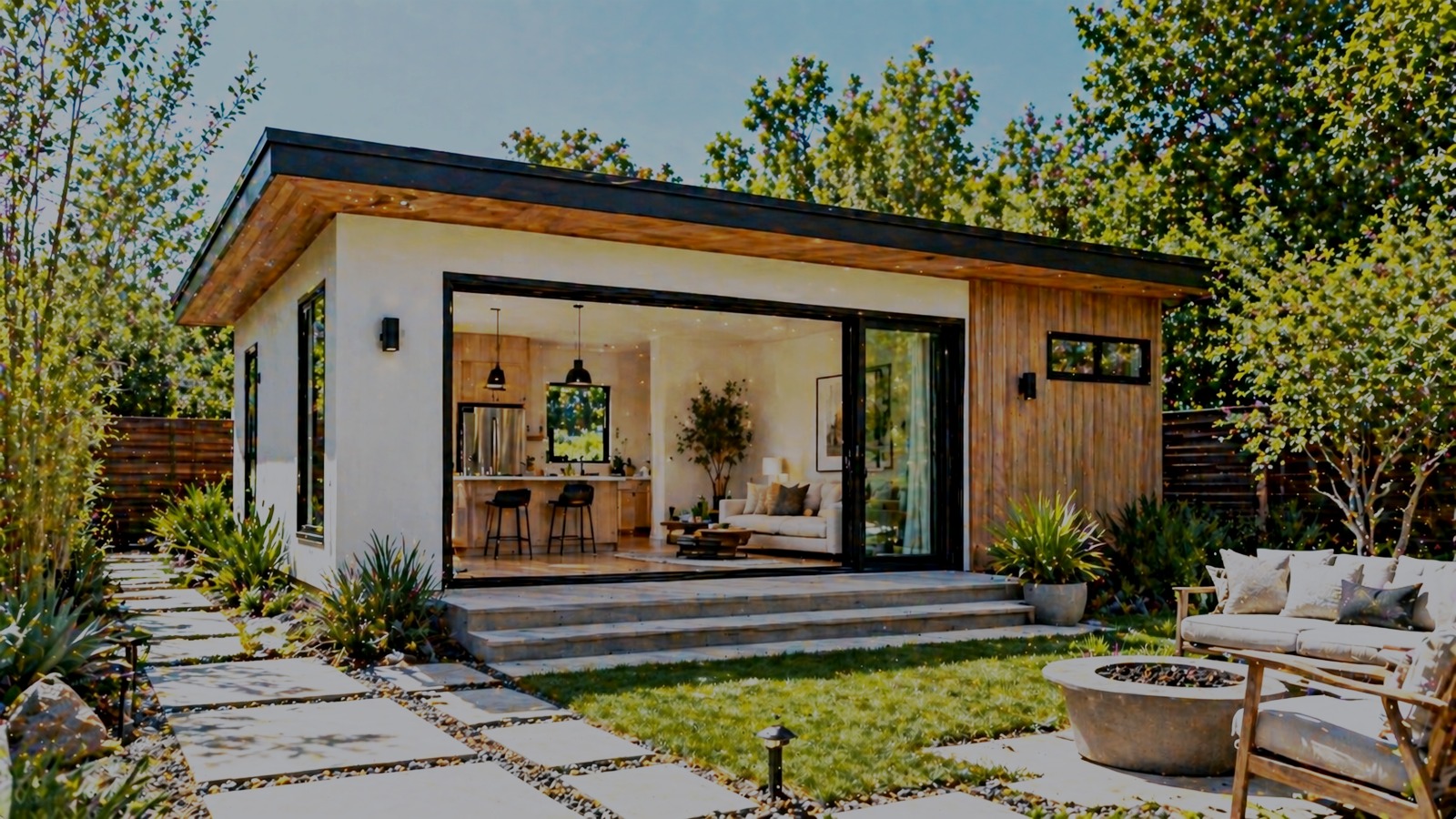
A garage conversion is one of the most cost-effective paths to an ADU in Los Angeles — the foundation, slab, and parts of the envelope are already there. But "already there" doesn't mean "ready for habitation." The right garage conversion contractor reads the existing structure honestly, names what needs upgrading, and sets a permit path that actually fits your lot. This post walks through what to verify before you sign.
What a garage conversion really involves
Most older Los Angeles garages were built to vehicle code, not to habitable code. To convert to an ADU, expect:
- Structural assessment. Existing framing, headers, and footings often need upgrading to meet residential structural code.
- Moisture barrier and insulation. Slab moisture barriers were rarely installed in older garages. Walls and ceilings need insulation upgraded to current Title 24 energy compliance.
- MEP (mechanical, electrical, plumbing). A garage typically has limited electrical, no plumbing, and no HVAC. Adding habitable space means new electrical service, panel or sub-panel sizing, plumbing rough-in, and an HVAC plan.
- Egress, light, and ventilation. Code requires bedroom egress windows, ventilation, and light per habitable-room standards.
- Fire separation. Where the garage shares a wall with the primary home or has occupied space above, fire-rated assemblies may apply.
A contractor who quotes a garage conversion without naming each of these in the scope hasn't actually scoped it.
Verify the license
Same baseline as any ADU build:
- CSLB license number (active, in good standing) — verify at cslb.ca.gov.
- Workers' compensation certificate of insurance.
- General liability insurance.
- Active bond.
Reluctance to share any of these is the answer.
How they read your specific garage
On a real site visit, the contractor should:
- Look at the existing slab — note level, cracks, moisture staining.
- Check the framing — wall studs, headers, roof framing, any termite or moisture damage.
- Trace where electrical service enters the garage and where the panel is.
- Note plumbing stack location relative to the primary home.
- Check setbacks, height limit, and lot coverage to confirm the conversion fits.
- Confirm whether the garage is detached or attached — the rules and rebuild scope differ.
If the contractor can't name what's specific about your garage after the visit, the quote that follows is a guess.
The permit path for a Los Angeles garage conversion
Most LA garage-to-ADU conversions go through LADBS's standard ADU permit and plan-check process. Ask:
- Does this property qualify for LADBS's standard ADU review process, or will it need added review?
- Will any conditions trigger discretionary review — hillside grading, HPOZ, coastal zone?
- Does the property fall under Beverly Hills, Culver City, Santa Monica, or West Hollywood permit offices instead of LADBS?
For a broader walk-through of LA permit reality, see our ADU permit and process guide.
How to read a garage-conversion quote
The same quote-reading rules apply as a full ADU:
- Each line separated — slab work, framing upgrades, MEP, finishes, soft costs, permit fees.
- Soft costs called out explicitly (design, structural, Title 24, permits).
- A defined finishes allowance, with what happens when you exceed it.
- A written change-order process.
If a quote lumps "structural and MEP" into one line, ask for the break-out. The break-out is where the real cost lives.
Common pitfalls in older LA garages
These are the issues we see most often:
- Slab not poured for habitation. May need a moisture barrier retrofit, leveling, or in some cases a new slab.
- Original electrical service too small. A 100-amp panel often won't carry the new ADU plus the primary home — service upgrade is part of the scope.
- Sewer lateral too far away. Plumbing routing for kitchen and bath may require trenching across the yard or under a driveway.
- Setback violations. Older garages occasionally sit closer to the property line than current setback rules allow — affects what kind of conversion is permitted.
- No fire-rated assembly between attached garage and house. Required for habitable space sharing a wall.
A contractor familiar with LA garage stock names these without prompting.
Where Hillstar fits
Hillstar Construction Inc is a licensed general contractor (CSLB #972213) handling garage conversions across Los Angeles. We assess the existing structure on-site, name what needs upgrading before we quote, and produce a written scope with each line separated.
For the broader ADU comparison (detached vs attached vs garage conversion vs JADU), see Complete ADU Cost Breakdown for Los Angeles Homes. For the broader builder-vetting checklist, see How to Choose an ADU Builder in Los Angeles.
Frequently asked questions
Is a garage conversion always cheaper than a detached ADU?
Often, but not always. The footprint is already there, which saves on foundation and parts of the envelope. But older garages can need substantial structural, MEP, and moisture remediation that closes the gap. The honest answer comes after a site visit.
Do I need a permit to convert a garage in Los Angeles?
Yes. Any habitable conversion needs a building permit plus electrical, plumbing, and mechanical permits. Doing the work without a permit creates problems when you sell or refinance later, plus code-enforcement exposure.
Does Hillstar handle the permit submission?
Yes — design, structural engineering, Title 24, and permit submission are inside the scope. We work with LADBS or the applicable city office.
What if my garage is detached versus attached?
Detached garages are simpler — no shared wall, no fire-separation question. Attached garages need fire-rated assemblies between the new habitable space and the primary home, plus MEP routing through or around the connection.
Do I lose my parking when I convert the garage?
Typically yes — the conversion removes the parking. California ADU rules generally do not require replacement parking on most lots, but some neighborhoods still impose conditions. A contractor familiar with your area names this up front.