
Almost every accessory dwelling unit and garage conversion in Los Angeles ends up on a ductless mini-split heat pump. The reason is simple — the new space rarely has the ceiling depth or the attic access needed for a conventional ducted system, and a single small heat pump can cover one ADU room or a multi-room layout cleanly. This post walks through what the equipment looks like, how the install is sequenced on an LA jobsite, and what the permit and inspection path looks like.
What a mini-split system actually is
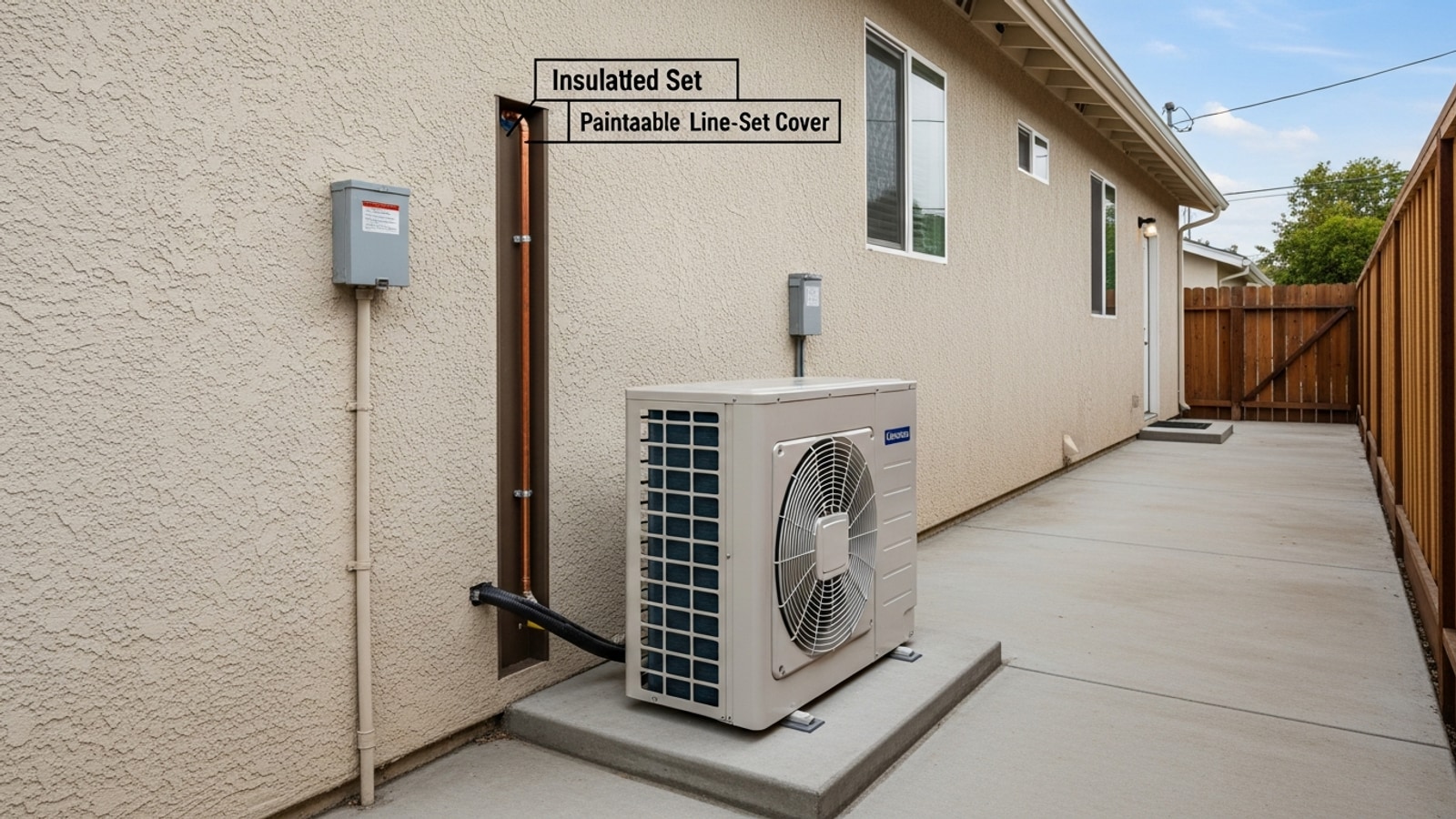
A ductless mini-split is a heat pump split between an outdoor condenser and one or more indoor heads. The condenser sits on a small pad outside; each indoor head is mounted high on a wall, recessed in a ceiling, or low on a floor inside the conditioned space. A small bundle of insulated copper refrigerant lines, a condensate drain, and a low-voltage control wire run from the condenser to each head through a single wall penetration.
Single-zone systems pair one condenser with one indoor head — a typical fit for a converted garage or a small detached ADU. Multi-zone systems route a single condenser to two or more heads — a typical fit for an ADU with a separate bedroom and living area. Both configurations are common on LA jobs.
Why mini-splits dominate the LA ADU and garage-conversion market
Several constraints push every project in the same direction:
- Most converted garages have low ceilings and no attic — there is no place to run sheet-metal ducts.
- Detached ADUs are usually a single open volume or a two-room layout — one or two indoor heads is enough.
- Heat-pump equipment is commonly selected for ADUs, and its rated efficiency is documented as part of the project's Title 24 energy compliance filing.
- The LA climate makes a single heat pump sufficient for both heating and cooling year-round; auxiliary heat is rarely needed.
- Side-yard space is often the only available equipment location, and a single small condenser fits where a packaged unit will not.
What the indoor head looks like
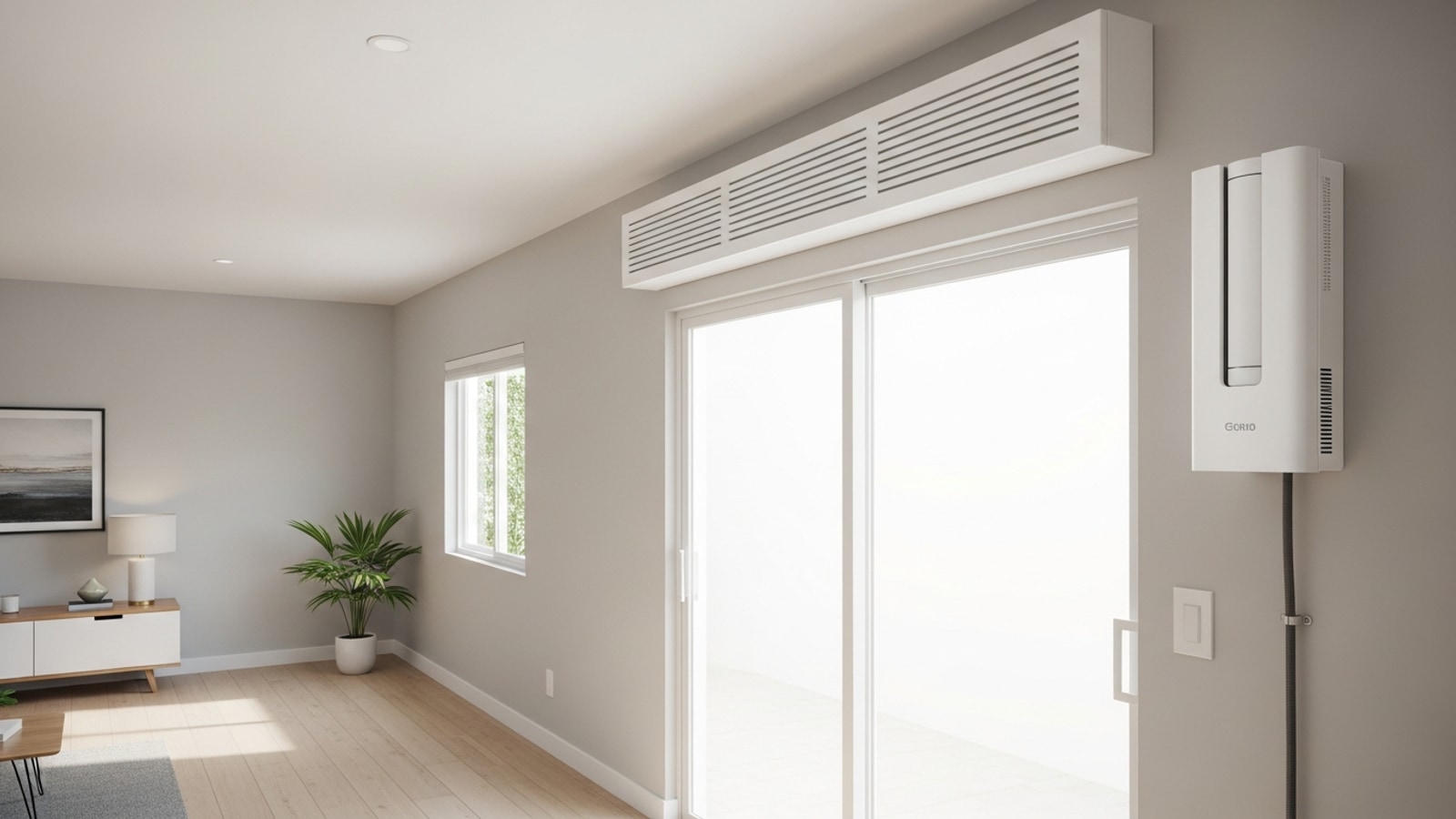
The indoor unit is the part of the system the homeowner sees. Three common types show up on LA installs:
- High-wall — a slim white head mounted high on an interior wall, the most common choice in converted garages.
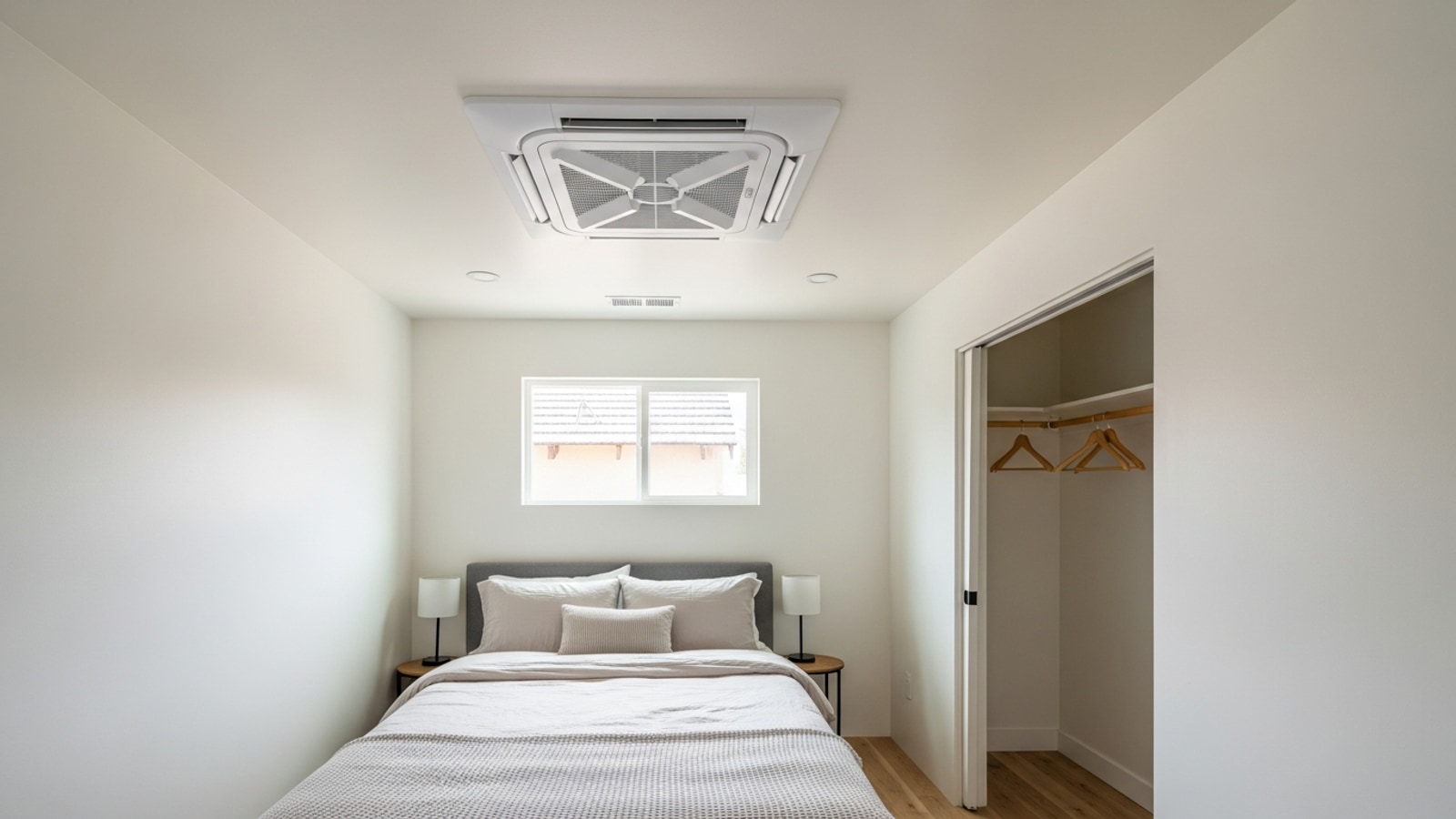
- Ceiling cassette — a square panel flush with the finished ceiling, used when wall space is taken by glazing or storage.
- Low-wall floor-mount — used where the ceiling is low or where the system has to be tucked into a soffit.
All three move conditioned air into the room without ductwork. The choice is driven by the room's geometry and where the line set can be routed.
How the install is sequenced
A typical LA mini-split install runs in a clean sequence:
- Set the outdoor pad — pre-cast concrete or composite, level, with the right setbacks from the property line and from operable windows.
- Mount the condenser on the pad and run the line set, condensate drain, and control wire through a labeled wall penetration sealed with the manufacturer's wall sleeve and silicone.
- Conceal the exterior line set inside a paintable rigid cover that runs vertically up the wall to the eave.
- Mount the indoor head on its bracket; route the line set through framing to the head; flare the copper fittings; torque to spec.
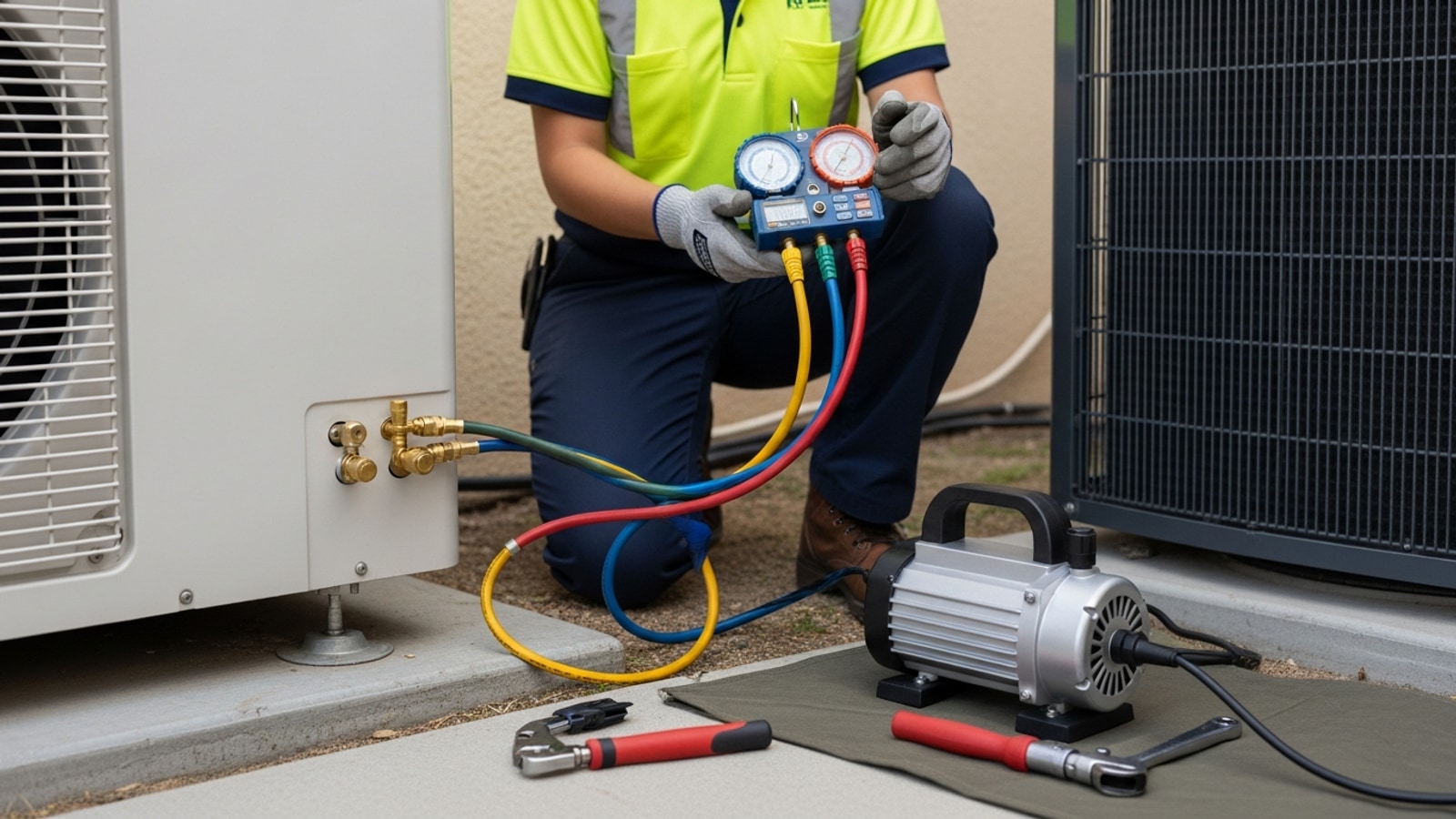
- Pull a deep vacuum on the line set with an electric vacuum pump and a digital manifold gauge to verify a leak-tight system before opening the refrigerant valves.
- Open the service valves, charge to the manufacturer's spec, commission the system, and walk the homeowner through the controls.
Electrical — the part that surprises homeowners
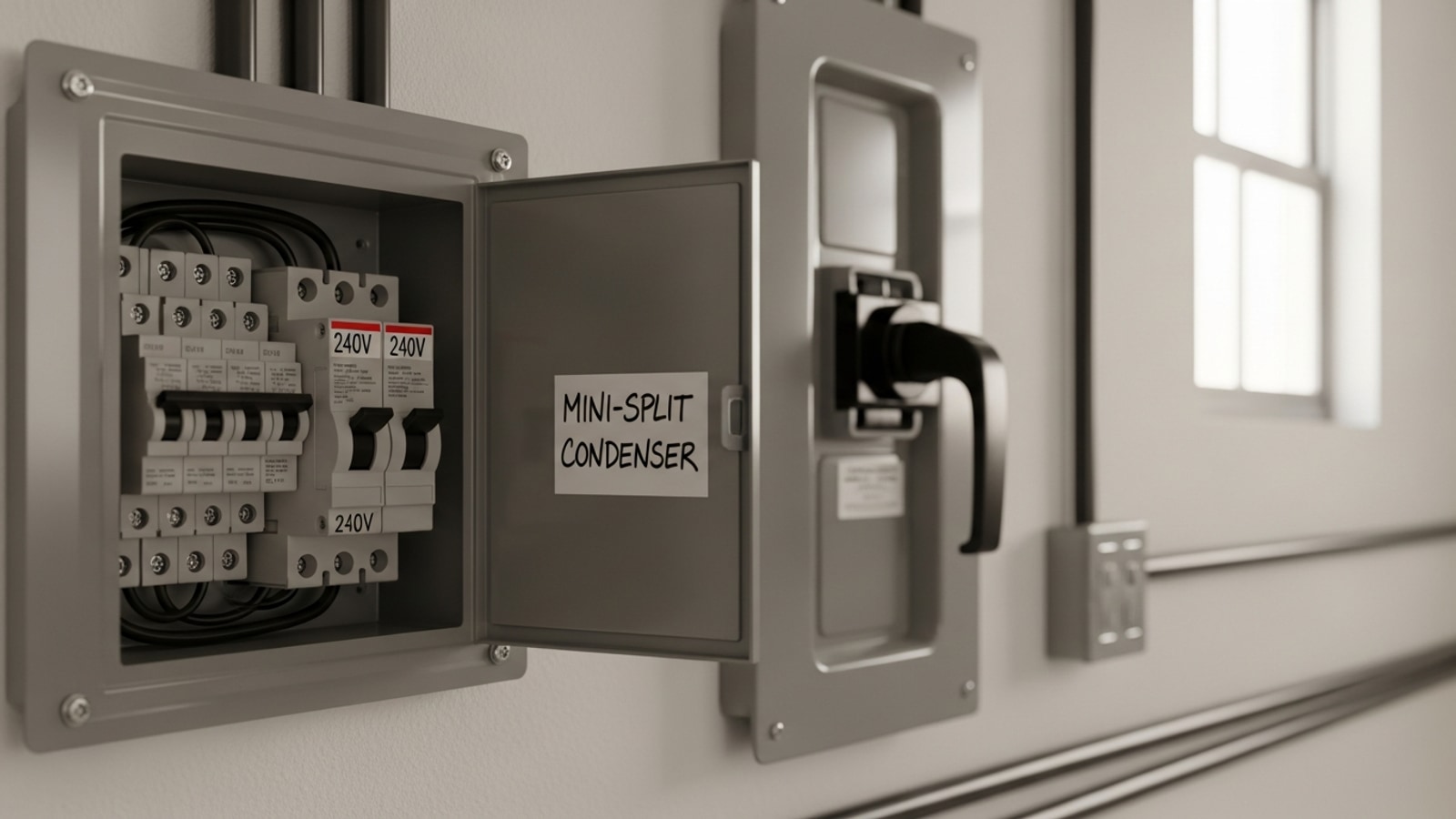
The condenser needs a dedicated 240V circuit and a service disconnect mounted within sight of the unit. On a converted garage or a detached ADU, the typical setup is a small subpanel inside the new space — fed from the main panel — with a labeled 240V breaker for the condenser and additional capacity for kitchen, bath, and lighting loads. Doing the electrical correctly the first time is what makes the rest of the install easy. Doing it wrong is what makes the rest of the install impossible.
Permits, licenses, and Title 24
An LADBS mechanical permit and an electrical permit are both typically required, with separate inspections. The contractor handling the equipment must hold a California C-20 Warm-Air Heating, Ventilating and Air-Conditioning license, and the installer must hold the federal EPA Section 608 certification to handle refrigerant. The Title 24 energy documents for the ADU show the equipment selected and its rated efficiency, documented on the CF1R Certificate of Compliance attached to the plans.
Where mini-splits are not the right call
On a larger home addition that already has accessible ducted equipment and attic space, extending the existing ducted system is sometimes the cleaner path. On a tight side yard with no setback room and no wall-mount option, the equipment placement may push the project toward an alternate solution. The contractor and the mechanical engineer determine the right path during design.
FAQ
Do I need both a mechanical permit and an electrical permit?
Most LA mini-split installs pull both. The mechanical permit covers the equipment, the line set, and the wall penetration; the electrical permit covers the dedicated circuit, the disconnect, and any new subpanel. Inspections are scheduled at the appropriate stages.
Can a mini-split heat as well as cool in Los Angeles?
Yes — every mini-split sold in the LA market is a heat pump. The same equipment provides both cooling in summer and heating in winter. For cooler hillside microclimates, low-ambient or hyper-heat models are available.
How loud is the outdoor unit?
Quieter than most homeowners expect. Modern variable-speed inverter compressors run at low speed most of the time and only ramp up under heavy load. The placement matters more than the unit — keeping the condenser away from bedroom windows and using a level pad with proper isolation pads is what keeps the install quiet.
Can one condenser run two indoor heads?
Yes — a multi-zone condenser can serve two or more heads from a single outdoor unit. This is the typical setup for an ADU with a separate bedroom and living area, and it keeps the side-yard footprint to one piece of equipment.