Questions to Ask a Woodland Hills Contractor Online Before the Walk-Through
A Saturday morning in Woodland Hills is not free time. Before you schedule an in-person estimate walk-through, a few direct questions over chat or email tell you whether a contractor understands Los Angeles permit history, hillside constraints, and the difference between a legitimate scope conversation and a sales pitch. The contractors who answer clearly online are the same ones who show up prepared with a plan.
Why Pre-Walk-Through Vetting Matters in Woodland Hills
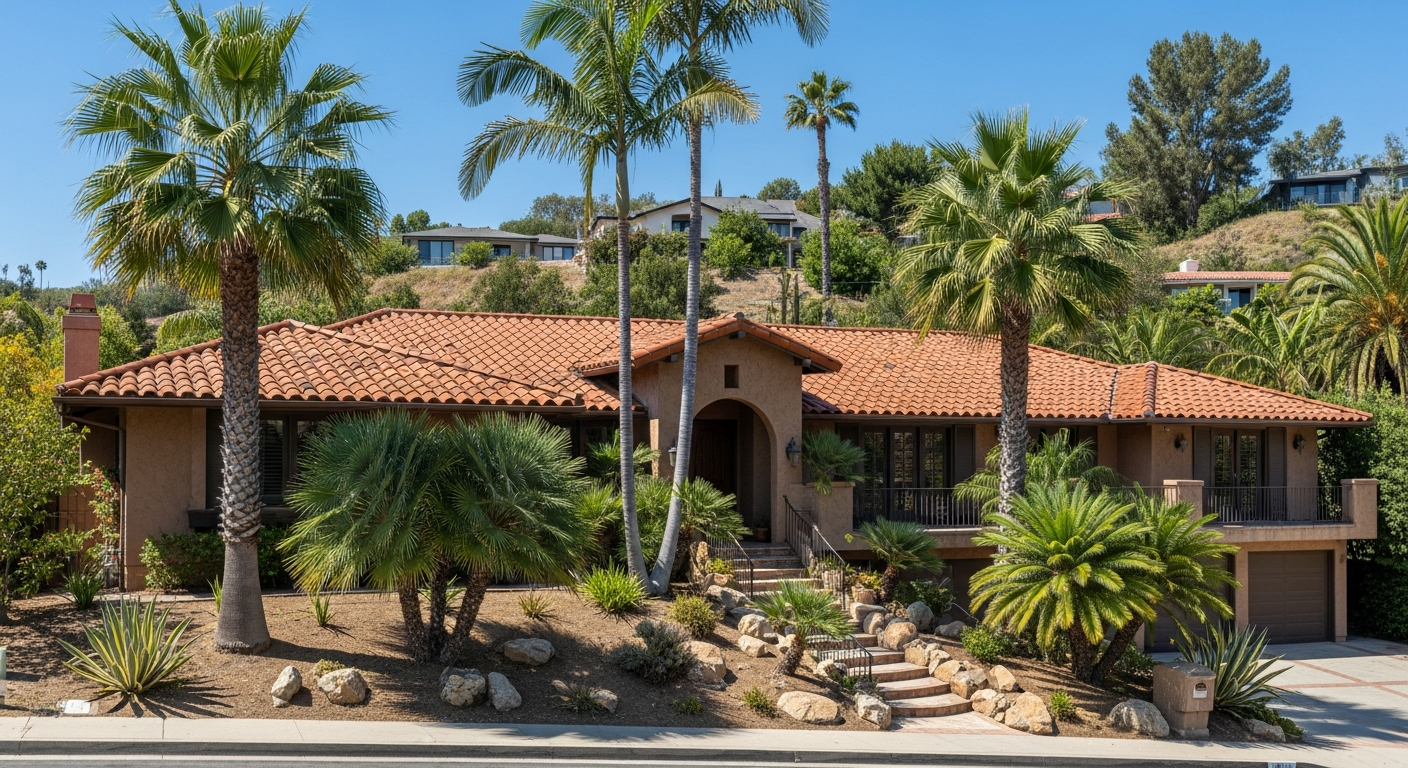
Woodland Hills properties sit on hillside lots with drainage easements, older foundations, and permit histories that sometimes predate LADBS digital records. A contractor who cannot answer basic licensing and scope questions online before the walk-through is either inexperienced or unwilling to be transparent. Either way, that first Saturday meeting becomes a waste of both calendars. The homeowner spends an hour explaining the project only to discover the contractor does not pull permits, does not understand hillside setback rules, or cannot coordinate structural work with the existing foundation. Experienced contractors answer vetting questions clearly because they have nothing to hide and prefer homeowners who understand the process.
The 30-Second CSLB License Check Every Homeowner Should Run
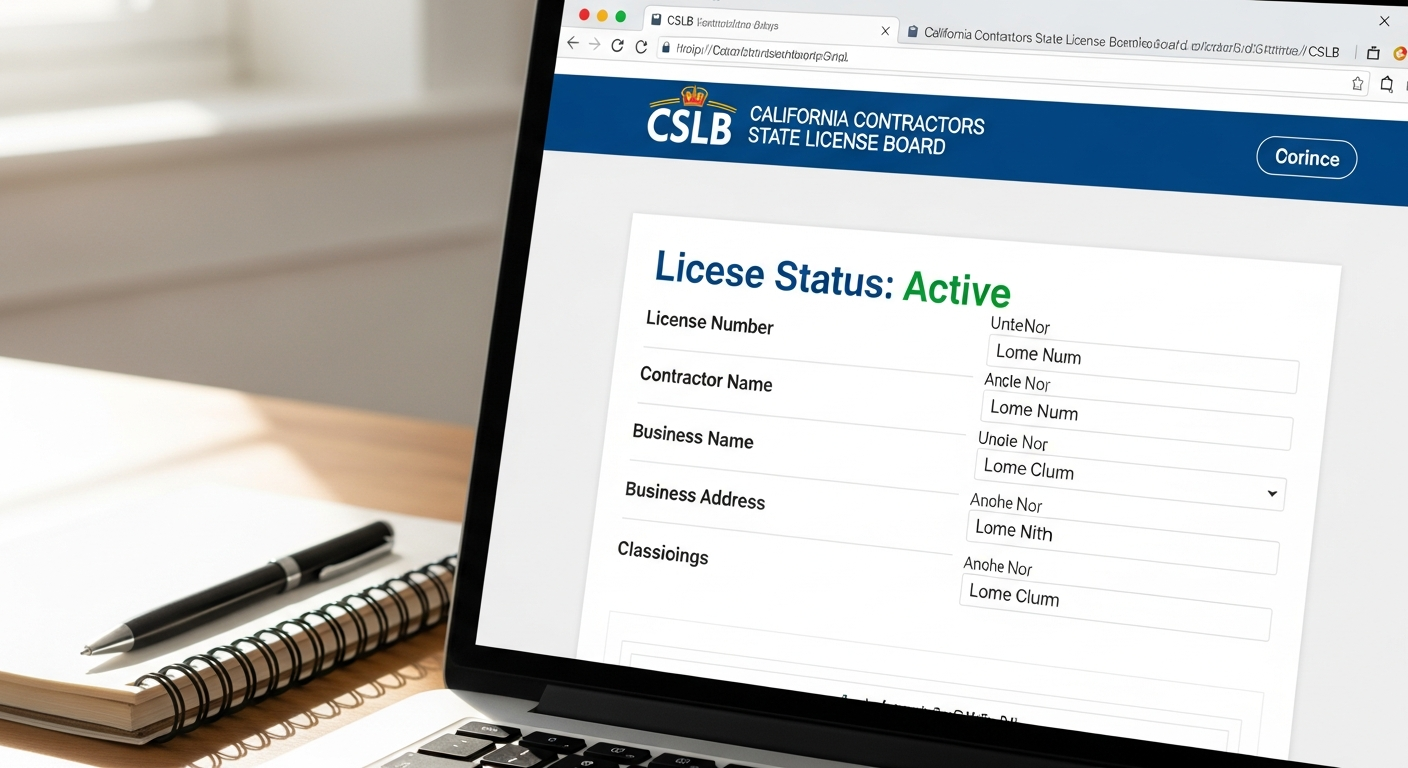
Before any conversation about scope or schedule, visit cslb.ca.gov and search the contractor's license number. Hillstar Construction Inc holds CSLB #972213, issued in 2012. The lookup shows license status, workers' compensation insurance, and any disciplinary history. A contractor who hesitates to provide a license number or whose license shows as expired, suspended, or unlicensed is not worth the follow-up email. The state publishes this data specifically so homeowners can verify credentials before signing anything or allowing anyone onto the property. If the contractor operates under a business name but cannot provide the individual license holder's name and number, that is a red flag. California requires the license number on every contract, every subcontract or call for bid, and every piece of advertising. A legitimate contractor includes it in the first reply. What that lookup actually proves, and what it leaves out, is covered in what a CSLB license check actually tells you.
Permit-History Questions That Matter for Older Woodland Hills Properties
Many Woodland Hills homes were built in the 1960s and 1970s, and not every addition or conversion over the past fifty years made it into the LADBS permit record. Before the walk-through, ask the contractor how they handle prior work not on the property's permit history. A good answer acknowledges that unpermitted alterations exist, explains that LADBS can require the current property owner to obtain a permit to resolve substandard or noncompliant conditions, regardless of who caused them, and confirms that the contractor coordinates with LADBS plan check rather than ignoring the issue. A bad answer suggests the contractor will work outside the permitted scope or promises to handle everything without city involvement. Hillside properties in Woodland Hills often trigger additional review for drainage, grading, and retaining walls. Ask whether the contractor has recent experience with hillside permits in Los Angeles and whether they coordinate directly with the city or rely on an expediter. The contractor who has pulled hillside permits in the past year will answer with specifics about soils reports and geotechnical consultants. The contractor who has not will give vague assurances.
Scope Questions That Translate Well Over Chat
Certain scope questions do not require an in-person walk-through to answer. Ask whether the project involves load-bearing changes, whether the home remodeling will be whole-house or phased by room, and whether the contractor coordinates all subcontractors or expects the homeowner to hire electrical and plumbing separately. Ask whether the project is better suited as an addition or as ADU construction under California's ADU law. A contractor experienced in Los Angeles residential work will explain the difference clearly and walk through what each path means for permitting. Ask whether kitchen remodeling that moves the sink or stove requires a new gas line or updated electrical panel, and whether those upgrades trigger Title 24 energy requirements for the parts of the house being altered. These are not gotcha questions. They are the questions that separate contractors who understand Los Angeles building code from contractors who learned the trade in another state and assume the rules are the same.
- Does the project require structural engineering, and does the contractor coordinate that or expect the homeowner to hire separately?
- Will the contractor pull all permits, or does the homeowner need to apply as owner-builder?
- Does the contractor carry general liability and workers' compensation insurance that covers all subcontractors on-site?
- What is the contractor's process for change orders, and are they documented in writing before work proceeds?

What an Honest LA Contractor Will and Will Not Commit to Online
No legitimate contractor provides specific pricing or specific schedule durations over chat before seeing the property. The variables that determine cost and timeline—existing framing condition, soil type, permit-plan complexity, subcontractor availability—cannot be assessed from photos or a property-tax record. A contractor who promises a firm number or a firm completion window before the walk-through is either guessing or planning to change the terms later. What an experienced contractor will commit to online is process transparency: how they handle permits, how they coordinate inspections, how they document change orders, and how they communicate during the project. Hillstar's approach is to answer vetting questions directly, confirm that the project falls within the contractor's scope of work, and schedule the walk-through only after the homeowner understands what the process involves. The walk-through is where the realistic schedule and budget range come from, not the initial chat.
Hillstar's Online Intake and When a Human Takes Over
Hillstar's website chat is handled initially by Mickey, the website assistant, who routes inquiries to a Hillstar representative when the conversation requires jobsite experience or specific project assessment. The assistant answers common questions about services, service areas, and the general permit process. When a homeowner asks about hillside grading, prior unpermitted work, or load-bearing changes, a Hillstar representative continues the conversation with the context already established. This is not a sales funnel designed to book appointments regardless of fit. It is a triage system that respects both the homeowner's time and the contractor's capacity. If the project is outside Hillstar's service area, requires specialty work Hillstar does not perform, or involves a scope the homeowner has not yet defined, the chat makes that clear before anyone blocks off a Saturday.
What to Expect in the Walk-Through After a Productive Online Conversation
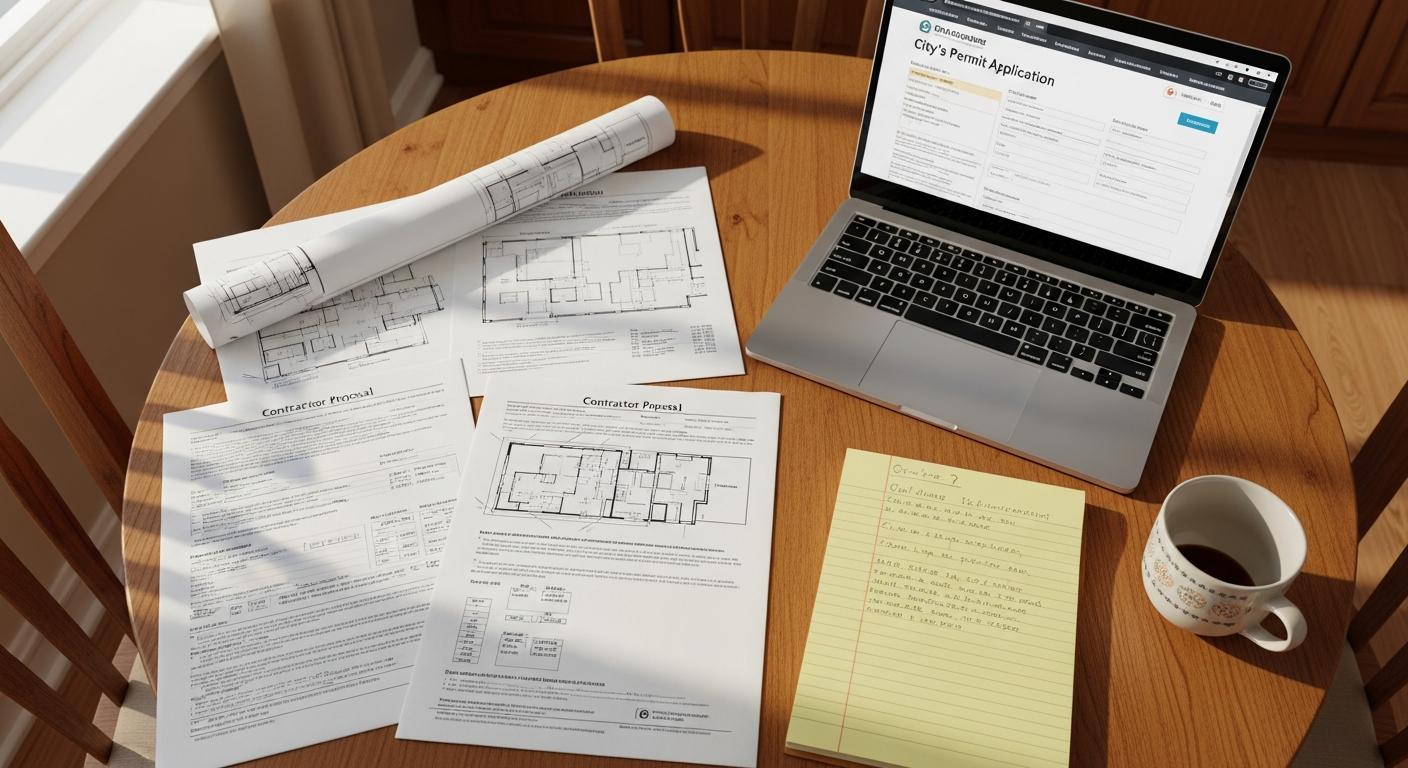
When the online vetting conversation covers licensing, permit history, and general scope, the in-person walk-through becomes a technical assessment rather than a sales meeting. The contractor arrives with a clear understanding of what the homeowner wants, what the property's permit record shows, and what the likely permit path will be. The walk-through focuses on existing conditions—foundation access, electrical panel capacity, plumbing stack locations, attic framing—and the contractor takes notes and photos that feed into the formal proposal. There are fewer surprises because the preliminary questions already filtered out the mismatches. The homeowner does not spend an hour explaining the project only to learn the contractor does not handle additions or does not pull permits. The contractor does not spend an hour measuring a property only to discover the homeowner expected a ballpark number on the spot. Both parties leave with a shared understanding of next steps, and the proposal that follows reflects the actual property conditions rather than a templated estimate.
How Experienced Contractors Separate Serious Inquiries from Tire-Kickers
Contractors who have been in business for decades develop a filter for inquiries that will not convert into projects. A homeowner who refuses to provide a property address, who asks for a quote based on square footage alone, or who demands a fixed price before the walk-through is usually not ready to move forward. A homeowner who asks about the contractor's license number, recent hillside projects, and permit coordination process is doing the homework that leads to a signed contract. Hillstar's intake process rewards that homework by answering questions directly and scheduling walk-throughs only when both parties are aligned on scope and expectations. The result is fewer wasted Saturdays, fewer proposals that go nowhere, and fewer projects that start with mismatched assumptions. The online conversation is not a hurdle to jump before getting to the real work. It is the foundation that makes the real work possible.
Why Woodland Hills Homeowners Should Not Skip the Vetting Step
Woodland Hills sits in a part of Los Angeles where property values, hillside constraints, and permit scrutiny all run high. A contractor who cuts corners on permits or insurance creates liability that follows the property through future sales and refinances. A contractor who does not understand LADBS hillside review or Title 24 energy compliance will either abandon the project mid-permit or deliver work that fails inspection. The time spent vetting contractors online—checking licenses, asking about permit history, confirming insurance coverage—is the time that prevents those outcomes. Experienced contractors appreciate homeowners who ask hard questions because those homeowners understand what a legitimate project requires. The contractors who dodge those questions or provide vague answers are the ones who create the horror stories that show up in online reviews and small-claims court. The vetting step is not paranoia. It is due diligence that separates organized projects from expensive mistakes.
FAQ
What should I ask a contractor before they come to my house in Los Angeles?
Ask for their CSLB license number and verify it at cslb.ca.gov. Ask how they handle prior work not on the property's permit record, whether they pull all permits themselves, and whether they carry workers' compensation insurance for all subcontractors. Ask about their process for change orders and how they coordinate LADBS inspections. A contractor who answers these questions clearly online is prepared for the in-person walk-through.
How do I check a contractor's license in Los Angeles?
Visit cslb.ca.gov and search by license number or business name. The lookup shows license status, workers' compensation insurance, and any disciplinary history. Hillstar Construction Inc's license number is CSLB #972213. If a contractor cannot or will not provide a license number, do not schedule a walk-through.
Can I get a price range from a contractor online before the walk-through?
No legitimate contractor provides specific pricing before seeing the property and understanding existing conditions. Cost depends on framing, soil, permit complexity, and subcontractor availability—none of which can be assessed from photos. What a contractor can provide online is clarity on process, licensing, and whether the project falls within their scope of work. The walk-through is where the realistic budget range comes from.
What makes Woodland Hills properties different for remodeling permits?
Many Woodland Hills homes sit on hillside lots that trigger additional LADBS review for grading, drainage, and retaining walls. Older properties often have prior work not on the city's permit record, which the current property owner may be required to resolve with a permit, even if a previous owner did the work. A contractor experienced in Woodland Hills understands these constraints and coordinates with LADBS plan check rather than ignoring the issue.