Remodeling Without Regrets
The Homeowner’s Guide to Planning, Comparing and Hiring the Right Contractor
Start here for a quick audio overview
I have spent about forty years building and remodeling homes in Los Angeles. In that time I have watched a lot of people go through this, and I have seen the same thing happen too often: a family spends years of savings on a project, ends up with a house they like — and a memory they would rather forget.
I do not think that is necessary. I have seen many of the problems that damage a remodeling experience begin before construction starts. Knowing what is coming gives you a much better chance of avoiding them.
The trouble is that homeowners are often expected to make these decisions without anyone clearly explaining what is coming. You are expected to make decisions worth years of savings, in an industry you have never worked in, using words you have never had to learn, while talking with people who work in this industry every day. Then, when it goes badly, you are told you should have done your research.
So this is the research. All of it, free, with nothing held back and nothing to sign up for. It is what I would tell my own family if they called me tomorrow and said they were thinking about remodeling.
I want you to end up with two things: a home you love, and a good experience getting there. Both of them matter, and this guide treats both as important.
I wrote this to help you whether or not you ever hire my company. If it means you hire someone else and it goes well, that is a good outcome as far as I am concerned.
— Lior Mazor
The letter above, read aloud.

What this guide will not do
- It will not ask for your email. There is no form anywhere in it, no account, and no gate. You can read every word and use every worksheet without telling us who you are.
- It will not hold anything back. There is no better version behind a signup. This is the whole thing.
- It will not sell you anything. No estimate offer, no consultation, no phone number pushed at you at the bottom of a chapter.
- It will not quote you a price. Every project is different, and any number printed here would become an anchor that misleads you. Chapter 3 teaches the method instead, which is worth more.
- It will not tell you how long a permit takes. There is no reliable generic permit timeline. It depends on the jurisdiction, the type of project, the review it needs, the corrections that come back, the department’s workload, the inspections required and conditions particular to your property. Chapter 4 shows you how to get an answer for your own project instead.

Common places people arrive from
- “The estimates came back much higher than I expected” — Chapter 3
- “I have no referral and nobody calls me back” — Chapter 5
- “How do I check if someone is legitimate?” — Chapter 6
- “I have three bids and they are miles apart” — Chapter 9
- “They want a large deposit — is that normal?” — Chapter 10
- “They opened the wall and now it costs more” — Chapter 13
- “It is going badly and I do not know my options” — Chapter 14
The whole guide
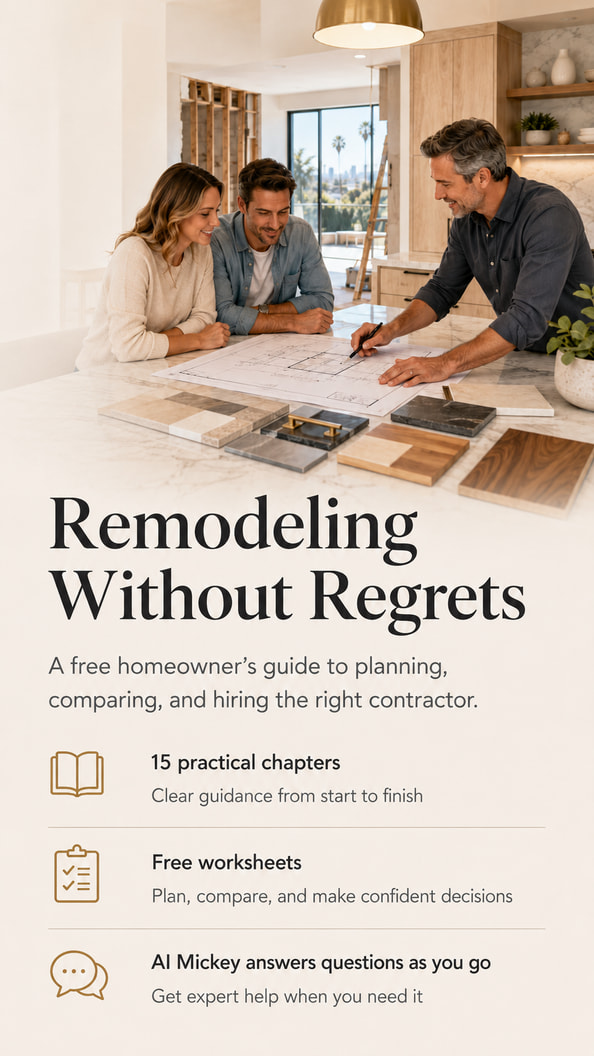
Fifteen chapters in four parts, in the order you will actually need them, each with a free worksheet you can use on the page. The order is deliberate and the guide builds: some chapters work directly from preparation done earlier — Chapter 2 starts from the sheet you fill in at the end of Chapter 1. If you are already underway, jump straight to the chapter that matches where you are, and follow the links back when it refers to something earlier.

Part 1 — Before you talk to anyone
- 1Where do I start?The first move is not choosing a professional. It is getting clear on what you want.
- 2Turn your wish list into a clear project briefA clear brief everyone receives, so each professional starts from the same requirements.
- 3Budget and quality levelWhy early budget expectations can miss, and how to build a more useful budget.
- 4When you need plansWhat to do first, when plans come in, and how to avoid spending heavily too early.
Part 2 — Finding the right contractors
- 5Finding contractors with no referralWhere to look when you do not have a referral, and how to write an inquiry that gets answered.
- 6Researching and narrowing the listHow to check someone properly, and what a license does and does not prove.
- 7The first call and the first meetingWhat to ask, what to watch, and how to get useful answers.
Part 3 — Proposals, comparing, signing
- 8Getting three comparable proposalsSend the same scope to each contractor and compare what is included, excluded and allowed for.
- 9Comparing bids apples to applesHow to compare the scope, allowances, exclusions and assumptions behind different totals.
- 10Before you signThe second check, the contract, and the payment rules California law requires.
Part 4 — Building and finishing
- 11Preparing for constructionLead times, dust, living arrangements and the decisions to make before work starts.
- 12Communication during constructionLior’s communication method for keeping the project clear and documented.
- 13Change orders and the unforeseenHow to distinguish a hidden condition from scope that was missing from the original bid.
- 14When it starts going wrongHow to document a problem, lower the temperature and know when to get professional advice.
- 15Finishing, and the file you keepHow to close out the job, handle the punch list and keep the records you may need later.
Ask AI Mickey about your project
Do not want to read fifteen chapters? Ask. AI Mickey knows the homeowner research and Lior’s experience behind this guide, and the complete 15-chapter guide. It will point you to the chapter that covers your question. There is nothing to sign up for and no email required.
Before you go
The guide is free and it stays free — come back to it whenever you need it. If you would like to know the people who wrote it, or keep it close, these doors are open. There is no form behind any of them.