
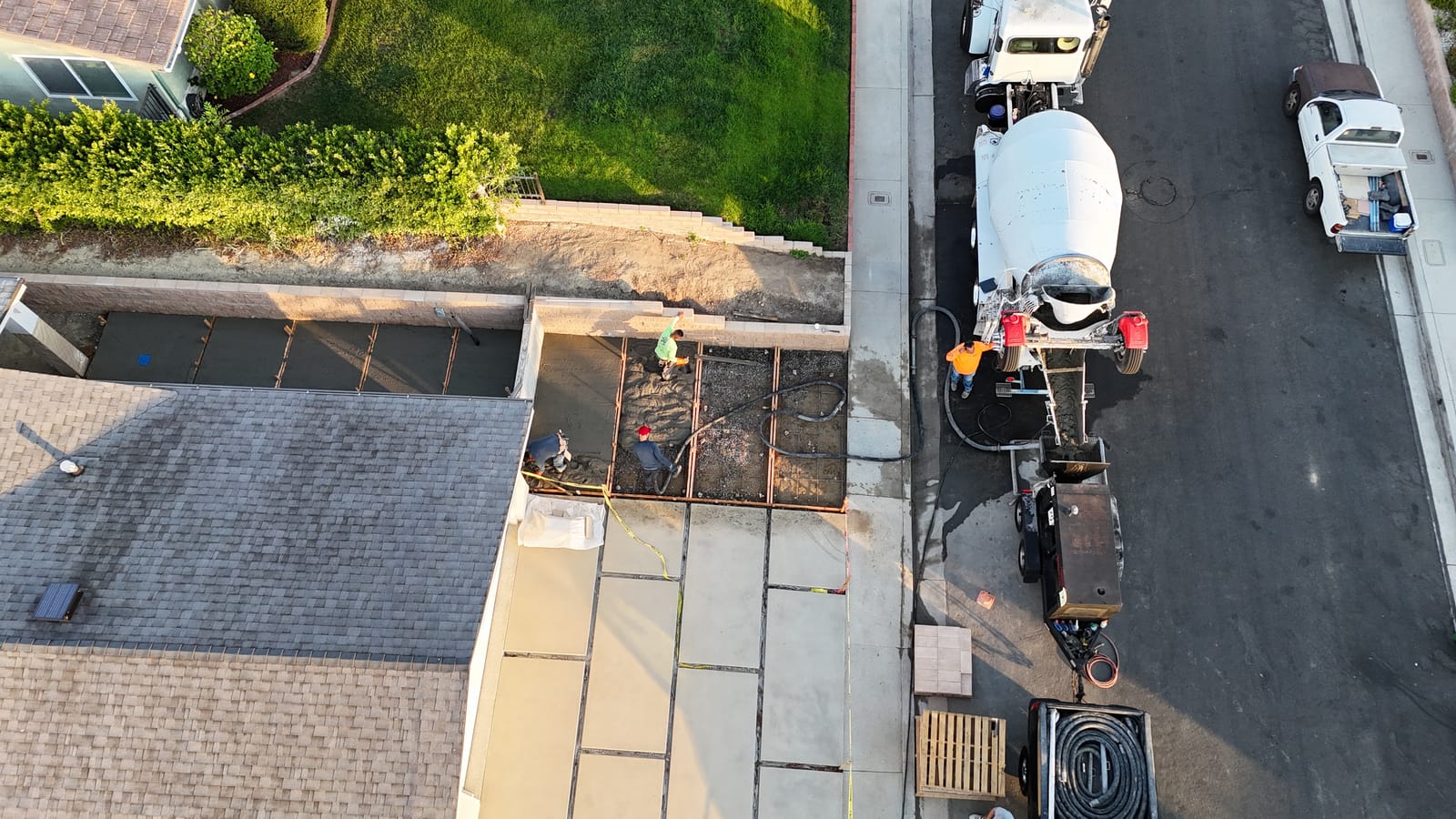
Concrete is one of the few parts of a home that is genuinely hard to redo. Once a driveway, patio, or foundation is poured, the quality of the prep and the finish is locked in, which is why choosing the right concrete contractor matters more here than in most trades. This guide walks through what to check before hiring one for a Los Angeles home: experience, licensing, materials, cost, timeline, and warranty.
What Residential Concrete Work Covers
Residential concrete work runs from the preparation and forming through the pour, the finishing, and the curing of everything from driveways and patios to foundations and decorative elements. Who does that work affects not just how the surface looks the week it cures but how it performs years later.
When comparing contractors, a few criteria carry most of the weight:
- Experience and Expertise: The provider’s track record in handling projects similar in scope and complexity.
- Licensing and Insurance: Verification of proper credentials to ensure compliance with local regulations and protection against liabilities.
- Material Quality: Use of high-grade concrete mixes and additives tailored to specific environmental conditions.
- Equipment and Technology: Availability of modern tools and techniques that enhance precision and efficiency.
- Customer References: Feedback from previous clients to gauge satisfaction and reliability.
Checking these items before signing anything cuts the risk of substandard work and expensive tear-out later.
What to Pin Down Before You Hire
A few things are worth settling before you start comparing bids:
Project Requirements and Scope
Different projects demand different concrete strengths, finishes, and curing times. A foundation is not approached the way a decorative patio is. Defining these parameters early makes conversations with contractors clearer and keeps expectations aligned on both sides.
Cost and Budget Management
While cost should not be the sole determinant, it remains a significant factor. Obtaining detailed quotes that break down labor, materials, and additional fees helps in comparing offers transparently. It is advisable to avoid the lowest bid if it compromises quality or service standards.
Timeline and Scheduling
Concrete work is time-sensitive, particularly regarding curing periods. Selecting a service provider capable of adhering to the project timeline minimizes delays and associated costs. Confirming availability and project scheduling upfront is recommended.
Warranty and Post-Completion Support
A reputable concrete service provider typically offers warranties covering workmanship and materials. This assurance reflects confidence in their work and provides recourse in case of defects or premature deterioration.
Environmental and Local Conditions
Concrete performance is affected by local climate and soil conditions, so a contractor who knows the area can recommend the right mixes and techniques for durability. For exterior flatwork specifically, our guide to pavers, patios, and outdoor surfaces in Los Angeles covers how surface material and drainage decisions fit together.
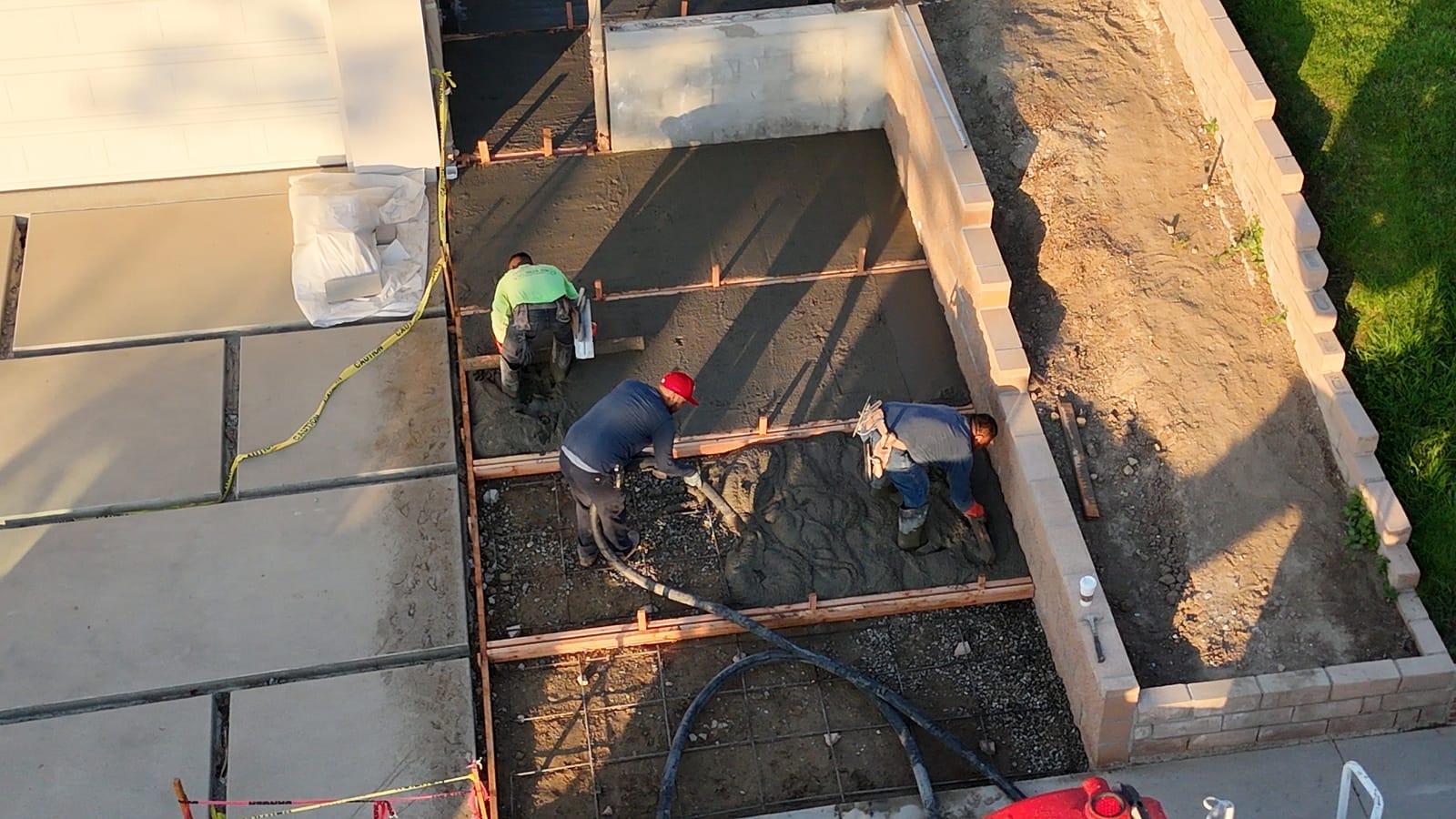
Who Does What on a Concrete Crew
Part of what you are paying for is a crew of specialists, and knowing the roles helps explain the pricing on a detailed bid:
- Concrete Pump Operators: Skilled in operating machinery that delivers concrete to precise locations, often in tight or difficult sites.
- Concrete Finishers: Responsible for the final surface texture and appearance, which takes a high degree of craftsmanship.
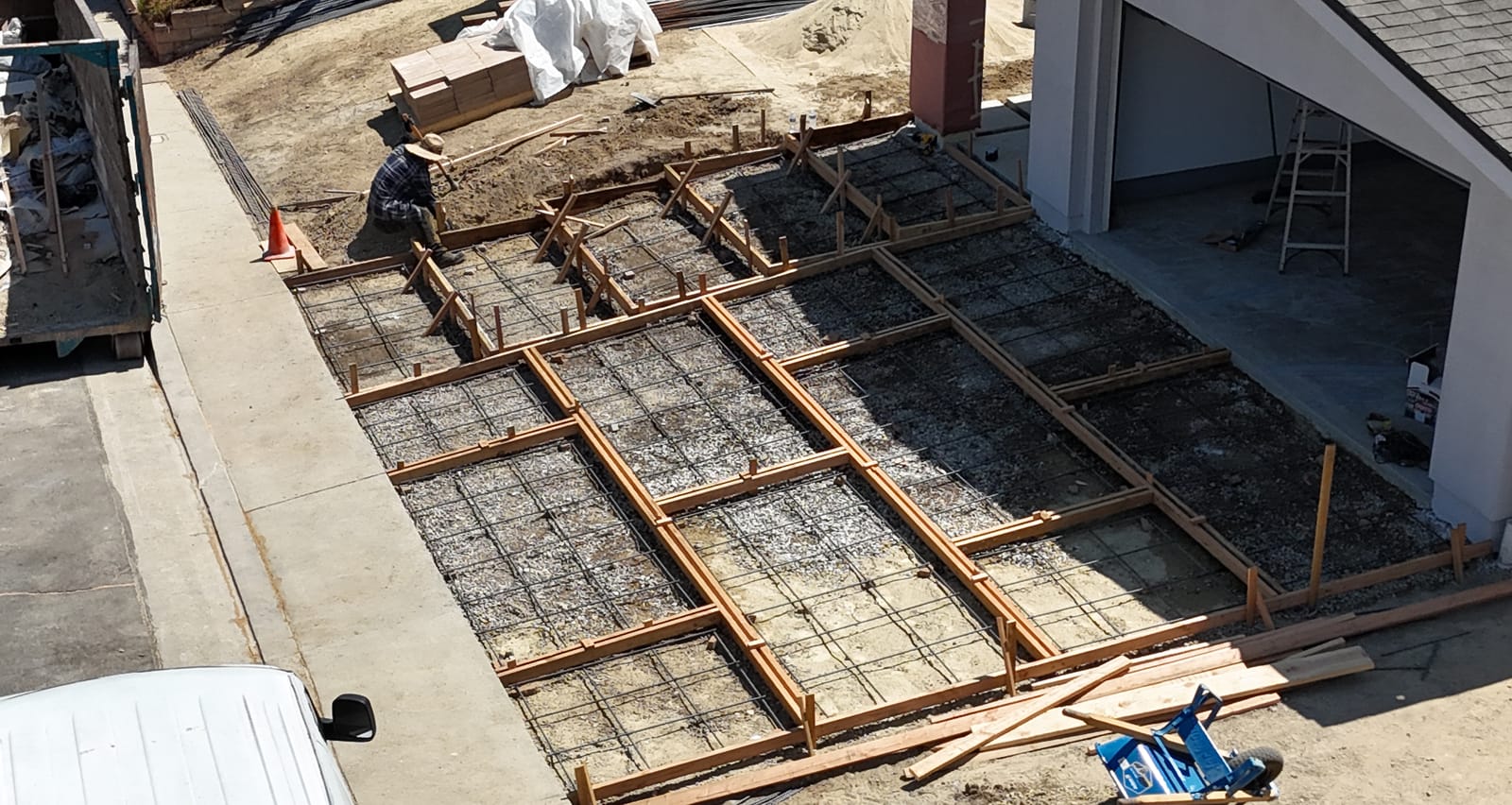
- Formwork Carpenters: Build the molds that shape the concrete, demanding precision and structural knowledge.
- Concrete Estimators: Calculate project costs, combining technical and financial judgment.
The specialized and supervisory roles, such as pump operators and estimators, are typically the highest paid on a crew. Those positions take extensive experience and certification, which reflects how much of the project's success runs through them.
Evaluating Credentials and Reputation
Credentials are the one step never worth skipping. Licensing confirms the contractor meets state and local regulatory standards, and insurance coverage protects homeowners from liability if there is an accident or property damage during construction.
Reputation can be assessed through:
- Online Reviews and Ratings: Platforms such as Google, Yelp, and industry-specific directories.
- Professional Associations: Membership in organizations like the American Concrete Institute (ACI) indicates commitment to industry standards.
- Portfolio of Completed Projects: Visual evidence of past work quality and style compatibility.
Talking with previous clients directly is still the best read on reliability, communication, and how the contractor handles problems when they come up.
Get It in the Contract
A detailed contract formalizes the scope, expectations, and responsibilities before any concrete is ordered. Key elements to include are:
- Scope of Work: Clear description of tasks, materials, and specifications.
- Payment Terms: Schedule of payments linked to milestones or completion stages.
- Timeline: Start and completion dates with provisions for delays.
- Warranty Details: Coverage period and conditions.
- Change Orders: Procedures for handling modifications or unforeseen issues.
That documentation protects both sides and gives everyone a clear reference point if a dispute ever comes up.
The Bottom Line
Hiring a concrete contractor comes down to diligence and long-term value. Prioritize experience, verified credentials, and transparent communication, and the driveway, patio, or foundation you pay for will perform the way it should for decades.
It also pays to favor contractors who specialize in residential concrete work in your own area. A local specialist already knows the regional requirements, the soil, and the inspection process, which shows up in both the quality of the work and how smoothly the project runs.